Albina Kasparienė
Nélia Gomes
Sandra Jovišić & Slađana Curić-Petričević
Tuba Küçükönder Çetin
Margrit Yesiltepe & Jaklin Melani Asator
Justyna Makowska
Višnja Vidović & Gordana Konjević
Jelena Rnjak
Cornelia Dumitru

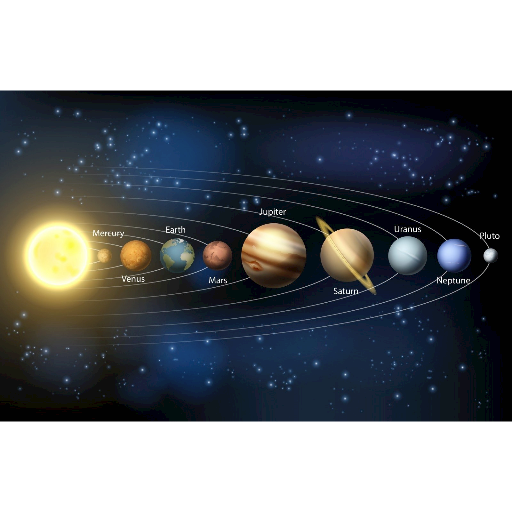
Our solar system
•Mercury is the closest planet to the Sun and is also the smallest planet in the solar system
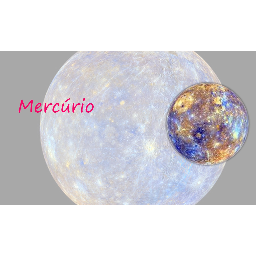
Characteristics
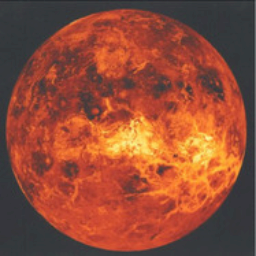
Science catapult game about the planet Venus – Fun game for one or two students to take turns playing. Each time a question pops up, select the correct answer and get a chance to shoot at your adversary with the help of your army. If you keep getting the answers right, you keep shooting at your adversary until his /her castle breaks down. A dragon also joins on your side to spit fire on the loser and destroy his/her castle completely. Be a champion and conquer enemy territory.
3) Like all the planets, Earth orbits (travels around) around the sun.
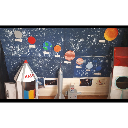
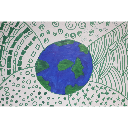
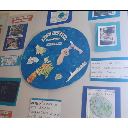
PLANET EARTH
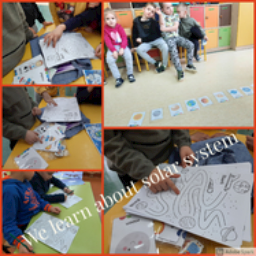
by exploring the solar system, children have shown great interest in the planet Earth,as it is the only planet on which there is life..
we explored what the planet Earth ia made of.
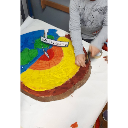
we got to know parts of the earth (core,crust...)and modeled.
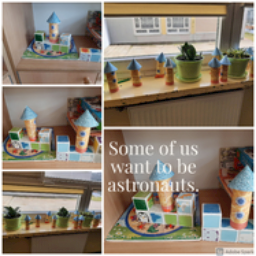
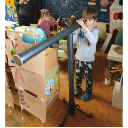
from unshaped material,we made a measuring instrument-TELESCOPE . with which we observed planets and stars in our improvised universe.
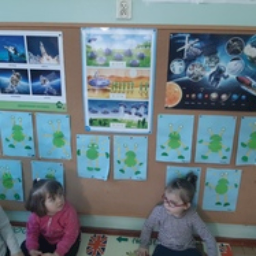
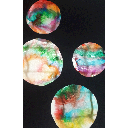
Through various art techniques (modeling,grading,wet to wet,rasters,melting wax)children expressed their creativity about the planets.
through various activities about the plenets we encouraged graphomotor exercises for the development of fine motor skilla of the finger and hand.
1) Named after the Roman God of war, Mars is the fourth planet from the sun in our solar system.
2) Mars is also known as the ‘Red Planet’ because, well, it’s red! This signature colour comes from the large amount of a chemical called iron oxide (or ‘rust’ as you might know it) in its rocks and soil.
3) Mars is the second smallest planet in the solar system after Mercury. With a diameter (distance through the middle) of 6,791 kilometres, it’s roughly half the size of Earth.
4) It can get pretty cold on Mars –– much colder than our own planet, since it’s further away from the sun. At the equator, temperatures can reach 20°C, but at its poles they can plummet to as low as -140°C. Brr!
5) Mars is home to the highest mountain in our solar system –– a volcano called Olympus Mons. Standing a whopping 24 kilometres high, it’s about three times the height of Mount Everest!
6) You could jump around three times higher on Mars than you can on Earth.BOING! This is because the planet’s gravity – the force that keeps us on the ground – is much weaker.
7) Do you like to look at the moon at night? Well, check this out –– Mars has two moons! One is called Phobos and the other Deimos.
8) A day on Mars is 24 hours and 37 minutes –– only a little bit longer than a day on our own planet. A year on Mars, however, is almost twice as long, lasting 687 Earth days! This is because it takes a lot longer than Earth to complete its orbit around the Sun.
9) Until recently, scientists believed that there was no liquid water on the surface of Mars –– only rocks, soil dust and ice. But… News flash! In 2018, they found evidence of a lake under the planet’s south polar ice cap. Exciting stuff!
10) Humans have not yet been to Mars, but scientists have sent spacecraft there to help them research this fascinating planet. The first spacecraft to land on Mars were the Viking Landers, which touched down on the surface in 1976.
- Full access to our public library
- Save favorite books
- Interact with authors
- < BEGINNING
- END >
-
DOWNLOAD
-
LIKE(2)
-
COMMENT()
-
SHARE
-
SAVE
-
BUY THIS BOOK
(from $3.79+) -
BUY THIS BOOK
(from $3.79+) - DOWNLOAD
- LIKE (2)
- COMMENT ()
- SHARE
- SAVE
- Report
-
BUY
-
LIKE(2)
-
COMMENT()
-
SHARE
- Excessive Violence
- Harassment
- Offensive Pictures
- Spelling & Grammar Errors
- Unfinished
- Other Problem





COMMENTS
Click 'X' to report any negative comments. Thanks!