The solar system is like a very big family. It consists of the sun, moons, planets, etc. The planets move around the sun.
The sun, the eight planets, their moons, and the dwarf planets form the solar system. The eight plants that revolve around the sun (in the order of increasing distance from the sun) are Mercury, Venus, Earth, Mars, Jupiter, Saturn, Uranus, and Neptune.
Sun: The sun is a huge ball of fire that gives us heat and light, and is at the centre of our solar system.
Mercury: It is the closest planet to the sun, and also the smallest planet in the solar system.
Venus: It is the second planet in the solar system, and is the hottest planet of all.
Earth: It is the third planet in the solar system. It is also called the blue planet because it is almost 70% of its surface is covered with water. It appears blue when seen from space. It is the only planet where life is known to exist.
Mars: It is the fourth planet. It is also called the red planet because the soil and rocks on this planet are red. It is the only planet that is similar to Earth and scientists believe that it is the only planet, besides Earth, where life may exist.
Jupiter: It is the fifth and the largest planet in the solar system. Jupiter spins very fast, pulling the clouds surrounding it to the form a striped pattern. This is why we see a striped pattern on Jupiter when we look carefully.
Saturn: It is known as the planet with rings because it appears to have several rings around its middle.
Uranus and Neptune: They are the farthest from the sun. Together with Jupiter and Saturn they are called the outer planets.
Till July 2006, it was accepted that the sun has a family of nine planets. However, on August 24 2006, the International Astronomical Union (IAU) redefined a planet. Our solar system now has only eight planets. Pluto, which was a earlier a planet, is now called a dwarf planet, along with Ceres and Eris.
These eight planets and dwarf planets move around the sun in their fixed path called orbits
Moon and Satellites
An object that revolves around a planet in an orbit is called a satellite. Almost every planet has a satellite that revolves around it. The moon is the only natural satellite of the Earth.
Moon does not have an atmosphere to protect it from extreme heat or cold. So, the temperature on the moon can be as high as 100 C at noon, and as low as –173 C at night ( 173 C below freezing point!). The moon does not produce its own light. It shines because it reflects sunlight that falls on its surface.
Stars
If we look at the night sky, we see lots of shining, twinkling objects called stars what are these stars made of
Stars are glowing balls of gases that spread out heat and light in space. They are actually huge but because they are so far away, they look like tiny pinpoints of light to us.
Constellations
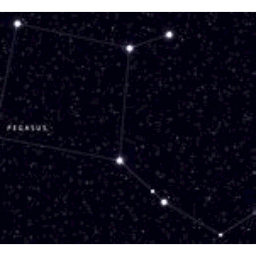
groups of stars that seem to form specific pattern are called constellations. Some constellations are easily visible are Usra Major (The great bear), Scorpio (Scorpion), and Orion (The hunter). The below picture shows about Constellations

Constellation collectively form galaxies, while a million galaxies together make up the universe. The milky way is one such galaxy, of which our solar system is a part.
- Full access to our public library
- Save favorite books
- Interact with authors

- < BEGINNING
- END >
-
DOWNLOAD
-
LIKE(1)
-
COMMENT()
-
SHARE
-
SAVE
-
BUY THIS BOOK
(from $4.39+) -
BUY THIS BOOK
(from $4.39+) - DOWNLOAD
- LIKE (1)
- COMMENT ()
- SHARE
- SAVE
- Report
-
BUY
-
LIKE(1)
-
COMMENT()
-
SHARE
- Excessive Violence
- Harassment
- Offensive Pictures
- Spelling & Grammar Errors
- Unfinished
- Other Problem

COMMENTS
Click 'X' to report any negative comments. Thanks!