 Brandon Khoury, Hour 1.
This book was created and published on StoryJumper™
©2010 StoryJumper, Inc. All rights reserved.
Publish your own children's book:
www.storyjumper.com

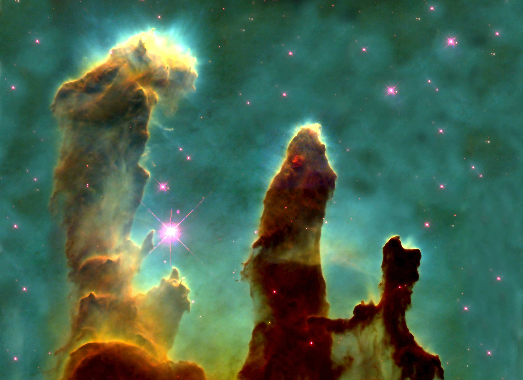
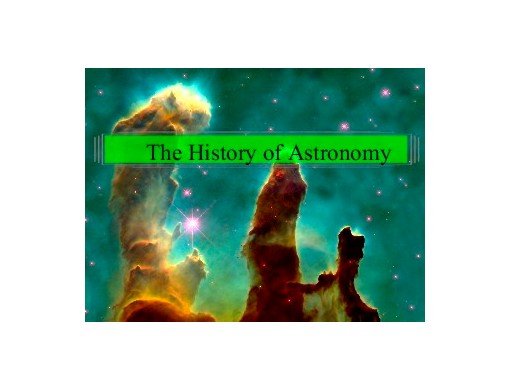
 The History of Astronomy
A presentation describing key events in the
history of astronomy.

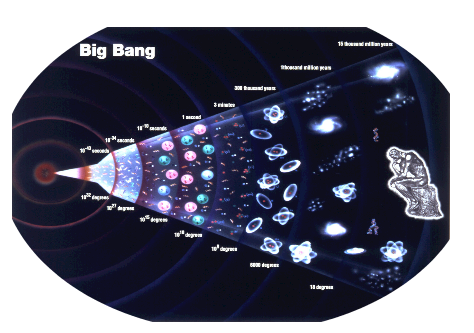
 The Big Bang (about 14 billion years ago)
The big bang is the theory of how the universe
was created. It states that a large amount of
extremely hot mass, started rapidly expanding.
After the initial expansion it began to cool and
released energy in the form of particles. These
particles are what made up all further
structures, and eventually, atoms, planets, and
so on were created due to these particles.

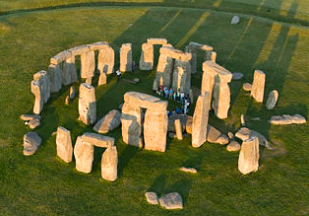 Stonehenge (around 3000 BC)
Stonehenge is a ancient structure located in
Wiltshire, England. The significance of this
structure relative to astronomy is its
orientation and design. Although some believe
that this is coincidence, the structure is set up
to face the northeast which is where the
solstice and equinox points can be viewed.
Because of this it is believed by some that
Stonehenge is an ancient observatory.
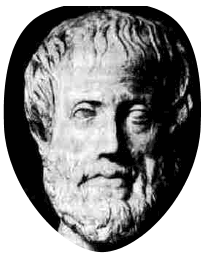
 Aristotle (384-322 BC)
Aristotle was an ancient greek philosopher who
had an impact in many fields. He studied
subjects in almost all areas of science. His
biggest contribution to astronomy was is
geocentric theory of the universe. This was the
theory that the earth was the center of the
universe and all planets revolved about the
earth. This ideal was adopted by the church for
centuries after his death.
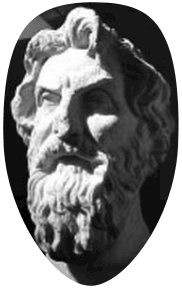
 Aristarchus (310-230 BC)
Aristarchus was another ancient greek, a
philosopher and astronomer. His main
contribution to astronomy was his heliocentric
theory and his solar, and lunar distance
studies. First, he presented the sun centered
universe, in which he was almost immediately
rejected. He also presented so primal methods
to calculate distances between astronomical
bodies, and earth.
enter text here
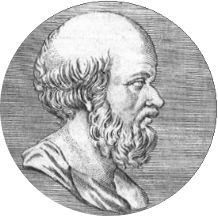
 Eratosthenes (276- 195 BC)
Eratosthenes of Cyrene was another
greek astronomer and mathematician.
He is known in astronomy for his
distance calculations. First, he
accurately estimated the circumference
of the planet earth. He also estimated
distances from the moon, and sun.

 Hipparchus (190-120 BC)
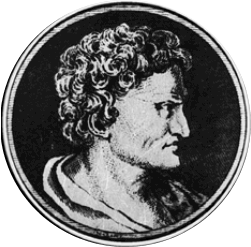
Hipparchus, was another greek astronomer
who is known for many things. First he is
known for is star catalogue which was used as
a reference by many astronomers after him.
Next, he basically invented trigonometry and
used it to calculate distances from the sun, and
the moon. He also created a method for
measuring brightness of stars, a method that
is still in place to this day.

 Ptolemy (90-168 AD)
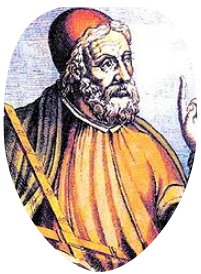
Ptolemy was an Egyptian astronomer of greek
antiquity. Ptolemy is known mainly for two
different things. First, he is known for
preserving the work of Hipparchus, which
helped kick start the scientific revolution in
astronomy. He also helped develop tables that
made it very easy to determine the position of
different planets and stars. He was also a
proponent of the geocentric theory.

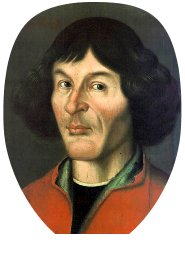
 (19 Feb. 1473-24 May 1543)Nicolaus Copernicus
Polish astronomer, that is also known as the
father of modern astronomy. He is known for
his popularization of the heliocentric theory. He
provided the sun centered theory with new
evidence that forever changed the way people
looked at the universe. Because of Copernicus
the sun was put at the center, and it stayed
there.
You've previewed 19 of 30 pages.
To read more:
Click Sign Up (Free)- Full access to our public library
- Save favorite books
- Interact with authors
- < BEGINNING
- END >
-
DOWNLOAD
-
LIKE(1)
-
COMMENT()
-
SHARE
-
SAVE
-
BUY THIS BOOK
(from $5.99+) -
BUY THIS BOOK
(from $5.99+) - DOWNLOAD
- LIKE (1)
- COMMENT ()
- SHARE
- SAVE
- Report
-
BUY
-
LIKE(1)
-
COMMENT()
-
SHARE
- Excessive Violence
- Harassment
- Offensive Pictures
- Spelling & Grammar Errors
- Unfinished
- Other Problem





COMMENTS
Click 'X' to report any negative comments. Thanks!