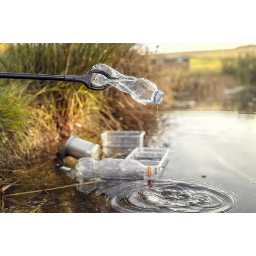
We make this book to make people aware and to help improve the situation of the pollution of our rivers and how it affects us.

Created & published on StoryJumper™ ©2026 StoryJumper, Inc.
All rights reserved. Sources: storyjumper.com/attribution
Preview audio:
storyj.mp/acrvsr93fbx
Rivers provide us with a variety of ecosystem goods and services. First of all, they are the source of fresh water that allows life on Earth. They are also the sustenance of diverse flora and fauna that are part of complex trophic chains and, in addition, we cannot fail to mention the scenic beauty that they represent and that makes them a suitable place for recreation and sports activities.

2
Reduce the consumption of plastics:
If you wonder how to avoid contamination of river water, the simplest answer is to reduce the consumption of single-use plastics. The truth is that there are more and more plastics in rivers: either on the coast, floating on the surface, and even in the river bed. As we know, plastics take hundreds and hundreds of years to degrade and decompose into microplastics that contaminate countless liters of water and some aquatic animals mistake them for food.
3
For this reason, reducing the consumption of plastics will significantly help to avoid the pollution of rivers. You can use cloth bags, biodegradable containers or other materials such as glass or metal. If there is no other alternative for the use you need to give it, it is preferable to choose those plastics that can be reused and / or recycled and not those for single use. When the useful life of these plastics comes to an end, make sure to give them a correct final disposal.
4
Reduce the use of oils and batteries:
Oils are highly polluting, it is estimated that a single liter of oil pollutes a thousand liters of water. Batteries and cells have a toxic composition that, when dissolved in water, can be ingested by fish and other living beings in the affected ecosystem. The use of these elements, and their poor final disposal, pollutes rivers and, consequently, affects aquatic biodiversity, affects the food chain (these pollutants can reach us through food, if we consume fish from said contaminated environment). Therefore, reducing the use of oils and batteries is a good initiative to reduce pollution of rivers.
5
Reduce the use of chemicals in the home:
In general, cleaning products are used diluted in water and at the end of their use, they are discarded, finally culminating in rivers and the sea. Except for places where very good water treatment processes are carried out, but it is still not the most common.
Many of these products, such as detergents and bleaches, have chemicals in their composition that are highly toxic to aquatic life. Given this, it is urgent to reduce the use of these chemicals if we want to conserve rivers and their biodiversity.
6
Consume more vegetables than animal products:
In case you did not know, you can avoid the contamination of rivers from what foods you choose for your diet. In fact, eating more plant products than animals will help preserve rivers for two reasons. In the first place, it takes thousands of liters of water less to produce a kilo of vegetables than to produce a kilo of meat. Second, the livestock industry produces a large amount of polluting waste that ends up in rivers and other bodies of water.
7
Benefits:
- Full access to our public library
- Save favorite books
- Interact with authors
READ

storyjumper.com
- < BEGINNING
- END >
-
DOWNLOAD
-
LIKE(2)
-
COMMENT()
-
SHARE
-
SAVE
BUY THIS BOOK (from $2.99+)
-
BUY THIS BOOK
(from $2.99+) -
BUY THIS BOOK
(from $2.99+) - DOWNLOAD
- LIKE (2)
- COMMENT ()
- SHARE
- SAVE
- Report
Liked By
X
Encourage this author
-
BUY
-
LIKE(2)
-
COMMENT()
-
SHARE
Problem with this book
X
- Excessive Violence
- Harassment
- Offensive Pictures
- Spelling & Grammar Errors
- Unfinished
- Other Problem
Which pages have problems?
Please describe the problem:
left text
right text
"An Action plan"
This informative book provides tips on how to reduce pollution in rivers, including reducing plastic consumption, using organic farming, and proper waste disposal.
(12 pages)
Privacy level:
PUBLIC
9 reads
2 fans
Report

COMMENTS
Click 'X' to report any negative comments. Thanks!