


Ever wondered how your plant gets taller and gets its food from? Let me Explain!
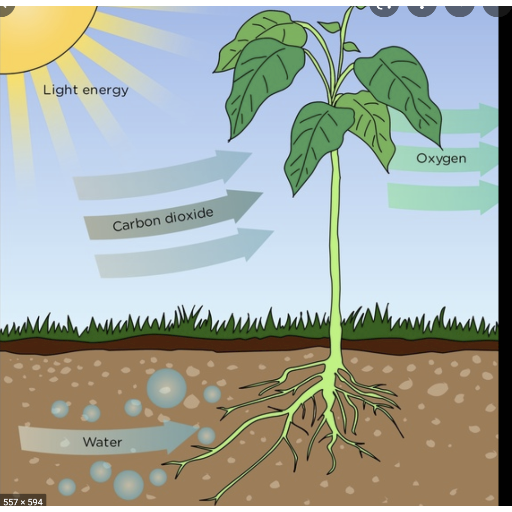
Photosynthesis is the way by which plants use sunlight, water, and carbon dioxide to create oxygen and energy in the form of sugar.

Yummy! Sunlight


Photosynthesis produces Oxygen, which we breathe in. It also produces glucose.
No Photosynthesis = No You.
Here is the equation that is used:
6CO2 + 6H2O → C6H12O6 + 6O2


Plant, being producers, absorb light using pigments in their chloroplast. Carbon dioxide enters the leaves of a plant through their stomata-or tiny openings. Water enters through the root of the plant.
FINALLY WATER!!


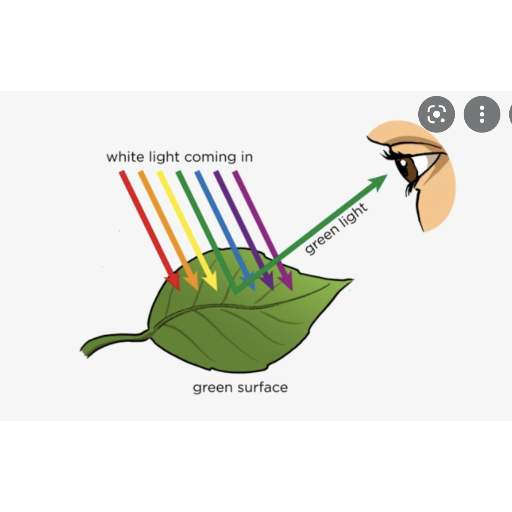
Ever seen a rainbow? ROY G BIV ring a bell? Those are the colors that make up light energy, which travels in waves. The plants are able to absorb wavelengths of blue and red lights but not green. The green is reflected and this is why plants are green!


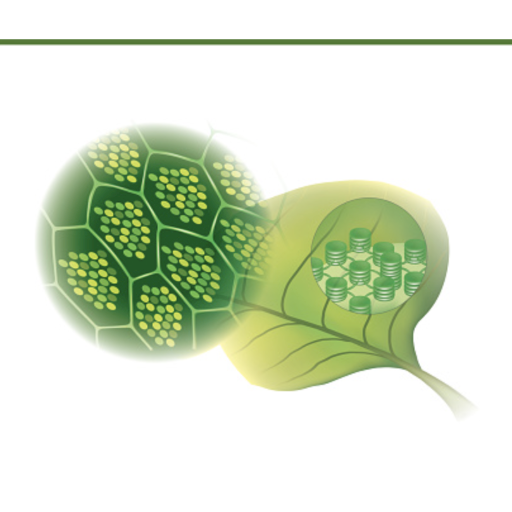
Ever heard of a chloroplast? When you hear photosynthesis, you are bound to hear chloroplast. It is an organelle in the plant cell whose main function, you guessed it, is to carry out the function of photosynthesis and specializes in capturing energy from the sun and producing sugar for the organism.


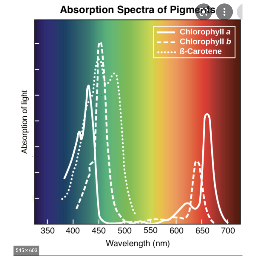
Chlorophyll is a green pigment that soaks up the energy from sunlight. It is also the reason why plants are green. You may remember that colors are different wavelengths of light. Chlorophyll captures red and blue wavelengths of light and reflects the green wavelengths.

WOWWW!!!

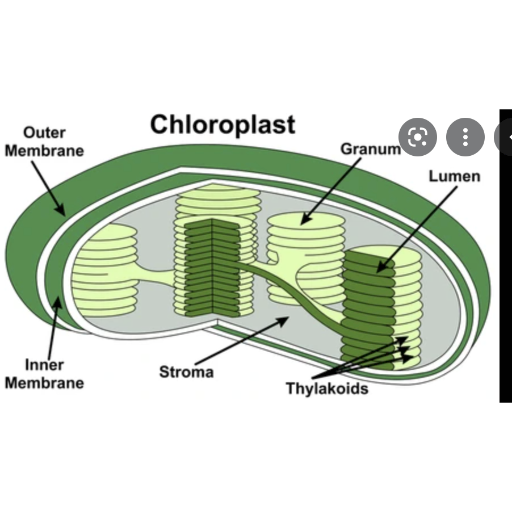
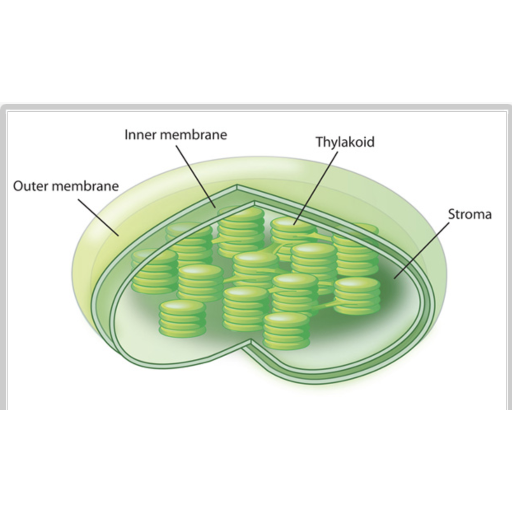
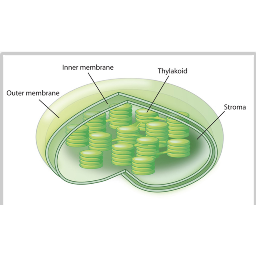
This is the parts of the chloroplast and includes the thylakoid and the stroma. The thylakoid provides a platform of photosynthesis and the stroma is the fluid-filled inner space contains DNA, ribosomes and other substances.


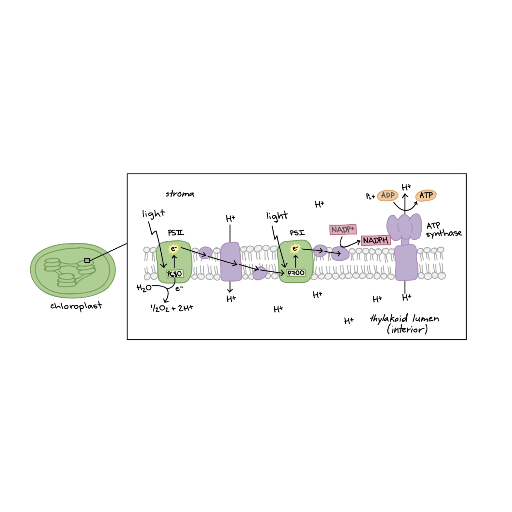
When sunlight hits the water molecules, it splits the hydrogen and oxygen. The oxygen is released as a waste product by the plant. The electrons released by the water, after going through several photosystems, attach to a hydrogen ion and turn NADP+ to NADPH. The electrons also form a electrochemical gradient, which powers ATP Synthase and is used to make ATP. This occurs in the thylakoid membrane.


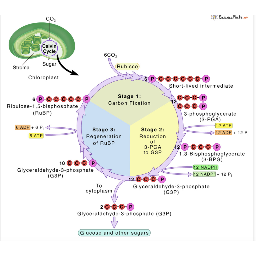
The light independent reaction, or the Calvin Cycle, uses CO2, to produce glucose. The ATP and NADPH produced in the light dependent reaction are used to regenerate ribulose, which is used to "fix". carbon. This occurs inside the stroma of the chloroplast.

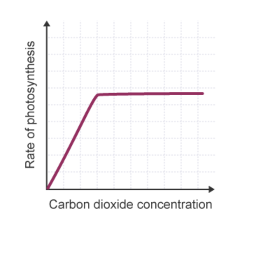
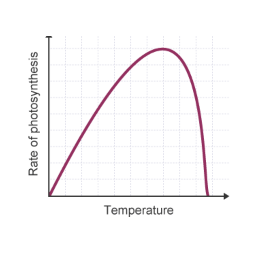
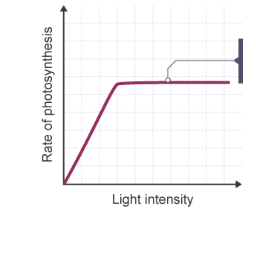
Carbon dioxide affects the rate of photosynthesis because it is the reactant. If there is too little CO2, the amount of sugar produced will also decrease. Water is also a reactant and the amount of water affects the amount of Oxygen released. Since this is an enzyme controlled reaction, temperature affects the enzyme. At high temperatures, enzymes are denatured, which affects the photosynthesis. The light intensity affects the photosynthesis because if the light increases, the other reactants are not able to catch up and the plant experiences sun damage. If light intensity is too low, photosynthesis can not occur in its proper form.


- Full access to our public library
- Save favorite books
- Interact with authors

- < BEGINNING
- END >
-
DOWNLOAD
-
LIKE
-
COMMENT()
-
SHARE
-
SAVE
-
BUY THIS BOOK
(from $3.39+) -
BUY THIS BOOK
(from $3.39+) - DOWNLOAD
- LIKE
- COMMENT ()
- SHARE
- SAVE
- Report
-
BUY
-
LIKE
-
COMMENT()
-
SHARE
- Excessive Violence
- Harassment
- Offensive Pictures
- Spelling & Grammar Errors
- Unfinished
- Other Problem

COMMENTS
Click 'X' to report any negative comments. Thanks!