This summer I was in London. It is a very big city. London has many attractions. One of them is Buckingham Palace. This is the residence of the queen.


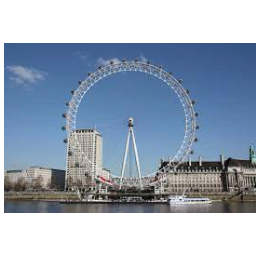
We were riding on the biggest Ferris wheel, and then went to the Madame Tussads` Museum that I wanted to visit. There I had the opportunity to be photographed with wax figures of celebrities and to go to the room of fear ...
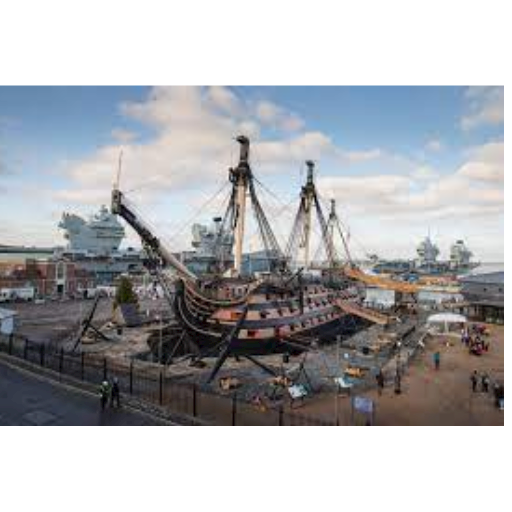
We visited the old museum ships, including the oldest and one of the most famous, the ship Victoria, on which Admiral Nelson has sailed. In Portsmouth, I visited the museum, consisting of a single ship, hauled from the ocean floor.

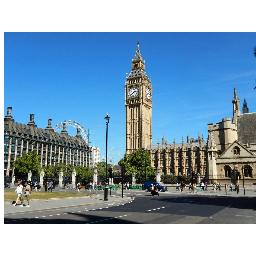
We visited Big Ben.
The Big Ben is the most popular landmark of Great Britain.
The official name of this building is the Elizabeth Tower but we know it as Big Ben.

The British Museum is one of the most popular in London.
It contains one of the richest collections of antiquities in the world. There is also one of the largest library in this museum.
London is one of the most beautiful cities. Everyone should visit it at least once in their life.I can say that this is my best trip!

London is an ancient name, already attested in the first century AD, usually in the Latinised form Londinium; for example, handwritten Roman tablets recovered in the city originating from AD 65/70–80 include the word Londinio ('in London').
Over the years, the name has attracted many mythically based explanations. The earliest attested appears in Geoffrey of Monmouth's Historia Regum Britanniae, written around 1136.
Modern scientific analyses of the name must account for the origins of the different forms found in early sources: Latin (usually Londinium), Old English (usually Lunden), and Welsh (usually Llundein), with reference to the known developments over time of sounds in those different languages. It is agreed that the name came into these languages from Common Brythonic; recent work tends to reconstruct the lost Celtic form of the name as *Londonjon or something similar. This was adapted into Latin as Londinium and borrowed into Old English.
The toponymy of the Common Brythonic form is debated. Prominent was Richard Coates' 1998 argument that it derived from pre-Celtic Old European *(p)lowonida, meaning "river too wide to ford". Coates suggested this was a name given to the part of the River Thames that flows through London, from which the settlement gained the Celtic form of its name, *Lowonidonjon. However, most work has accepted a plain Celtic origin. Recent studies favour an explanation of a Celtic derivative of a Proto-Indo-European root *lend- ('sink, cause to sink'), combined with the Celtic suffix *-injo- or *-onjo- (used to form place-names). Peter Schrijver has specifically suggested that the name originally meant "place that floods (periodically, tidally)".
Until 1889, the name "London" applied officially only to the City of London, but since then it has also referred to the County of London and to Greater London.
In writing, "London" is occasionally contracted to "LDN". Such usage originated in SMS language and often appears in a social media user profile, suffixing an alias or handle.

- Full access to our public library
- Save favorite books
- Interact with authors

- < BEGINNING
- END >
-
DOWNLOAD
-
LIKE
-
COMMENT()
-
SHARE
-
SAVE
-
BUY THIS BOOK
(from $2.99+) -
BUY THIS BOOK
(from $2.99+) - DOWNLOAD
- LIKE
- COMMENT ()
- SHARE
- SAVE
- Report
-
BUY
-
LIKE
-
COMMENT()
-
SHARE
- Excessive Violence
- Harassment
- Offensive Pictures
- Spelling & Grammar Errors
- Unfinished
- Other Problem

COMMENTS
Click 'X' to report any negative comments. Thanks!