A collaborative e-book in our Etwinning project
"KNOWING ME, KNOWING YOU"

ISAAC NEWTON
(1643-1727)
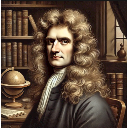
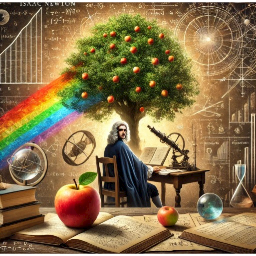
Isaac Newton is one of the most important scientists who laid the foundations of modern science. He was an English physicist, mathematician, astronomer, philosopher and inventor. Among his contributions to science, the following stand out:
Law of Gravitation: Newton developed the concept of gravity and formulated the Universal Law of Gravitation, which explains how this force affects the motion of the planets.
Laws of Motion: Newton laid the foundations of classical mechanics by developing the three laws of motion (inertia, force-acceleration, action-reaction).
Works on Optics: He discovered that white light was separated into colored light with the help of a prism, providing important information about the nature of light.
Mathematics: He developed the field of Calculus (derivative and integral calculation).
Mathematical Principles of Natural Philosophy, published in 1687, is considered one of the cornerstones of modern physics and mathematics. Newton's work revolutionized the explanation of the functioning of the universe and greatly contributed to the development of modern science.
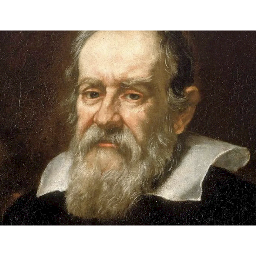
GALILEO GALILEI
Galileo Galilei was a famous scientist, astronomer, and mathematician born on February 15, 1564, in Pisa, Italy. He is often called the "Father of Modern Science" because of his many contributions to physics and astronomy.
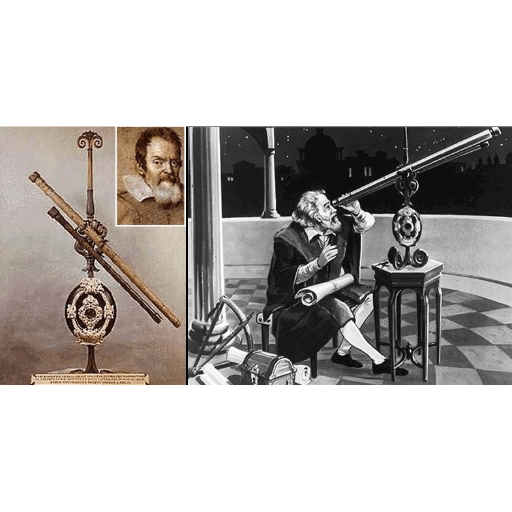
Galileo invented a telescope that allowed him to observe the skies in more detail than ever before. Using his telescope, he discovered the moons of Jupiter, the phases of Venus, and mountains on the Moon. These discoveries supported the idea that the Sun, not the Earth, is at the center of the solar system, a theory first proposed by Nicolaus Copernicus.
He also studied how objects fall and proved that they fall at the same rate regardless of their weight. Galileo’s work challenged the beliefs of his time, and he was put on trial by the Catholic Church for supporting the heliocentric model. Despite this, his discoveries changed the way people understood the universe.
Galileo died on January 8, 1642, but his ideas continue to inspire scientists around the world.
ARISTOTLE
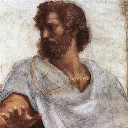
Aristotle (384–322 BCE) was a Greek philosopher who loved learning about the world. He was a student of Plato and later taught Alexander the Great. Aristotle studied many things, like how people live, how governments work, and how plants and animals grow. He started a school called the Lyceum in Athens, where he and his students explored all kinds of ideas. His writings and ideas are still important today because they help us understand life, science, and how to think clearly.
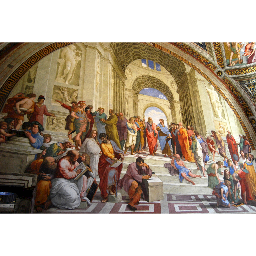
Here are a few examples of why Aristotle is so popular:
Logic: Aristotle developed the first formal system of logic, known as syllogism, which is a way to structure arguments. For example:
Science and Astronomy: Although some of his scientific ideas were later proven wrong (like believing the Earth was the center of the universe), his methods of observing and questioning nature were groundbreaking for his time. And many more.
Aristotle’s curiosity and systematic thinking made him a key figure in shaping knowledge and understanding for centuries.
CHARLES DARWIN
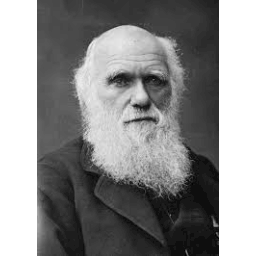
Charles Darwin was born in Shrewsbury, England on 12th February, 1809.
This means that he was born over 200 years ago in a small town in England!
He went on to become a famous scientist and his work is still studied today.
Darwin was a naturalist, biologist and geologist, which means he studied the natural world.
Naturalists study plants, animals and other living things.
Biologists study living things and the way they interact with each other and their environment.
Geologists study the Earth, its history and its structure.
He was interested in learning about all of these things!
Charles Darwin was a scientist who lived a long time ago.
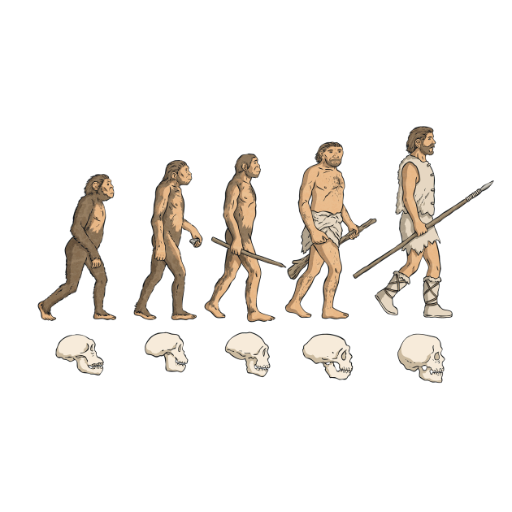
He studied the natural world and came up with a theory that explained how living things have changed over time.
His theory of evolution was a revolutionary idea that explained how living things have changed and adapted over millions of years.
His theory is still an important part of science today.
Charles Darwin spent 20 years to publish On the Origin of Species because he wanted to make sure he had enough evidence to support his theory of evolution.
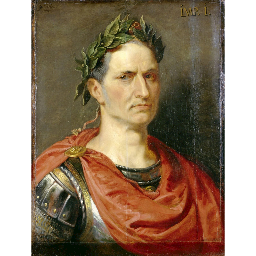
JULIUS CESAR
JULIUS CAESAR
Julius Caesar was one of the most famous leaders of the Roman Empire. He was born in 100 BC in Rome and died in 44 BC. He is known as a powerful commander, politician, and writer.
Caesar is famous for his military achievements. He expanded the Roman Empire by conquering Gaul (modern-day France). He also led the first military expeditions to Britain.
In politics, he was very influential. He gained power against the Senate and started a civil war by marching into Rome with his army in 49 BC. Later, he was declared a dictator. Caesar made significant changes to Rome's government, laying the foundation for the Roman Empire.
However, Caesar's growing power disturbed his enemies. In 44 BC, he was assassinated by his rivals in the Senate. One of his most famous quotes is “Et tu, Brute?” ("You too, Brutus?"), which he is said to have spoken during the attack.
Julius Caesar was a key figure who changed both Roman and world history. His life and leadership have inspired many literary works and historical studies.
JULIUS CESAR
Emine KAYA TEAM İstanbulluoğlu Social Sciences High School Balıkesir-TÜRKİYE
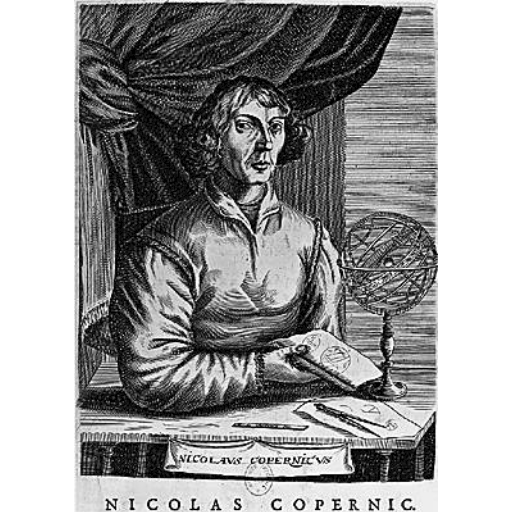
NICOLAS COPERNICUS
Nicolaus Copernicus was a Polish astronomer and mathematician known as the father of modern astronomy. He was the first European scientist to propose that Earth and other planets revolve around the sun, the heliocentric theory of the solar system.
He was born on February 19, 1473 in Torun, a city in north-central Poland on the Vistula River.
Copernicus delayed publication of his major astronomical work, De revolutionibus orbium coelestium libri vi, or “On the Revolutions of the Heavenly Spheres,” nearly all his life. Completed around 1530, it was not published until 1543 — the year of his death.
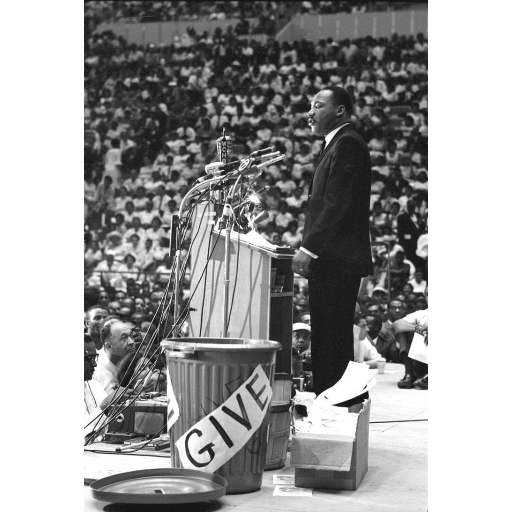
MARTIN LUTHER KING


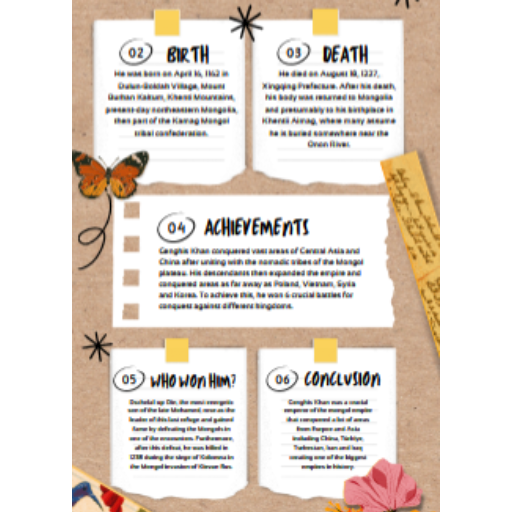
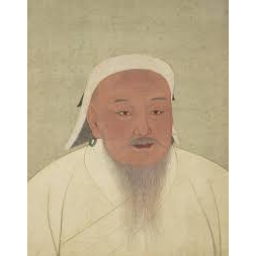
GENGIS KHAN

Rubén (SPAIN)
GEORGE WASHINGTON
George Washington (1732-1799) was the first president of the United States and a key figure in American history. Born in Virginia, he gained military experience during the French and Indian War before becoming commander of the Continental Army during the American Revolutionary War (1775-1783). He led the colonies to victory against Britain, culminating in the surrender at Yorktown in 1781.

In 1787, he presided over the Constitutional Convention, contributing to the drafting of the Constitution.
Elected as the first president in 1789, he served two terms, establishing important precedents such as neutrality in foreign affairs and the limitation of presidential power. He voluntarily retired in 1797 and spent his final years at his Mount Vernon estate, where he died in 1799. He is remembered as the "Father of the Nation" for his critical role in the founding of the United States.
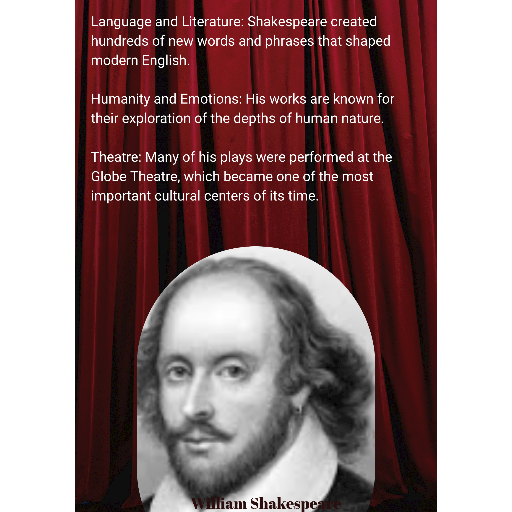
WILLIAM SHAKESPEAR (1564-1616)
He is considered one of the greatest and most influential writers in English literature. Born in Stratford-upon-Avon and living in London, Shakespeare left a great legacy as both a playwright and a poet.
His works:
Tragedies: Hamlet, Othello, Macbeth, Romeo and Juliet, King Lear.
Comedies: A Midsummer Night's Dream, Twelfth Night, The Taming of the Shrew, The Merchant of Venice.
Historical Plays: Henry V, Richard III, Julius Caesar.
Poems: His work Sonnets contains 154 poems and deals with universal themes such as love, time, and immortality.
ALEXANDER THE GREAT
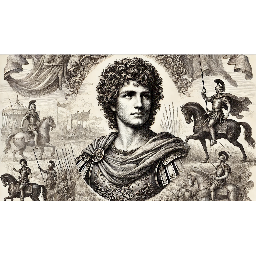
Alexander the Great, born in 356 BCE in Pella, the capital of the Kingdom of Macedonia, was one of history’s most famous military leaders and kings. He was the son of King Philip II and Queen Olympias. From a young age, Alexander was tutored by the philosopher Aristotle, who taught him subjects like philosophy, science, and literature, shaping his brilliant mind.
At the age of 20, Alexander became king after his father was assassinated. He quickly united the Greek city-states and set out on an ambitious campaign to conquer the Persian Empire. Over 11 years, Alexander led his army through modern-day Turkey, Egypt, and as far east as India, creating one of the largest empires in the ancient world.
Alexander was not only a skilled warrior but also a visionary. He founded over 20 cities, many named Alexandria, spreading Greek culture and ideas. This blend of Greek and local traditions became known as Hellenistic culture. Despite his success, Alexander's life was cut short when he died in 323 BCE at the age of 32 in Babylon. The cause of his death is still debated, with theories ranging from illness to poisoning.
Alexander the Great's legacy lives on as a symbol of ambition, leadership, and the quest for greatness.
India, creating one of the largest empires in the ancient world.
Alexander was not only a skilled warrior but also a visionary. He founded over 20 cities, many named Alexandria, spreading Greek culture and ideas. This blend of Greek and local traditions became known as Hellenistic culture. Despite his success, Alexander's life was cut short when he died in 323 BCE at the age of 32 in Babylon. The cause of his death is still debated, with theories ranging from illness to poisoning.
Alexander the Great's legacy lives on as a symbol of ambition, leadership, and the quest for greatness.
THOMAS EDISON
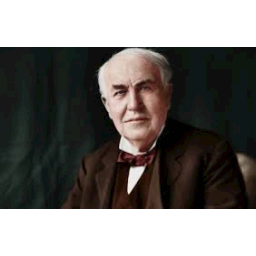
Thomas Edison (1847–1931) was an American inventor, businessman, and one of the most prolific inventors in history. Renowned for his prolific inventiveness, Edison held over 1,000 patents, covering various technologies that touched almost every aspect of daily life. Often referred to as the "Wizard of Menlo Park," he established the world's first industrial research laboratory and played a pivotal role in shaping the landscape of modern technology.
He made a breakthrough in October 1879 with a bulb that used a platinum filament, and in the summer of 1880 hit on carbonized bamboo as a viable alternative for the filament, which proved to be the key to a long-lasting and affordable light bulb. In 1881, he set up an electric light company in Newark, and the following year moved his family (which by now included three children) to New York.
NELSON MANDELA
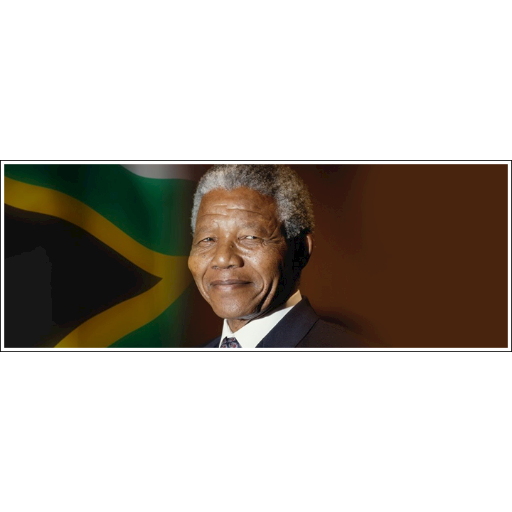
Nelson Mandela’s birth name was Rolihlahla Mandela, which means “to pull a branch off a tree” and “troublemaker” in his Xhosa tribe. He was given the name Nelson by his primary school teacher when he was seven years old. It was the 1920s and African children were given English names so that colonial masters could pronounce them easily.
Nelson Mandela spent nearly 27 years of his life in jail. He spent 18 years of his imprisonment on Robben Island, during which he was allowed to meet his wife once every six months. Today, there are Robben Island Tours to see Mandela’s jail cell.
Nelson Mandela and F.W. de Klerk were jointly awarded the Nobel Prize for Peace in 1993, “for their work for the peaceful termination of the apartheid regime, and for laying the foundations for a new democratic South Africa.”
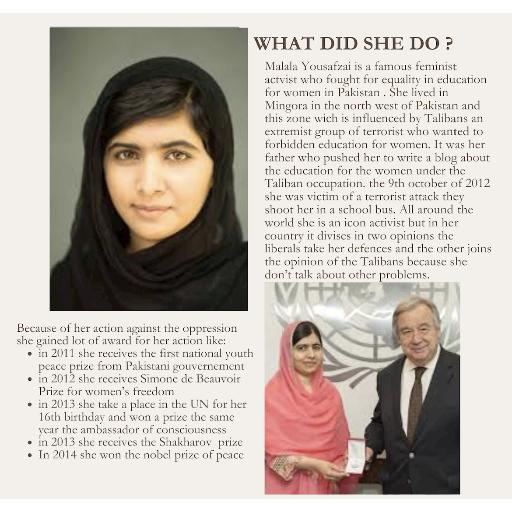
MALALA YOUSAFZAI

ROSA PARKS
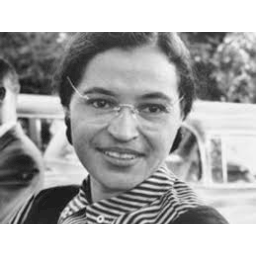
Rosa Parks(Human rights defender) was born on February 4, 1913, in Alabama, USA.
She joined the American Civil Rights movement in 1943.She was the person who initiated the subsequent movement by taking a stand against discrimination against black people in the state of Alabama in 1955.
Parks died on October 24, 2005, at the age of 92, in his apartment on the east side of Detroit.
Emine KAYA Team İstanbulluoğlu Social Sciences High School Balıkesir Türkiye
ROSA PARKS
EMMELINE PANKHURST
- Full access to our public library
- Save favorite books
- Interact with authors
THE END


- < BEGINNING
- END >
-
DOWNLOAD
-
LIKE
-
COMMENT()
-
SHARE
-
SAVE
-
BUY THIS BOOK
(from $9.99+) -
BUY THIS BOOK
(from $9.99+) - DOWNLOAD
- LIKE
- COMMENT ()
- SHARE
- SAVE
- Report
-
BUY
-
LIKE
-
COMMENT()
-
SHARE
- Excessive Violence
- Harassment
- Offensive Pictures
- Spelling & Grammar Errors
- Unfinished
- Other Problem





COMMENTS
Click 'X' to report any negative comments. Thanks!