

Acknowledgements
This e-book could not reach where it did without the contributions of these people to whom members of the organising committee would like to express their sincere gratitude. So, special thanks to all the participants including student speakers, teacher coordinators, teacher speakers, guest speakers and also guest writers. Thank you all for your valuable contribution. Words cannot suffice to express how much great work they have done for the achievement of such international conference.
Introduction
It is commonly known that the concept of emotional intelligence was introduced by Peter Salovey and John D. Mayer in the 1990s and then it was launched to the public by Daniel Goleman. Therefore, emotional intelligence becomes one of the most controversial topics in the last few years. In the same sense, this e-book tends to shed the light on this topic via collecting the different views and approaches which are shared by educators, researches and students in an international conference held on 9, 10, and 11 June 2022.
Table of contents
Acknowledgements.
Introduction.
Part one: An introduction to the conference.
Part two: Viewpoints.
Part three: Analysis and reflections.
Part four: EI glossary and partner institutions.
Conclusion.
Appendix.
Emotional Intelligence for teachers and learners
Part One
An introduction to the conference
Guest Speaker.
There are speakers from different domains and they belong to different countries around the world. Educators, researchers, writers, and international speakers are invited to participate in the conference. Everyone of them expresses his or her own views and perspectives about a specific point that is related to emotional intelligence. Meantime, their reflection on the students' theoritical account and the teachers' experiences about emotional intelligence is of great importance too.
Guest Writer.
There is a collection of articles, quotes and opinions written by people from different countries around the world. This informative account of these people is taken into analysis and discussion in order to come up with a full-fledged explanation to how people think of emotional intelligence as well as to what extent the skills of emotional intelligence are developed or acquired by people.
The target topics
For the student speaker.
1- A glance at the history of emotional intelligence.
- The history of emotional intelligence
- Understanding the meaning of emotional intelligence.
- Discussing the domains of emotional intelligence.
2- Benefits of learning emotional intelligence.
- For individuals.
- Self-awareness.
- Self-regulation.
- Self-motivation.
- For society.
- Social awareness.
- Social skills.
3- Utilizing emotional intelligence.
- In our relationships.
- In our work or study.
- In our way of thinking.
4- Developing emotional intelligence.
- Learn how to communicate your opinions and needs.
- Learn how to be calm in stressful situations.
- Learn how to respond by listening and understanding before responding.
- Learn how to take initiative, make a decision and solve your problems.
- Learn how to use non-verbal communication skills for a positive presence.
For the teacher speaker.
- How emotional intelligence promotes leadership at school.
- How emotional intelligence helps teachers to succeed in the classroom.
- How emotional intelligence helps teachers to handle stress.
- How emotional intelligence helps teachers to prepare good lesson plans and proceed successfully in the textbook content.
For the guest speaker.
1 - How can emotional intelligence lead to constructive thinking?
2- How can students develop their emotional intelligence by studying history and archaeology?
3- How can emotional intelligence help you to recover from failure and avoid loss?
4- How can emotional intelligence develop your leadership and affect your health?
5- How can emotional intelligence develop your teaching skills?
6- How can emotional intelligence develop your learning skills?
7- How can emotional intelligence be used in peace building process?
8- How can emotional intelligence develop your knowledge acquisition?
9- How can emotional intelligence be beneficial for inclusive education practices?
10- How can emotional intelligence be used for better communication with people?
11- How can emotional intelligence develop your leadership?
12- How can emotional intelligence represent a challenge of the twenty first century?
Part Two
Viewpoints
from the USA
Academic Advisor & Professor at Defense Language Institute - Washington Office
National Foreign Language Center, University of Maryland
Former lecturer at Graduate School of Education, University of Pennsylvania
Former Assistant Professor at University of Maryland
Former Visiting Assistant Professor at Wake Forest University
Former Lead Instructor at Middlebury College, The Chinese School
Former Assistant Professor at University of Oregon
Former Principal Instructor, first-level Chinese at Indiana University, East Asian Summer Language Institute.


"The two-plus years of pandemic, and consequent required adjustments to our teaching and our learners' pedagogical practices, has tested the emotional intelligence of all of us. Whatever the "new normal" will be will reflect that emotional paradigm shift."
Hisnindarsyah
from Indonesia
Lecturer, researcher and Senior Maritime and Hyperbaric consultant.
Founder Center of indonesia Hyperbaric Community
Doctor - Medical Faculty of Hasanuddin University
Post-Graduate of Medical Faculty of Airlangga University
Magister of Law Faculty of Patimura Unuversity
Doctorate degree of STIESIA Surabaya
Fellowship program Emergency Universiti Sains Malaysia( USM)
Fellowship program Maritime Medicine and Hyperbaric, Japan.
Certificat pandemic Control Management from Hawaii National Guard USA

"Forgive other people's mistakes and believe that it will let them grow. Revoke your hatred as it will show how wise and mature you can be. Both of them reveal the power of your emotional intelligence."
TEDx Speaker at Tedxvce.
Co Founder at MENTORx.
Founder & CEO at Revup Life Skills Unit.
Works at The Global Library of Female Authors.
Works at Global Youth Peace Ambassadors Programme.
Global Chairperson at MENTORx Women.
National Child & Woman Development Council.
Global Advisory Board, Education at MSME CCII.
Mentor at Indiamentor and School Of learning.

from India
"Our body is precious, as it houses our mind and spirit. Let us choose inner peace by understanding ourselves and others. Moreover, we create our destiny from our everyday emotions. So, master your emotions to master your life."
Former Director, Foundation Program at Gulf University. for Science and Technology.
Former English Teacher at Gulf University for Science. and Technology (Kuwait).
Studied at Lehigh University.
Studied M.B.A at University of Miami.
Went to Kenmore West Senior High School.
A PD specialist supporting teachers globally.

"To ensure that we feel a sense of professional belonging at work, we need to have the emotional intelligence characteristics of self-awareness, self-regulation, motivation, and empathy. We also need others to support our learning and our professional journey by collaborating and celebrating with us as well as validating our work and effort. This is how we can help each person on our team to feel included and valued for their work."

Sacha Kaluri
from Australia
The CEO of The Motivational Company.
Director of the Australian Teenage Expo.
Hosting and producing a ratings high TV show,
Having a weekly radio program and a podcast.
Having a column writer for 108-top regarded Australian newspaper.
Wrote a book for parents - The Two Worlds Of Your Teenager.
2017 and 2018 Sacha was the Official Australian Ambassador for the New York United Nations Women’s Entrepreneurship Day.
2019 Sacha was voted the Australia’s Top 50 Business Leaders Award.
Live on radio each week on LIVEFM.
"Understanding emotional intelligence is a fundamental tool to ensure your success in business, education and employment. Figuring out how this can work best for you and your constructive thinking is all about knowing yourself and what methods of thinking are the best work for you."

Von Eric Tandoc
from Canada
Speaker, Facilitator, Author, Mindfulness and Gratefulness Expert.
Distinguished Toastmaster at Toastmasters International.
Coordinator and Facilitator at Toastmasters Youth Leadership Program.
Past Division B Director at District 99 Toastmasters.
Past Area Director at District 99 Toastmasters.
Past President and Club President at Drayton Valley Derrick Toastmasters Club.
Works at District 99 Toastmasters.
Former Manager at McDonald's.
"Emotional intelligence (EQ, for short) is the ability to understand and manage emotional behavior. This ability allows you to keep your thoughts, emotions, and feelings in balance, so they aid you to successfully reach your goals, instead of hindering you from achieving them. This is why I like to describe EQ as making emotions work for you, instead of being against you."
Denise Fernandes
from the USA
Director of Women Economic Forum New Jersey 2023.
Latina Voice Co- Chair and Latino Advisory - Community Engagement Co-Chair.
Member of White House Hispanic Prosperity Initiative.
Portugal Country Chair and President at The Fernandes Initiative.
Honorary Life Member- WEF and All Ladies League Woman Economic Forum.
Honorary Doctorate Degree - Honoris Causa in Governance and Leadership.
Executive Director at La VIA Al EXITO and Union County Fatherhood Initiative Coalition –Advisor. CAU -Interfaith Latino Outreach -Union County.
Member -Under President Obama at White House.
Community Organizer at All On The Line.

"Emotional intelligence is divided into self-awareness, social awareness, self-management and relationship management. It is a way of recognizing, understanding and choosing how we think, feel and act. Therefore, it shapes our interactions with others and our understanding of ourselves as well. Meantime, it defines how and what we learn."
from France
Ambassador at Large International Human Rights Commission
PRO-Chancellor at RCST Rockfield College of Sciences and Technology
President in charge of the General Planning and EU at ADN
"Emotional Intelligence takes shape when wisdom abolishes vicious intelligence"
Henny Wirawan
from Indonesia

Founder, Director, and Senior Facilitator of Meliora Consulting and Learning Academy.
Certified Trainer of Cognitive Behavioral and Client-Centered Therapy.
Directive Communication International Gold Level Certified Corporate Trainer and Consultant.
Holistic wellness coach, counselor, and psychotherapist.
Positive parenting and educating counsellor.
Women advancement and empowering specialist.
Assessor and evaluator in Human Resources: organizational and educational settings.
Former associate professor at Tarumanagara University.
Former Dean of the Faculty of Psychology Tarumanagara University.
Tips for Enhancing Students’ Emotional Intelligence
The term "emotional intelligence" has been in use since 1964; however, it wasn't until 1995 that the best-selling book written by Daniel Goleman brought it to the forefront. A wide variety of sources provide us with explanations of what emotional intelligence is and how it can be measured (Goleman, 1995, 1998; Salovey& Mayer, 1990; Mayer, Salovey, & Caruso, 2004). To put it another way, emotional intelligence refers to a person's capacity to exert control over his or her feelings to navigate social situations successfully.
According to the findings of several studies, emotional intelligence has a positive correlation with mental health. In the workplace, they are also better able to demonstrate work performance and more effectively carry out leadership functions.
Students who possessed a higher level of emotional intelligence not only scored higher on standardized tests but also did better academically overall.
Given that the field of education is the focal point for shaping attitudes and behaviours so that individuals can function more effectively in social settings, educators should make the development and improvement of emotional intelligence a top priority.
This is because the field of education is the focal point for shaping attitudes and behaviors. The most beneficial type of education, on the other hand, is one that covers a wide range of topics, including academic knowledge, behavioral skills, attitude maturity, social skills, and other personal qualities.
The purpose of this article is to provide educators with a variety of actionable strategies that they can use to assist their students in developing higher levels of emotional intelligence.
To get started, teach students how to recognize and name their feelings. Before individuals can learn to control their feelings, they must first be able to recognize what those feelings are: how they are reacting to different events that have occurred in their life. They must be aware that there are tens to hundreds of different names for feelings and that these names can change depending on the circumstances of one's life. Positive feelings (happiness, joy, excitement, calmness, and peace) and negative feelings (sad, worried, disappointed, afraid, jealous, disgusted, angry, rage) coexist in the human experience.
Consequently, teaching young children the names of different emotions at a young age is extremely important. Additionally, they must acknowledge that the feelings they are experiencing are natural and deserve of being validated.
Second, students need to understand that there are a variety of ways in which they can communicate their feelings, including being assertive, being passive, or being aggressive, and that each of these ways has repercussions. Conversations between educators and students, accompanied by illustrations from the outside world, will be of great assistance in the process of communicating the significance of this information.
Third, students should be taught how to control their feelings when they are confronted with challenges or difficulties, whether they are experiencing boredom while studying or completing assignments, or anxiety when taking exams. The cultivation of students' emotional intelligence can also be accomplished through the practices of mindfulness and meditation.
Fourth, build up a sense of self-awareness. Remind the students that they are unique individuals. Everyone has their own set of advantages and disadvantages. They need to acknowledge and make use of their strengths, while also making efforts to overcome their weaknesses. They must have life standards and goals, as well as the bravery to grow and improve because of their errors and setbacks. In addition, as individuals who come from a specific cultural background, they have the responsibility of learning to appreciate the positive aspects of their own culture. Their capability in this area will be improved if they keep a journal or diary in which they record the lessons they have learned.
Fifth, teach students to have empathy for others. Students will be better able to empathize with others
after participating in activities that increase their self-awareness. Students will have a much easier time understanding that they are comparable to other people if they keep in mind that they, like other people, have weaknesses and restrictions. It was enough for them to understand that other people had flaws and that those flaws could be compensated for by working together.
Sixth, create a helping and supporting the environment in which the behaviors will be rewarded in some way. Students who actively contribute to the improvement of their social environment through positive words or actions should be awarded additional credit. In addition, to navigate cultural diversity effectively, individuals’ emotional intelligence needs to include respect not only for themselves but also for others.
Seventh, you will need to establish a setting that has positive boundaries. Students need to understand that while developing relationships with one another is
important and necessary, they must also respect one another's personal space. When the time comes, it is time to give other people space to work on their matters without being excessively criticized or gossiped about. It is also time to stop talking about other people behind their backs.
Eighth, practice effective communication. The process of sending and receiving messages to foster mutual understanding and productive cooperation is what we mean when we talk about communication. Students will eventually develop into fully formed adults who are required to negotiate with a variety of parties and even resolve conflicts. Because they have spent so much time in school, they have had a wealth of opportunities to hone their communication skills, which will enable them to articulate their brilliant ideas with self-assurance and a sense of maturity. In addition, they will be taught to take into consideration the viewpoints or criticisms
expressed by others and to respond constructively, regardless of the possibility that their perspectives and interests may differ from those of others.
Ninth, get in the habit of taking responsibility for their actions and decisions. Encourage students to complete their assignments in a responsible manner that sets an example for the rest of the class. In addition to this, they need to get some practice making decisions after considering several different options and aspects. In the end, responsibility is a crucial adult value that needs to be instilled in children at a young age.
Tenth, be a model for others to follow. Putting what one has learned into practice is the most effective way to further one's education. In addition, students can more readily internalize the lesson and put it into practice in their everyday lives if the instructor acts as an honest role model for the topics that are being covered in class.
Further readings:
Goleman, D. (1995). Emotional intelligence: Why it can matter more than IQ. New York: Bantam Books.
Goleman, D. (1998). Working with emotional intelligence. New York: Bantam Books.
Mayer J. D., Salovey P., Caruso, D. R. (July 2004). "Emotional intelligence: Theory, findings, and implications". Psychological Inquiry. 15 (3): 197-215. doi:10.1207/s15327965pli1503_02. S2CID 144415437.
Salovey, P., & Mayer, J. D. (1990).Emotional intelligence. Imagination, Cognition, and Personality, 9(3), 185–211.
Salovey, P., Brackett, M. A., & Mayer, J. D. (Eds.) (2004). Emotional intelligence: Key readings on the Mayer and Salovey model Port Chester, NY: Dude Press.
Salovey, P., &Sluyter, D. (Eds.) (1997). Emotional development and emotional intelligence: Implications for educators. New York: Basic Books.

Shary Williamson
from the USA
Lifetime educator, author & inspirational speaker
Do you feel that your life is missing something? Are you thinking you have not become the best version of you? Or do you instinctively know that an even more amazing life is within your grasp, but you aren’t sure how to get to it?
Look no further. As you are trying to become the person you were born to be, everyday can and should be filled with confidence, fulfillment, impact, purpose and joy. There are so many revealing truths behind the power of EQ (Emotional Intelligence).
Just for starters, emotional intelligence (EQ) is the number one predictor of professional success and personal excellence. It is at the core of life. The EQ skills are necessary for you to exceed your goals and achieve your fullest potential.
Research convincingly shows us that EQ is more important than IQ in almost every role and many times more important in leadership roles.
Not education. Not experience. Not knowledge. Not IQ. None of these serves as an adequate predictor as to why one person moves forward in life and another doesn't. But there is an indicator of why that happens. It’s called EQ and its power cannot be denied.
What is it exactly? This is your ability to recognize and understand emotions in yourself and others and your ability to use this awareness to manage your behaviour and relationships. A bonus is that it definitely is a skill that can be learned.
The study of EQ offers effective tools for helping us manage, adapt and get ahead. The skills include the study of: self-awareness, self-management, social awareness and relationship management.
Whether it is to strengthen your relationships, improve your work-life or have more effective face-to-face communication, your EQ will be a critical determinant of your ultimate success or failure.
Your self-awareness lifetime journey in ongoing. Embrace this EQ opportunity to learn something very important about yourself. The time is now to become the best version of you.
Armen Kassabian
the USA

TESOL International Coach
ABSTRACT
This article highlights the role and importance of Social and Emotional Intelligence in the Classroom. It also reveals three methodological approaches teachers can take to support and enhance their students' social and emotional intelligence skills.
Keyword: education, communication, emotional intelligence, social and emotional intelligence.
The need for teaching social and emotional intelligence skills to students is of paramount importance. Educators around the world teach students academic skills, but the majority of schools do not have formal programs to teach social and emotional intelligence to students. This may be because of a lack of funding, time in the curriculum or belief that such softer skills will not benefit students' professional and academic lives in the future. However, this is an erroneous perception.
My name is Armen Kassabian. I have been working as a teacher of English to speakers of other languages and teacher training for the past 14 years. I have personally witnessed that schools that teach students social and emotional skills, give students the skills to make the world a better place, as they equally care about their academic development as well as their relationships with peers and to their emotions.
According to Roger Weissberg, who wrote an article titled, “Why Social and Emotional Learning is Essential for Students,” he outlines some of the benefits for students:
Students are often taught that success is primarily based on individual academic success. This leaves an underlying assumption of focusing more on oneself than working collaboratively or to learn the skills of how to show care for others. However, the skills of social and emotional intelligence can be taught in even simple ways in our classes, to mitigate the challenges young people are facing around the world.
Weissberg goes on to explain that “our focus in teaching should be on the kids: seeking to teach them skills such as anger management, cooperation, and negotiation. The other focus is on the classroom, to see if changes in its atmosphere can improve students’ chances of acquiring these and other important social skills.”
This article will give three simple suggestions teachers can use in their classrooms to have a more socially and emotionally intelligent approach built into the daily routines of students.
Daily routines to help students connect with themselves
Routines are what create successful classrooms, with authentic student to student and student to teacher interaction. From the first day of school, teachers should decide the routines that they want to use in their classroom and how long they want each routine to be. Routines can have both mental, emotional, physical and academic benefits. Having these intentions clear from the beginning of our academic year, creates a sense of regularity in how teachers teach and what students are expected to do, say and feel each day in your class.
Routines I have used in my high school classes often involve some amount of mindful movement and breathing to release tension, time to share feelings and teach students words to better name whatever they are feeling. In addition, teachers can include a quote, uplifting chant or daily reflection questions, which relates both to the class theme and to their students' lives. This takes a degree of creative thinking on the behalf of the teacher, since they must teach students how to think more
holistically about learning. This gives students a sense that learning in the classroom is not divorced from real life, but intricately interconnected with life lessons as well. What we teach our students can help them become happier, healthier, more self-reflective and smarter citizens.
By creating a short time for students to express their emotions and personality during a lesson, they can build a sense of trust and create a culture of acceptance, support and safety. Each student comes with their own emotional baggage and perceptions, and this cannot be ignored in any classroom no matter how hard educators only want to teach the materials. Teachers can not only teach their subject area, but can also teach students how to better regulate themselves and relate to their classmates in more compassionate ways.
A Safe Space for Students to Connect with One Another
In the United States, Americans live in a country that faces
the hreat of danger in regards to school shootings. We teach our students to prepare not only for their school subjects and fire drills, but also to hide in the corner of the room, close shades and lock doors to remain safe, if faced with an active shooter. According to the Gun Violence Archive, an independent data collection organization, The U.S. ended 2021 with 693 mass shootings. The year before saw 611. And 2019 had 417. It defines a mass shooting as an incident in which four or more people were shot or killed, excluding the shooter.
This degree of violence occurring in schools or certain communities in the United States, also occurs in many countries around the world. It may be related to domestic abuse, substance abuse in a family, racial or ethnic discrimination or other forms of violence that directly or indirecly impact our students’ lives.
Teachers must be sensitized to create a safe space of trust in each class, which allows students to not feel judged or
repressed when difficult emotions come up in class. When a student is acting in a way that we as teachers deem as inappropriate, it’s very possible that the young person is struggling and is in pain, and that behavior is a result of an internal or external struggle. This in no way justifies the behaviors that some young people may have in our classrooms, but it is important for educators to reflect not just on what our students do, but also ask why they do and say what they do in our classes.
Creating a circle time in your class can be a healing action to support students and to create a safe classroom space. In “Building Community With Restorative Circles'' Marieke van Woerkom describes “a technique for proactively building the skills and relationships students will need when challenges arise.” Circles teach students about how to use a talking piece, take turns listening to each other and speaking and responding to prompts. This can build the skills of students to relate better to each other and to create a supportive classroom environment.
Connecting with the World Through International Digital Exchanges
The need for students to also learn about and from students around the world, can also build their skills in intercultural communication. Students learn a lot when they can meet students from diverse backgrounds from around the world. Teachers can research safe ways for their students to do internatinal exchanges using secure forms of communciation. It is best to have studenst work in small breakout rooms and to discuss different topics that relate to their lives in some way. Teachers build stronger relationships with their students and teacher students to build international exchanges by engaging in this form of communication.
One English teacher named Lusine Jhangiryan, works in a school in Russia. She noticed that her studens were not regulary using English in the class, as they often used their first language and were not very motivated. When she began to have her students meet other students online, she noticed
their motivation and interest in English, becoming remarkable higher. She went on to participate in Kidlink, an online exchange to help studnest connect with each other around the world.
Another Educator named Kohei Nakashima, from the Toyota Minami High school in Japan, also created weekly meeting times for students around the world during Covid quarantine. Students seeing teachers who can talk about their students has a powerful impact on them as well. Such iniaitives by educators such as Kohei and Lusine, truly break down the barriors and perceptions we may have about people who are different from us. International digital exhcanges also build students' confidence in their public speaking as well as their ability to listen deeply to their peers. Students must learn from each other, take turns speaking and learn how to speak about a pleathora of subjects. One teacher's classroom truly becomes a microcosm for the world. By having teacher role models who teach students how to care about the world and learm about the realities of students on the other side of the globe, their studets begin to build their social and emotional awareness as well.
Conclusion
In this paper, the importance of social and emotinal intelligence has been shown to build educators' awareness and knowledge about the value of teaching such skills to their students. But of course, no teacher can teach a subject that they have not first internalized, practiced and learned themselves. By teaching students to connect to themselves, their peers and the world more deeply, teachers can create more caring classrooms that have a balanced approach to academic and emotional development.
Works Cited
Diaz, J. (2022, May 25). 27 school shootings have taken place so far this year. NPR. Retrieved May 31, 2022, from https://www.npr.org/2022/05/24/1101050970/2022-school-shootings-so-far
Weissberg, R. (2016, February 15). Why social and emotional learning is essential for students. Edutopia. Retrieved May 29, 2022, from https://www.edutopia.org/blog/why-sel-essential-for-students-weissberg-durlak-domitrovich-gullotta
Woerkom, M. van. (2018, March 12). Building community with restorative circles. Edutopia. Retrieved May 29, 2022, from https://www.edutopia.org/article/building-community-restorative-circles
Founder of The Principal’s Desk,
Published author and presenter at international education conferences.
CASEL and People Styles
Social Emotional Learning (SEL) is not a new concept in education. However, over the past several years, more attention is being placed on the wellbeing of both teachers and students. The global COVID-19 pandemic has put a spotlight on SEL and Emotional Intelligence (EI). Currently, the world is facing a massive teacher shortage and children are experiencing depression and anxiety at record levels.

David Franklin
From the USA
Georgetown University reports that even before the pandemic, anxiety and depression were becoming more common among children and adolescents, increasing 27 percent and 24 percent respectively from 2016 to 2019. By 2020, 5.6 million kids (9.2%) had been diagnosed with anxiety problems and 2.4 million (4.0%) had been diagnosed with depression.About 5 million kids also experienced behavior and conduct problems in 2020, a 21 percent increase from the previous year. Despite these increases in need, use of mental health care among children and adolescents did not increase over the five-year period. In 2020, only 80 percent of kids who needed counseling or other mental health services received mental health care services in the past year, a slight (but not statistically significant) decrease from the 82 percent who had gotten care in 2016 (Osorio, 2022).
In order to support both teachers and students, schools must employ the use of SEL and EI strategies. The CASEL Framework is the most comprehensive method of support that can help to cultivate skills in these areas. The CASEL Framework is broken down into five main focus areas: Self-Awareness, Self-Management, Responsible Decision-Making, Relationship Skills, and Social Awareness.
CASEL defines each of these areas in the following manner:
These five areas are then considered in four settings: classroom, schools, family home, and community. Explicit instruction and modeling in these areas are essential as children are struggling in these areas. It is also important for teachers and school leaders to model these competencies as stress is plaguing schools and teachers across the world.
Another important aspect of SEL and EI is to look at how we communicate as adults. People Style is a framework created to help adults recognize how they communicate with others and how others might want to be communicated with by them.
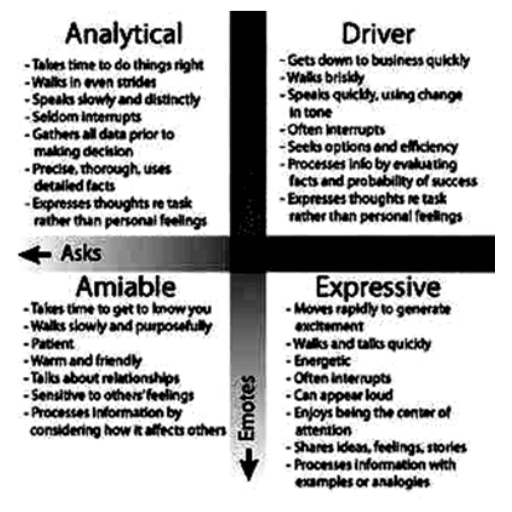
It is vital that teachers self identify with a primary and secondary People Style. Then, it is important that teachers identify the People Styles of their colleagues, families, and community members so that they can adjust how they communicate in order to meet the needs of the other party. This way, communication will be more fluid and productive.
from Egypt
English Instructor at The British University in Egypt.
Mentor at RELO Cairo.
PhD Candidate/Researcher at Ain Shams University.

"Regulating emotions is like driving a car, you have to be competent to reach your destination safely. Meantime, emotional literacy cracks a world of happiness."
Michael A. Dishnow
from the USA

Educator and researcher.
A representative of the Taiwan’s My Culture Connect Organization.
"We often speak about the importance of educational tools. One of them is Emotional Intelligence which tops the list. And its impact is obvious when we look at our own examples either in case we acted wisely or in case we acted foolishly."
Taiwe Parfait
From Cameroon
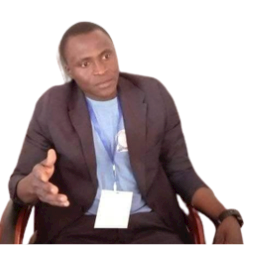
Researcher at Chronique du Droit Numérique et le Cyberespace
Promotor/CEO at EMI-enfant
Auditor at Réseau d'actions pour l'emploi et l'autonomisation des jeunes
Member at Association des Blogueurs du Cameroun
President/Founder at Actions sans limite pour le développement
Work at All India Human Rights Protection Commission
Blogger
"Emotional intelligence is shaped by our repeated experiences, and its benefits are evident at work. It is the ability to understand and manage our emotions, and it is the key to our businesses today."
Chief Strengthener at Onyinyechi Joy Nwosu - OJN
Executive Director at Vivacious Development Initiative
Works at Vivacious Teens Development Resources
Studied at University of Benin
from Nigeria

"Emotional intelligence provides support and protection for the mind, and enables optimal performance. It is to the mind, what the bones are to the body."
Assem Abdel Hamied Moussa
from Egypt
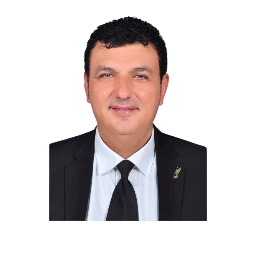
"Great leaders are people who could move us. They are those who have the ability to inspire, to motivate, and to energize the others. You can’t be a successful leader without much emotional intelligence."
Simonova Anastasia
from Russia
A PhD in history.
University lecturer and teacher.
Developer of electronic textbooks and educational platforms on history.
"knowledge of human society and the laws of its development is impossible without an important skill - emotional intelligence. It helps to better understand the actions of a person of the past, evaluate the present and form a person of the future. The most effective ways to teach emotional intelligence in the humanities is practice. Our practice of teaching emotional intelligence through archaeology. Students on an archaeological expedition gain professional skills as an archaeologist, and also begin to recognize and understand others, their feelings and actions."

Eng. Mireille Toulekima
from Australia

Emotional intelligence is becoming a key aspect to focus on in the education system worldwide. It is not just about IQ and academics anymore; Soft skills and EQ are key and essential for teachers and students. Today we live in a Volatile, Uncertain,
Complex and Ambiguous (VUCA) world where it is now imperative to understand the psycho-logic, develop empathic behaviourand in a way be more concerned with humans and their needs.
The VUCA world we live in requires that we make sure meaning and purpose take a central role in everything we do and that we are willing to engage in genuine cooperation.
We are also in the mist of the 4 industrial revolution which is an era that needs the skills of active listening, complex problem solving, critical thinking, ability to coordinate, people management, creativity and negotiation,all of which require a high level of emotional intelligence.
For teachers supporting the 4 industrial revolution and teaching in this VUCA environment we are in, Emotional Intelligence becomes a key enabler to create the best learning environment for students: an environment that is
safe, inclusive, stress, free and conducive to help each student express their uniqueness and unleash their special gifts to become the best that they can be and realize their full potential. Emotional Intelligence helps teachers face certain stressful situations in which their actions can impact the students’ learning and well-being. It helps them deal with the new educational challenges at hands and be in a position to manage their emotions for the best outcome for them and for their students.
For students, Emotional Intelligence is considered an important trait to attain success in the classroom and later in life.
It helps them become more confident learners as they can develop proficient communication skills, handle
themselves and their emotions efficiently, be able to connect with their teachers and classmates and better understand them. They develop a positive attitude to learning as a result and their academic performance is impacted positively.
Educational organisationsaround the world should acknowledge the importance of emotional intelligence and make sure thatschools across the world include courses that develop emotional intelligence as part of their curriculum for teachers and students.
Emotional Intelligence is very important for students and teachers to bring the best out them. It is key to guaranty a safe, inclusive, diverse, equal and stress free educational environment for the best results and performance for students and teachers.

Emmanuel Kolapo
from Nigeria
Deputy Head of School, Academics City of Knowledge Academy
Humans are not robots. They have spirit, soul, and body. A human has the part to be loved, understood, and also like to love others. They have emotions, and feelings, they like to be praised, cherished, and elevated while being motivated. Their spirits need to be lifted, their energy needs to be boosted. That is humans for you!
Teachers are human, and so are their students. The job of an educator is extremely important. She gathers about 20-25 different individuals with different attitudes, personalities, and home backgrounds in a room and needs to pass across information into their minds as they grow.
She does it every day, for weeks, months, and years and she sees them grow into mature adults. She molds them into what they love to become.
During her call of duty, she goes through lots of stress physically and emotionally. Sometimes the parents of her children use the wrong words toward her.
The management, most of the time, may not understand what she goes through but she goes on and on till the children turn out very well.
That is her joy. She has emotions too. She has feelings. She has a family, a husband to love and children to take care of.
Emotional management in teachers is extremely important. It prevents stress and helps them deal with complicated situations in the classroom without affecting the students.
This is why emotional intelligence is crucial to the teachers and the students alike.

Kamal Jabr
from Sweden
UNRWA HQ-Amman.
Studied at UNESCO.
Studied at Damascus University.
Studied Master's Degree in Management Information Systems.
Studies Master's degree in Education for Sustainable Development.
"Emotional intelligence is the essence of interrelated emotional and psychosocial competencies and skills which affect on the human’s behavior and wellbeing. It determines how well we understand ourselves and others.
Also how to cope with daily needs, interests, challenges, and pressures. Indeed, considering emotional intelligence in the classroom and school as an inclusive practice is so crucial to reach to all students in order to identify and respond to their needs and interests regardless of their age, sex, ability, disability, learning difficulties and social needs. Ultimately, reaching and achieving the students’ potential, requires understanding and acting to respond individually and collectively on inclusive mindset. Emotional intelligence is a base for belonging of students in their schools and communities and for humanity as a whole."

Jagat Mishra
from Canada
"Emotional Intelligence is a vital tool in peace building process. World wide the development work requires improved measures of level headedness in the policymaking and operational levels. The executives who are the implementers of the defined legislations need to be very calm and free of bias while serving the citizens.
The 2030 Agenda of United Nations Sustainable Development and Sustaining peace resolutions, such as General Assembly resolution 70/262 and Security Council resolution 2282 (2016), demonstrate the United Nations (UN) member states’ commitment to engage all stakeholders in development and peace building activities. It is very important to explore various ways and means to implement peace building and development, particularly concerning interactions with people on the ground.
The people-oriented approach calls for use of emotional intelligence (EI) in peace building process and development practitioners word-wide need to apply the EI principles in their work."

Santhosh Kumar
from India
Principal Director of English Club at Global Law Thinkers Society.
Former Assistant Professor of English at Dr.N.G.P. Arts and Science College.
PHD Scholar.
"Language is a vital tool in the contemporary times in making unknown things as known. It is a socio-political tool to convey things in a detailed manner. Thought process play a vital role in learning a language. Emotional Intelligence is a tool for expressing one's ability and emotions. EI and language learning go hand in hand because of thought process. If Language is said to be the heart then EI is said to be the brain which makes the human to be interactive so that things turn out to be proactive."
Hamdan Al Anazat
from Jordan
Former Assistant Professor in AL Balqa Applied University
Global educator and trainer.

"Leadership is how an individual influence others to achieve a goal. It is the combination of the efforts of everyone involved not only by the leader alone. Therefore, leaders, who are expected to have the ability to understand and manage moods and emotions in the self and others, need to know how to communicate, inspire, listen, dialogue, and motivate so as to contribute to effective leadership. Emotional Intelligence is visible in building positive relations and gaining emotional commitment of any goal."

Dragan Jovanov
from Macedonia
Works at Honorary Professor in Internationl Internship University
Assistant at Mit University Skopje.
Phytotherapist at Phytomedicine.
Research Associate at Fondacija Jovanova Danoila
Emotional intelligence is the ability of a person to successfully identify and successfully deal with their own emotions as well as the emotions of other people. Our behavior is largely conditioned by our emotions, so it is understandable how this type of intelligence plays an important role in every aspect of functioning, while at the same time being one of the most important factors that improve the chances of success - where needed.
Although this is a task that is not at all easy to achieve - given the chaotic order in which we are forced to exist, it is still a state to which it is wise to strive. There are huge benefits that can be applied to any important moment, situation or action - increased optimism, reduced guilt and conscience, increased self-confidence, improved communication, facilitated decision making, clear direction and plan to achieve your desires.

Colonel Prem Prakash
from India
Col PremPrakash, Sena Medal (Retd) from India
Group Director at CSKM
Qualified Interviewing Officer
Trained in Guidance and Career Counselling
Soft Skills Trainer
Trained in 21 Century Skills by British Council
Trained in Pedagogy Leadership by CBSE
Trained in Strategic Leadership Programme at IIMA
Trained in School Leadership Programme at IITD
Emotional Intelligence is about capacity to be aware of the self and others. And leadership at school is about managing individuals, teams and tasks within the institution and among the stakeholders. In fact, emotional competencies are more predominant than cognitive and technical skills at leadership levels especially among high performers.
While school leaders enable students to plan, prepare and perform after setting high goals, pedagogical leaders inspire students to be creative, problem solvers, independent learners and critical thinkers. Emotional Intelligence and Pedagogical Leadership are easily juxtaposed as both are about optimising results through positive relationships. As per research 80% of competencies including leadership are based on Emotional Intelligence. It is easily discernable that Pedagogical Leadership is promoted by EI.

"When teachers become mentors, they open the doors of knowledge and life. We all have memories of our teachers and remember those who have left an impact on us. For some, the teacher is good in her subject but for others, the teacher has encouraged and motivated us in many ways. We remember those words of our teachers as well as their positive attitude or friendly nature whatever it is- a teacher is remembered for
Prachee Gaur
from India
all that he or she has contributed in a student’s life in more than one way. The emotional connection between the teacher and the student is important as it stays forever. Although in a short period burdened with syllabi, a teacher has her limitations to interact with children at an emotional level. However, with little effort and sensitivity towards students’ emotional needs, the teacher can develop children of tomorrow with a positive outlook towards life.
The influence of a good teacher can never be erased. An emotionally intelligent teacher, a guide or a mentor can make our lives positive and happy truly enlightening us. "

Violeta Panev
from Macedonia
ICE Global Edu Leader Award and the Teacher of the year of MKD.
Wakelet Ambassador 2021
EU Climate Pact Ambassador 2021
Eminent and Distinguished Teacher Award - OOU Vlado Tasevski 2021
Mentor Teacher - Ministry of Education MKD
EL Teacher at Primary school Vlado Tasevski Skopje
Best Teacher Community Karposh 2021
ETC International Coordinator 2020 & 2021
International Researcher Award 2020-21
Best Teacher-Ex Yugoslavia Award 2019
Teacher of the Year Award 2018- 2019 by Ed. Association of Skopje, MKD
Teacher Champion 2014-2018 Sustainable Development Goals Project - UK
Certified National Geographic Educator 2020
ETC Global Environmental Teacher Award 2020
Educational work is the basis on which the values and value orientations of young people are adopted in parallel with the process of acquiring educational knowledge. In a
broader context, it encompasses all forms of upbringing, starting with the family, the school, and non-formal educational institutions and factors such as clubs, organizations, and the media. In a narrower sense, the educational work is incorporated in the teaching in the educational institutions which is not spontaneous but is formal, planned, intentional and expedient according to a given adopted plan and program within the school system.
When we talk about values, their encouragement, learning, internalization in everyday practice, it is necessary to talk about the term Emotional Intelligence (EI) which is a fertile ground for their growth and maturation and was first elaborated concept by Daniel Goleman, an expert of personality development.
In keeping with the theoretical models for achieving happiness, harmony, and success in the life(Seligman, Dvek &Chicksenmihail), the emotional intelligence is preferred as primary and all-encompassing in the activities of one's life in achieving personal happiness, good relationship with loved ones and friends. In addition, this concept offers solutions to problems in upbringing, education, organization and the community in general.
"Emotional Intelligence" scientifically and convincingly explains the emotional architecture of the brain and shaping the emotional habits of our children, acquiring a talent for self-regulation of emotions and harmonizing with others to protect the health and well-being, emphasizing points for its growth. The cure for the various unstable, depressive states of young children today who are
academically more informed but are more angry and moody, more aggressive and impulsive, is found in the holistic education of the intellect and heart, in the acquisition of emotional literacy or self-awareness, self-control, concern for others and skills for cooperation and conflict resolution.

Azra Sose
from Bosnia
"Everyone who remembers his or her own education remembers teachers, not methods and techniques. The teacher is the heart of the educational system." –Sidney Hook Teachers can create an effective learning classroom by their sheer will and motivation to make their students more aware in various subjects and skills. Highly emotional intelligent teachers tend to motivate their students better and understand their students’ behavioral and psychological wellbeing. It is important to develop teachers who are emotionally intelligent for the growth and development of both students and schools.
Taipei Wanfu Public Elementary School, Taiwan
English EFL teacher / Head Teacher of ELT Center
Microsoft Innovative Expert and Google Certified Eeducator,
Wakelet Community Leader and Flipgrid Ambassador
Adobe Creative Educator Educator
World Wide Green Program Taiwan Coordinator
ECT Taiwan Country Ambassador and Kahoot Ambassador
Global Classroom Facilitator and IELTA Taiwan Ambassadors
IIU Taiwan Country Director
"Looking at ourselves in the mirror of Emotional Intelligence,
We cannot erase our emotions. Emotions are part of who we are in life. This is why we teach how we are feeling. Due to Covid, the EI has become the most critical competences for teaching profession nowadays. Understanding our emotions are not only helping teachers in practice, it will also benefit our students to be better learners in the classroom and better persons in life. Because teaching our students what counts in life is more important than teach them how to count. Therefore, understanding EI has been continuing a life-long lesson."

Ming Yao Hsiung
from Taiwan
Dary E. Dacanay
from the sPhilippines
Director for Academics - St. Patrick School of Quezon City,
"Educators today should have the prospect to structure the minds of students; hence, the expressive synergism between the teacher and the student has become essential as it continues forever. Nevertheless, an educator has some limitations to communicate with students at an emotional level. It is the responsibility of every educator to develop students of tomorrow with a positive and constructive attitude towards life. Emotional Intelligence (EI) in Teacher

Mourad El Hanafi
from Morocco
Why Should we Revitalize Suggestopedia?

Conventionally, teachers are supposed to bring two things that are of valueinto their instructional settings: subject expertise and teaching methods. The former has to do with the content being taught, whereas the former refers to the teacher’s training and pedagogy to structure the content presented. That is why if you ask students what they think is an ideal teacher, they will most probably come up with comments like, “an ideal teacher is the one who explains the lessons well,” “the one who answers all our questions,” or “the one who cares about and understands his/her learners.” While the two former comments can be classified under the two teaching aspects we mentioned earlier (subject expertise and teaching methods), the last comment lurks outside, not fitting either side.
It rather sets the tone for emotional intelligence, a different skill that has been given scant attention in teaching. Nevertheless, Desuggestopedia, formerly known as Suggestopedia, has always addressed this issue of emotionality in teaching as itputs students’ feelings at the core of the teaching/learning process.
Many methods have directed a great deal of attention to the technical aspects that can make of one a great instructor, but Desuggestopedia has come to partially and implicitly fill a chasm that has been poorly addressed in teaching: the use of emotional intelligence, a tool that may come in handy to manage one’s classroom successfully. Interestingly enough, most authors have come to the conclusion that if one does not use emotional intelligence in their teaching, the value of their knowledge of their subject and learning and teaching methods can seriously be diminished (Mortiboys, 2005).
I have always believed that through subject expertise and teaching methods we, teachers, can only make a living, but once we take teaching to an upper level and are able to wipe out students’ psychological barriers towards learning, it is only then we can pride ourselves on making lives – and not only a living.
Though it is not a mainstream approach to teaching, Desuggestopedia has brought a lot to teaching. It pinpoints what instructors should consider before they channel their energy into demonstrating skills and orchestrating discussions: they should make sure learners are happy to be there. In other words, “[T]eachers are advised to create comfortable environment in class in order to determinate any fear of failure on the part of their learners.” (Kumaravadivelu, 2006). Here, Desuggestopedia purports that teachers should have empathy, which is one of characteristics of emotional intelligence.
It is worth noting that the term emotional intelligence was popularized by the success of Goleman’s book “Emotional Intelligence: Why it can matter more than IQ.”
In his definition of this neglected skill, Goleman identifies five characteristics emotionally intelligent people should have: “the capacity for recognizing our own feelings (self-awareness) and those of others (empathy) for motivating ourselves, and for managing emotions well in ourselves (self-regulation) and in our relationships (sociability)” (Goleman, 1998, p. 317).
According to Desuggestopedia and this notion of emotional intelligence, planning the emotional environment is at the heart of the teaching and learning process. Eric Jenson asserts that “all learning is state depending.” That is, the state you are in is the most important factor determining your readiness to learn. In a classroom where students’ feelings are overlooked, the
retention is likely to diminish as the emotionally unsafe environment holds them back from reaching their full potential in learning.
Basically, teachers should not lose the sight of the fact that learners bring their individual experiences into the learning situation (Freeman, 2003). If these experiences are bad, they will certainly present psychological barriers to learning. It is the teacher’s mission to desuggeststudents from this situation and create an emotional environment in which learners feel safe rather than threatened, trustful rather than suspicious, challenged but not pressured, and motivated but not disengaged. In this regard, Desuggestopedia suggests “dramatization” as one of the techniques that reduce psychological barriers towards leaning. It is really effective. You could only ask puppeteers or ventriloquists how they first got into using puppets and you will find out that the reason is mainly to hide shyness and less self-confidence.
setting arrangements or even move every now and then or treating them to some music can yield amazing results in one’s teaching.
Similarly, maintaining an authoritative behaviour as an instructor is a key component in Suggestopedia. Without building strong bond and trust between learners and their teacher, chances for effective learning are minimized. Once teachers can demonstrate trust and genuineness that students can acknowledge as such, they will set out a new fruitful learning journey. Throughout his career as a clinical psychologist, Carl Rodgers could come to the conclusion that it is not mainly his expertise that helped his clients change; it was the qualities of trust, genuineness and acceptance he could exhibit with his clients that made difference. He then formulated a theory known as “client-centred theory”. Rogers soon
suggested that what was in therapy room could also apply in the classroom.
So many studies have been conducted as to the qualities of highly effective teachers. Most of the findings show that teachers with some emotional intelligence are considered to be relatively more efficacious. For instance, in a very interesting study, Barbara Harrel Carson (1996) gathered the responses of former students, who graduated over a period of 26 years from Rollins College in Orlando, about teachers who they perceived to be most effective. She found out that the single quality the Rollins alumni most frequently associated with effective teachers was special attitude towards and relationship with students (Mortiboys, 2005).
This discussion of Suggestopedia and emotional intelligence takes me back to consider a question that has lurked within for so long: How do some instructors touch lives and are always remembered, while some others’ names are just mentioned in passing? It is high time syllabi on teaching with emotional intelligence were built and incorporated in teacher training centres.
References:
Douglas Brown, H. Teaching by Principles an interactive Approach to Language Pedagogy. Longman Goleman, D. 1998. Emotional Intelligence: Why it can matter more than IQ.
Kumaravadivelu, B. 2008. Understanding Language Teaching. ESL and Applied Linguistics
Professional Series.
Larsen-Freeman, D. 2003. Techniques and Principles in Language Teaching. Oxford university press.
Mortiboys, A. 2005. Teaching with Emotional Intelligence A step by step guide for higher and further
education professionals. Routledge Taylor & Francis Group.
Richards, J., C., and T., S., Rodgers. 2001. Approaches and Methods in Language Teaching A description and analysis. Cambridge university Press.
Bunyamin Kivilcim
from Turkey
Industrial automation technology teacher.
Genc Dusler Atolyesi association vice president.
Ordu TOBB vocational and technical Anatolian high school.
Ordu science high school.
Ordu anatolian high school.


Ozge Odabas
Senel Bacaksiz
Melike Tomakinoglu
"Emotional intelligence is not a type of intelligence that depends on mathematical parameters like IQ. Considering the coverage area, it is extremely difficult to measure it, since it is more social and emotional. When our social life and bilateral relations are observed, it can be understood how much emotional intelligence has developed. For example, a person's self-knowledge and ability to criticize his or her shortcomings is a proof that his or her EQ has improved. Ultimately, it has been determined that the reason why some people are not successful despite having a high IQ is due to EQ."


Yudha Luthfianto
from Indonesia
Kania Rahma Meneling
Marcello Xavier
Idea Nirmala Darojah
"Emotional Intelligence drives us all the way to the balance of three important aspects in life. They are Dream-Act-Inspire. It plays a significant role on how dreams are accomplished by a series of actions. The never-ending quest for achievements leads everyone to seek more inspiration fueled by the balance of knowledge and mentality. The power of emotional intelligence is a sure need for the success of future generation."


Ninia Mikautadze
Anastasia Bolkvadze
Nini Guledani
Giorgi Tatalashvili
Marina Kharitonashvili
from Georgia
Winner of Global Teacher Award.
Team leader at Erasmus+.
Winner of the Gold Medal at Global Creative Women Award.
Head Teacher at TV SCHOOL.
Team Leader At CISV Georgia.
Geography teacher at Aia-Gess.
PhD degree in Computer Science.
Judge at Diamond Challenge for High School Entrepreneurs.
"A human being is capable of performing three tasks that determine who they are: emotional intelligence, personality, and intelligence quotient. Emotional intelligence is the capability to be aware of, control, and express emotions. Emotional intelligence helps students better analyse situations. It helps students not only interact with others in a better way but also tackle academic issues with greater panache. The better a student is able to deal with a situation, the more in control they are of it."

Dev Rawal
Chandita Sharma
Ayush
Sara Sharma
Deepika Abrol
from India
Counsellor, Educator.
Assistant Director, Institute of Gifted Children.
Col Satsangi’s Kiran Memorial Public School.
Mentor Teacher for school Adolescent Peer Educators’ Leadership Programme in Life Skills, Holistic Health and Well being 2021-22 session by CBSE and Expressions India.

"Emotional Intelligence, particularly in this vulnerable, unpredictable world, consciously cultivated by educators will, in turn, help to inculcate this crucial skill in our students. We will be able to understand ourselves and our pupils better, cater optimally to their socio-emotional as well as academic needs, bond well, develop meaningful relationships and create interactive classrooms wherein there is joy of learning together and innovative ideas in a nurturing environment."
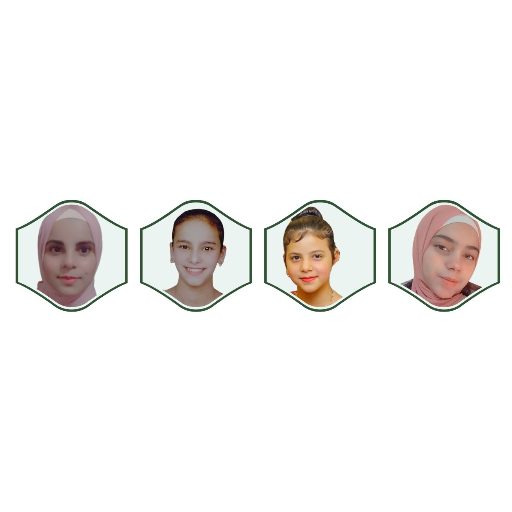
Huwaida Alabassi
from Egypt
Nour Shaban
Shorouk Shaban
Hana Mohamed
Naira Allam
An EFL teacher and instructor.
A NTTP British Council Educator.
A RElO Certified Mentor 2020 U.S Embassy Cairo.
A TESOL certified from the university of Maryland.
A certified as “A GLOBAL EDUCATOR’S RESOURCE BANK” program.
The founder of ”IELTA EGYPT” TEACHER TRAINING ORGANIZATION.
The top achiever in an exchange program to the U.S.
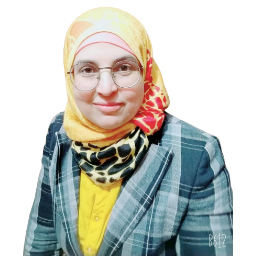
"It has become very important to understand and process our feelings to reduce stress. This becomes essential mainly during a pandemic, self-information skills, enthusiastic management, and effective communication. Constantly measured by new data accompanied, our current realistic dangerous conditions have brought social manifestations such as shifts in faith, echo chambers, and extremism. Especially when the connections are not the same. All these are forcing us to reconsider the way we express our thoughts and correspond."


Simonova Anastasia
from Russia
Artem Deykin
Orekhov Nikita
Alexandra Nikiforova
A PhD in history.
University lecturer and teacher.
Developer of electronic textbooks and educational platforms on history.
"Emotional intelligence is needed to understand your emotions and yourself better. It is also a powerful tool for creating harmonious relationships with others. These two factors greatly increase your chances of success in your work, study and personal life."


Eleonora Burnete
from Romania
Bongea Alesia Maria
Ganea Ana Maria
Doctorate Degree in Physics.
An expert in education.
Former Profesor Doctor at Gymnasium school.
A degree in Accounting and Management Informatics.
"The term 'social skills' in emotional intelligence refers to the skills needed to handle and influence other people’s emotions effectively. This may sound like manipulation, but it can actually be as simple as understanding that smiling at people makes them smile back, and can therefore make them feel much more positive. Social skills can therefore be considered as the final piece of the emotional intelligence ‘jigsaw."


Olga Zhdan
from Ukraine
Zakatsiura Tanya
Victoria Anna Bodnar
TESOL certified teacher.
Works at Natalia Diachuk's Agency of Foreign Languages "Runa".
Founder and Managing Director at OZ Learning Space.
Emotional intelligence for students is as important as the academic success, since it enables them to have positive interactions with others, to anticipate their feelings and to experience appropriate levels of empathy. And later in life, people with high EQ earn the trust of their superiors, make their colleagues feel valued and attract admirers wherever they go. Just like any other form of teaching, early experiences and education can help kids master the fine art of relating to other people via emotional intelligence.


Iryna Kahamlyk
from Ukraine
Darina Lozova
An EFL teacher.
Works in Arizona State University.
TESOL certificate.
A participant in GoGlobal projects since 2017.
"People have always paid more attention to IQ than to EQ. But we must admit that the value of emotional intelligence has been underestimated. Emotions influence our IQ. They influence our success in life. Because the ability to control your emotions, recognize them and correctly react to them, understand the intentions, motivation and wishes of others as well as your own ones – all these refer to Emotional Intelligence. It is EQ which provides humans with flexibility. But EQ itself is a skill which should be developed. Our life and space become more automatized and only high EQ that is able to accept this challenge."
Alesa Durgaryan
from Armenia
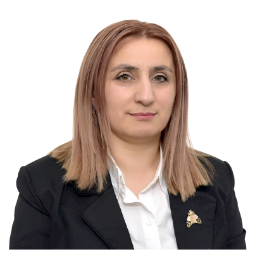
Gor Aghamiryan
Trainer at EDU Armenia
Facilitator at British Council of Armenia.
Teacher trainer at ITTI Armenia.
Global educator and trainer.
"Emotional Intelligence is a psychological component of adaptation to a new reality or changes in the world. Therefore, the right questions to highlight in this case are as the following. "Can we be adapted to this new reality?" and "To what extent people's attitudes and behavior have changed after the pandemic?". Indeed, people's emotional intelligence has changed to be more artificial nowadays. And through such artificial intelligence people started to communicate less and less in the real world while they tend to be more on the virtual platform."


Patricia Gonde
from Zimbabwe
Tatenda Mpofu

Shirley Wei-ling Li
from Taiwan
An EFL teacher and instructor.
A Google Certified Educator.
The Director of Applied English Department.
Member of Taichung City Vocational High School Advisory Group.
A Co-founder of “Engspiring: English Teaching and Learning” Fanpages.
You Han Xin


Mohamed Fettah
from Morocco
Messoudi Hiba
Dghoughi Kawtar
ELT teacher
ISA international coordinator
CC Program coordinator
Researcher and writer.
Developing your emotional intelligence skills is very useful to maintain a strong connection between your heart and your brain. This connection makes you able to controle your emotions and use your brain in the right way. Indeed this balance between what your brain think of it and how your heart feel about it makes you able to succeed in your work and relationships with others.


Alejandro Rodriguez
from Mexico
Leonardo
Alejandro Rodriguez
Teacher Coordinator
An English Language Professor at a Self-Access Language Center at the Universidad Veracruzana, a public Mexican university.
A Virtual Tutor at two private Mexican universities.
"Emotional Intelligence plays an important part in human communication. So, it is necessary to cultivate it for us to become better communicators as well as to improve our way of thinking and to act in every setting where human interaction takes place.
Besides, utilizing EI in our way of thinking and acting will allow us to develop our cognition and emotions in five aspects which are important to foster healthy human and public relations: self-awareness, self-regulation, motivation, empathy, and social skills."

Maha Shhadeh
from Lebanon
Mohammad Hussein
An International Internship University Country Director.
A Supervisor and ESL Insructor and Coordinator.
An International School Award British Council Ambassador.
An eTwinning Project Coordinator.
A News Editor a Verificat Agency.
A certified as ''Global Educator's Resource Bank" Program.
A Deputy Advisor at Positive Thoughts Motivational. Speaker, Parenting, Life & NLP Coach.
A Global Classroom LAU Model UN School Advisor.
A project manager at Alliance for Humanity-AH.
An Author at Dar Aoun.

Our words are only one way we use to communicate. Our bodies convey our thoughts and feelings and send messages that others pick up to use and make judgments about us. We have all come across situations where the words someone is saying don not seem to line up with what their bodies are saying to us. It is crucially important to our success in all areas of life that we become aware of the messages our body language sends out to others. Emotional intelligence and body language go hand in hand. By being aware of and focused on not only the words that we use but what our bodies are saying, we can come across congruent and send a complete message that will have the impact we intend.


Bijay Sing Thebe
from Nepal
Dibika Rai
Vice Principal of Hibiscus English Boarding School, Dharan, Nepal.
British Council ISA Project Head.
Hall of Fame at Global Forum of Teachers Educators.
Teacher Trainer.
Mathematics and Science teacher and instructor.
Emotional intelligence is all about the ability to identify and manage one’s own emotions as well as other people’s emotions. It helps us to recognize our emotions, strength, limitations and other impacts on the others around us. In case of social skills, it helps effectively at managing relationships that benefits everyone involved. Being motivated consists of enjoying what we do, working towards achieving our goals and not being motivated by money or status. It allows us to wisely manage our emotions and impulses. Likewise, the most amazing thing, it helps us to be able to identify and understand other’s emotions.


Melissa Esposito
from Italy
Christian Riccio
Mathematics teacher in High School
Founder of eTwinning projects.
Nearpod Certified Educator
Verified Educator and Edpuzzle Coach
Wakelet Community Leader.
Coding (Certificate of Excellence for coding literacy)
International speaker
Global Community Leader for GEN.
Write texts for math videos for www.eduboom.it.
Write for a website.
Continually update on new technologies, teaching methodologies and digital tools.

Stasa Pesic Milanov
from Serbia
Ognjen Milanov
Teacher of Citizen Education Coordinator for English.
language competitions Special education teacher.
Works at My Magical Dust.
Works at Innovate Your Dreams.
- Full access to our public library
- Save favorite books
- Interact with authors
- < BEGINNING
- END >
-
DOWNLOAD
-
LIKE(3)
-
COMMENT()
-
SHARE
-
SAVE
-
BUY THIS BOOK
(from $40.39+) -
BUY THIS BOOK
(from $40.39+) - DOWNLOAD
- LIKE (3)
- COMMENT ()
- SHARE
- SAVE
- Report
-
BUY
-
LIKE(3)
-
COMMENT()
-
SHARE
- Excessive Violence
- Harassment
- Offensive Pictures
- Spelling & Grammar Errors
- Unfinished
- Other Problem





COMMENTS
Click 'X' to report any negative comments. Thanks!