
1. Concept of Mindfulness
2. Mindfulness in the body.
3. Mindful attention to breathing
4. Full attention to emotions
5 And full attention to the environment.
FIRST BLOCK:
THE CONCEPT OF MINDFULNESS
Collage Mindfulness
1.There are moments when we look at nature and take pictures with our eyes, when we inhale deeply, wishing we could hide that scent, and when we are tickled when the wind blows sweetly. We can ask the children to find that peaceful memory with their families. We can ask them to photograph, draw or write about the situation they find, whatever is appropriate.
2. We can ask them to bring the moments that give them peace to the class. First, we want them to present them to their friends in the circle.
3. Accompanied by quiet music, we embrace the paper that represents our feelings of peace and hand it to our friend next to us. Finally, the papers collected by the student are placed in the happiness box. Then, when needed, they can take them out of their boxes and bring them back to that moment. In the classroom we will create a collage together and talk about what it is.
A jar with water and sand compares to our mind full of thoughts and feelings. Don't you sometimes need to scream, you lose control and a lot of thoughts come to you. It happens to children too, and one way to teach them what it means to have a calm mind is with this game:
MIND IN A BOTTLE
1.The seeds and glitter are our emotions and thoughts.
2. We put them in the bottle with water, our mind.
3.- We tremble as well as our mind.
4.- We breathe and let it rest and then OUR MIND IS CALM.
https://youtu.be/OEyQ9gRgJ78
The mind in a jar
The frog posture
Explain to the children that we have to learn to adopt the frog pose and do the following activity: https://youtu.be/EOckRqbCdG0
After the activity, you will gradually open your eyes and asked different questions to the students:
- What place have you imagined, have you ever been to a place like this?
- How did you feel in such a place?, etc.
After discussing these questions together, you will be asked to draw a picture of the place you have imagined on a sheet of paper.
Afterwards, a corner of the classroom will be reserved to place these drawings and decorate it together, calling it "MINDFULNESS CORNER". They can go to this corner whenever they need to and when they are nervous, upset or angry, so that they are aware of their breathing and calm down.

In case of doubt, pause for a moment.
When you get angry, pause for a moment.
When you get tired, pause for a moment.
When you get stressed, pause for a moment.
And when you pause, take a deep breath and be grateful.
I gather all my students in the class assembly and read the poem to them. I generate a discussion about the importance of stopping at certain moments in our lives and activities and focusing on this moment, on a moment of happiness, peace and not thinking about anything else, just that precise moment.
Pause for a moment poem
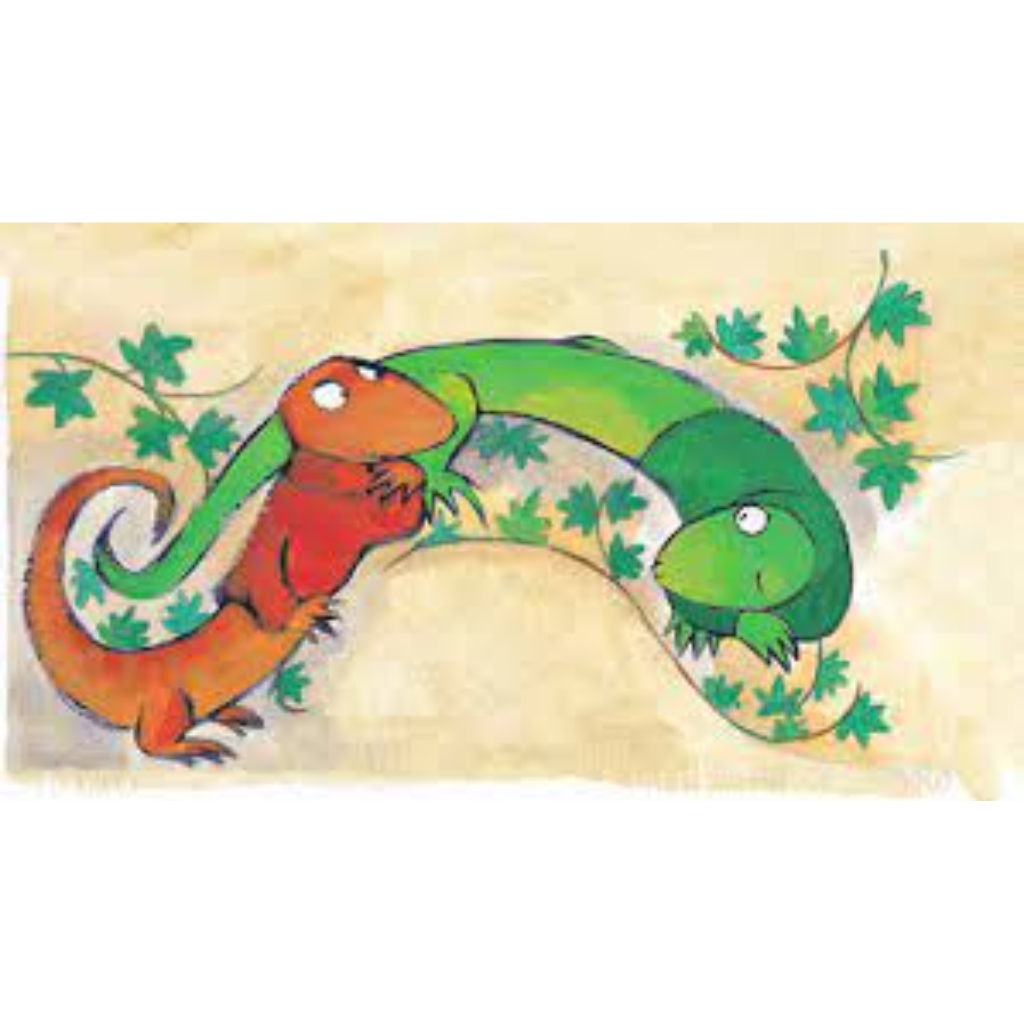
The Running and lying down Lizards
This is a tale about the importance of paying attention to what we are doing at all times and about the need to rest and enjoy what we have around us.
Once the story has been told, a series of questions will be asked to the students:
· What was happening to the running lizard?
· What did the Reclining Lizard think of her friend?
· Did the running lizard know how to enjoy life?
· Is it good to be overwhelmed all day and running from here to here? why?
· Etc.
(https://youtu.be/GqwSulNnZQg?si=NirHrfKRZful7I4A)
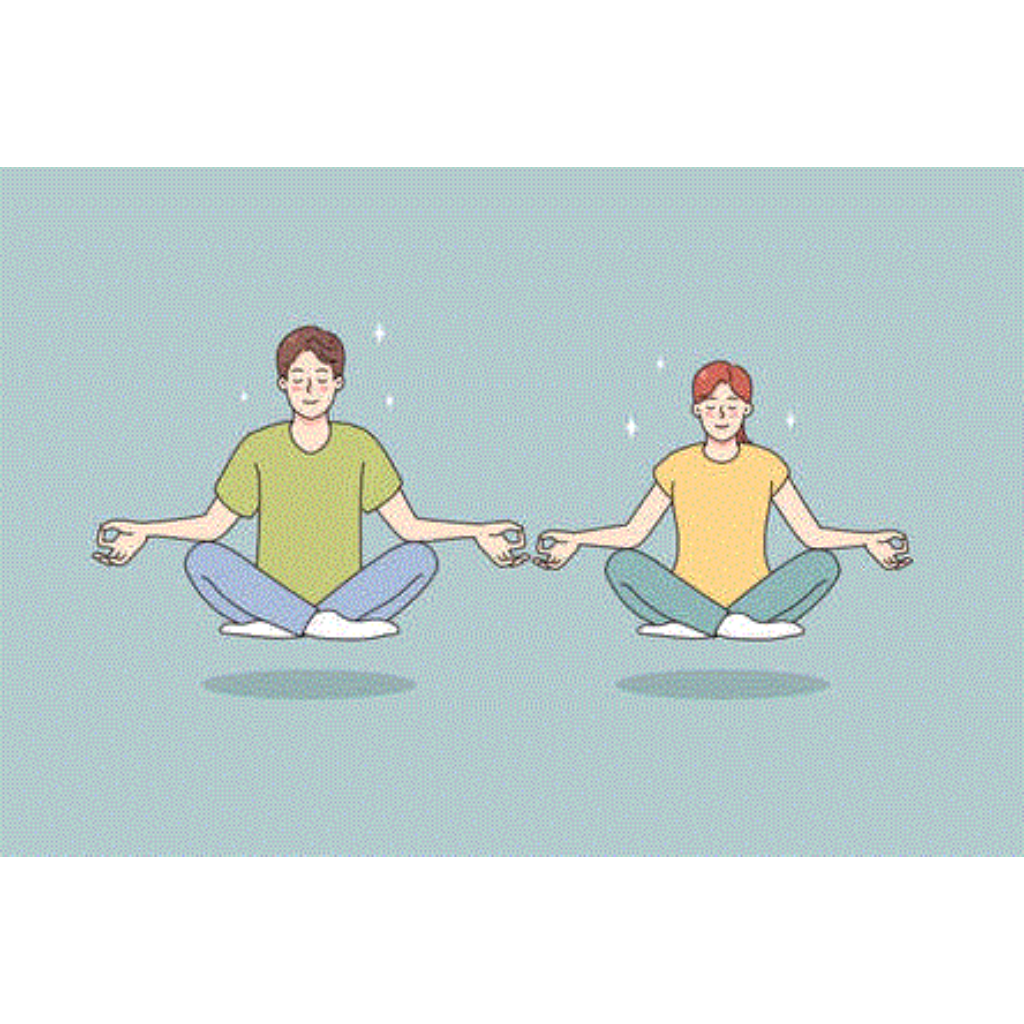
One easy way to introduce mindfulness to our children is through informal practices that you can do along with them. Start with a simple kindness meditation—offering good wishes and compassion to others.
1. To begin, find a comfortable sitting position. You can even place a hand on the heart. Allow your eyes to close or lower your gaze toward the floor.
2. Bring to mind someone who you really respect and look up to, and who really loves you in return.
3. Notice how you feel as you bring this person to mind.
4. Make a kind wish and send it their way. What would make them happy?
5. Next, bring to mind someone else you love and care about: A family member, a friend, a beloved colleague. Just bring this person to mind, sending this person a kind wish.
We’ll move from here to a more neutral person. Perhaps someone you don’t know very well: A parent you see occasionally in the pick-up line, a person who delivers your mail, or makes your coffee in the morning. Just bring this person to mind and imagine yourself sending them some kind of kind wish.
6. Lastly, bring to mind someone who has frustrated you lately, someone who is a little difficult. Send this last person a kind wish—something nice for them in their life.
7. Check in with your mind and body as you conclude this practice. Allow your eyes to open if they’ve been closed. Notice if there’s any shift.
First Mindfulness steps
SECOND BLOCK:
THE MINDFULNESS IN THE BODY
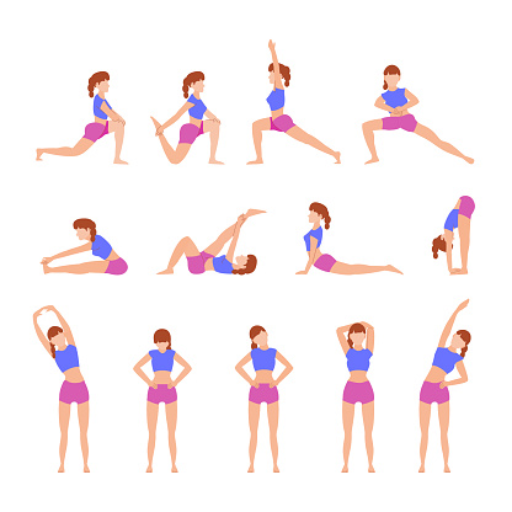
MINDFULNESS IN THE BODY
It is important that you are aware of the sensations you have in your body and observe them, as this will lead you to greater awareness of the present moment. The exercises in this session will work with breathing and relaxation of the different parts of the body.
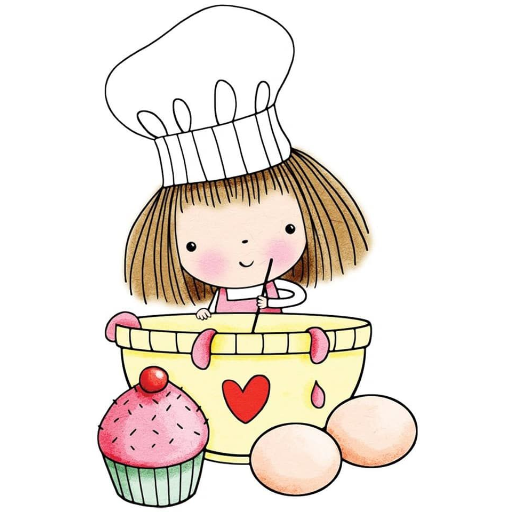
CAKE CHEF'S DOUGH
Tells the story that motivates the teacher. This story will tell about a town where once lived a famous pasta maker who managed to make the richest and softest dough there. And he did all this to learn to handle the dough with great delicacy and precision, as he kneaded it, moved it with his fingertips, and renewed it.Now the teacher will be invited to play. Divide them into small groups of 5 or 6 people. One of them will be bread dough. Others will be pasta chefs who must knead the dough very carefully. The student playing the dough role will lie face down on the floor and the stretching time for comfort will be eliminated. They work by carefully moving people's bodies to: They will rub it. They will stretch their arms and legs a bit... while also naming the different parts they are manipulating. They will turn it several times (with great care). hey will knead it with their fingertips. Then everyone will be replaced by a rolling pin until it becomes "cake dough". At the end of the workshop, students go to their work tables to make the cake of their dreams. The teacher distributes the leftover materials in the classroom (beads, stamps, buttons, rope, toothpicks, etc.) to the children. Children design their dream cake.
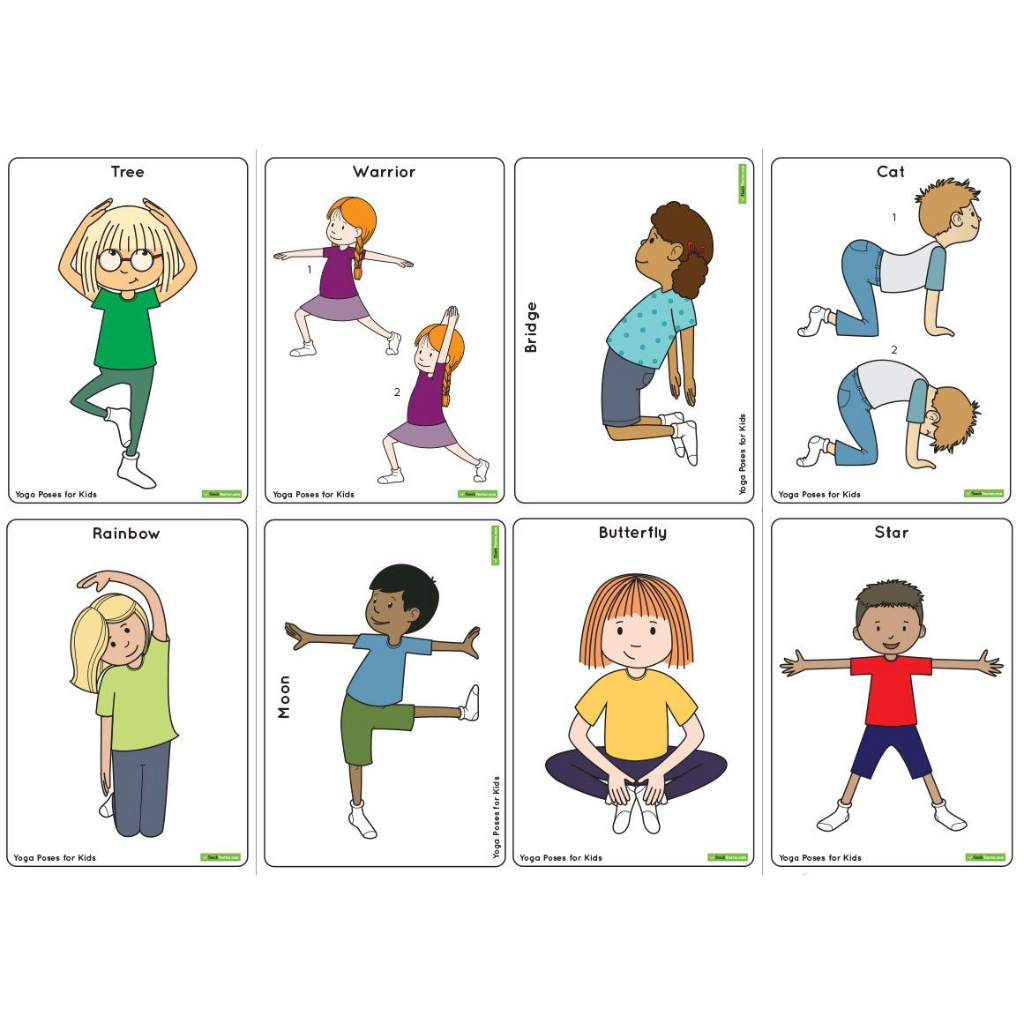
Sponge Game
We should explain to the child that we will imagine that we have a sponge in our hands. Each of them will rub every part of the body with their imaginary sponge, from the hair to the feet, moving towards the face, arms, fingers, belly, legs, feet... they will be aware of every part of the body.
Afterwards, sports warm-up exercises will be performed.
https://www.youtube.com/watch?v=A0IS4ZO_mOU
Students make the movements they see in the visual and explore by feeling every part of their body.

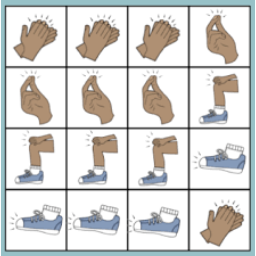
BODY PERCUSSION
Students are asked what can be done with their bodies? There is a conversation about this. We can create rhythm in our body. Let's make noise by hitting our hands. Let's make noise by tapping our feet, etc.
After these exercises, the video is turned on and body percussion is applied.




IMAGINE....
We are walking between two specific points. In the meantime, we watch every step and focus on the feelings. The important thing is to maintain awareness of sensations such as the feeling of lifting the foot, carrying and placing it. We then arrive at how our cells and the resulting emotional reactions change during practice. Then they ask the children to walk below. Describe what is going on in their current body and mind and how they feel:
It's like you're kissing the surface of the earth with your feet.
You can walk with something in your hand that might spill or fall (like an egg on a spoon).
I walk like a very angry, rude man Like one of her heartbroken lovers
Like someone who won the lottery Like a model walking the red carpet
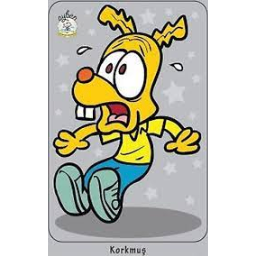
Like a superhero you love He panicked as he lost his wallet.
THIRD BLOCK:
ATTENTION TO BREATHING
Mindful attention to breathing
Convey the importance of breathing in mindfulness, since through it we ensure that the body and mind are in the same place, that is, in the present. The breath is used as an anchor tofocus on the present moment.
We want to teach children to:
- Know breathing: identify inspiration and expiration.
- Introduce listening practices and inviting the bell.
- Promote the ability to pay attention and react.
- Encourage conscious breathing.
- Develop and enhance creativity.
Breathing technique with five fingers
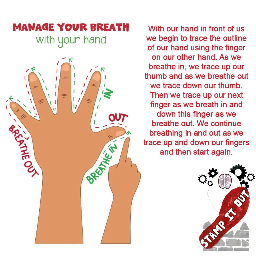
https://www.youtube.com/watch?v=hbnese_Lofs
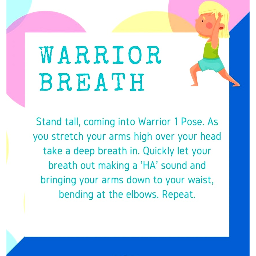
Warrior Breath
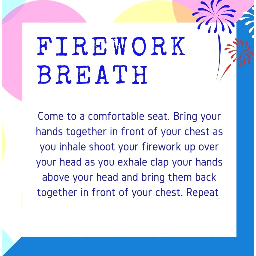
Fireworks Breathing Exercise
https://www.youtube.com/watch?v=b5Y7b31yxag
https://www.youtube.com/watch?v=5oc_93oDXhk

Practical activity: Paint a rainbow!
The children, grouped in teams of 4, will have to create a rainbow using techniques of their choice (painting, drawing, collage, stamping, etc.)
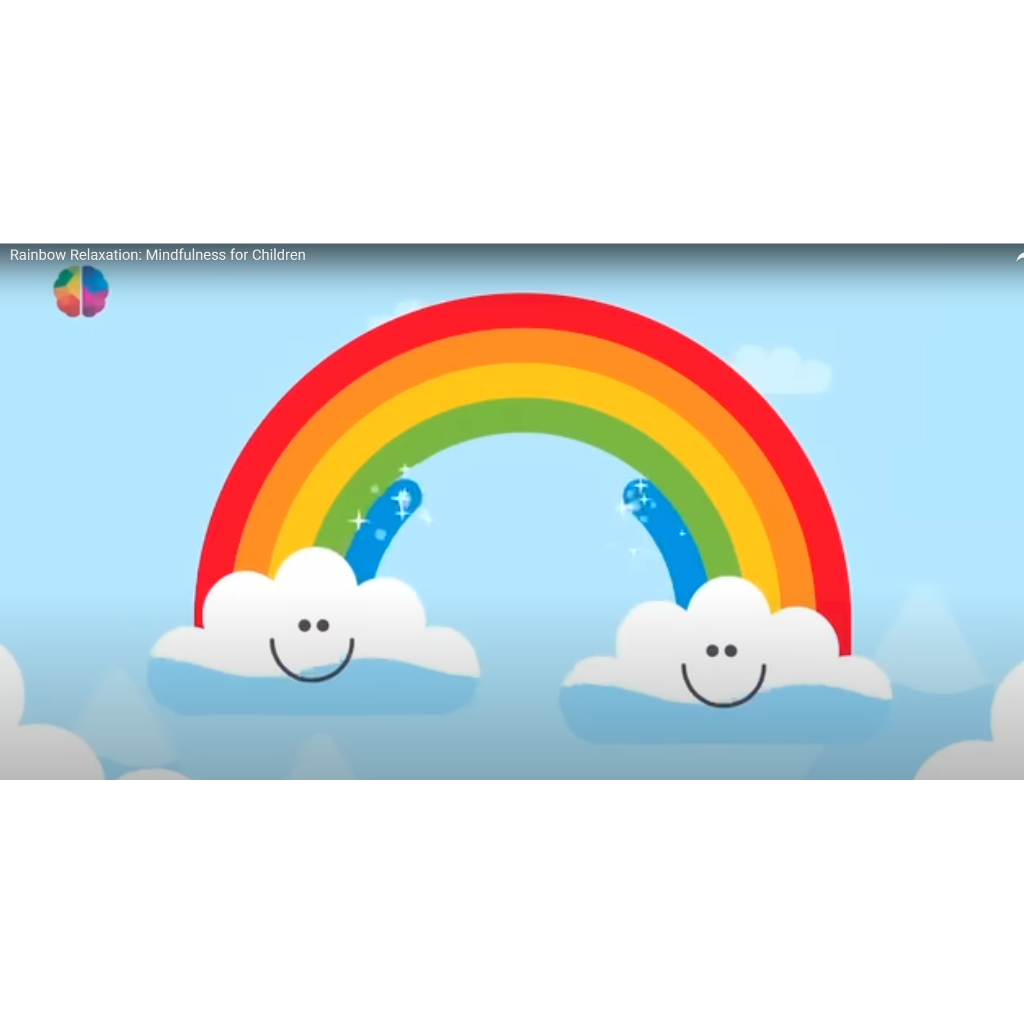
PAINT A RAINBOW
Standing in a relaxing position, the children inhale and raise their hands as if painting a color of the rainbow. When he puts his hands down, he exhales, then inhales again and paints another color and so on until he paints all the colors of the rainbow.
https://www.youtube.com/watch?v=IIbBI-BT9c4
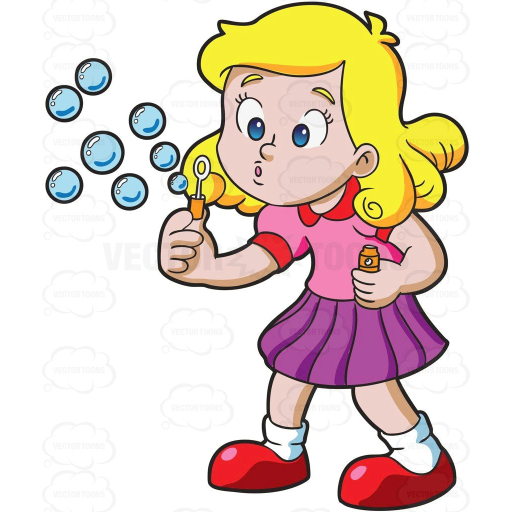
Bubble Breathing
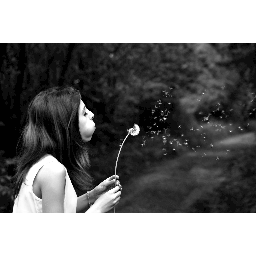
Sitting in a relaxed position, children will imagine that they have a magic wand in their hand that produces balloons when they blow through it. Inhale deeply through the nose, then exhale through the mouth, blow through the wand to scatter the balloons into the air.
You can do t the breathing exercises with the students at the beginning of class or when they need a moment to relax.
https://www.youtube.com/watch?v=1S-9C-F8CzM
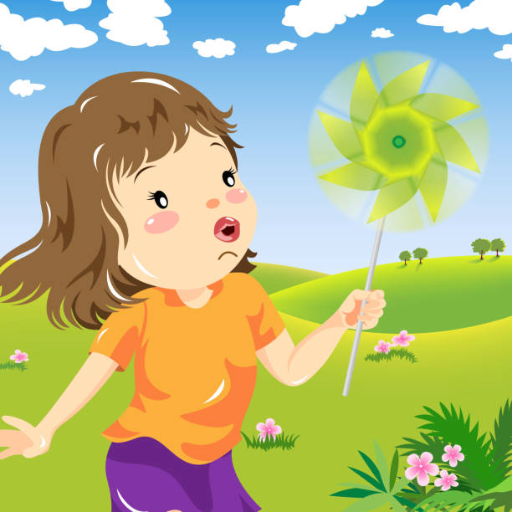
https://www.youtube.com/watch?v=AZrP2vSqhQ4
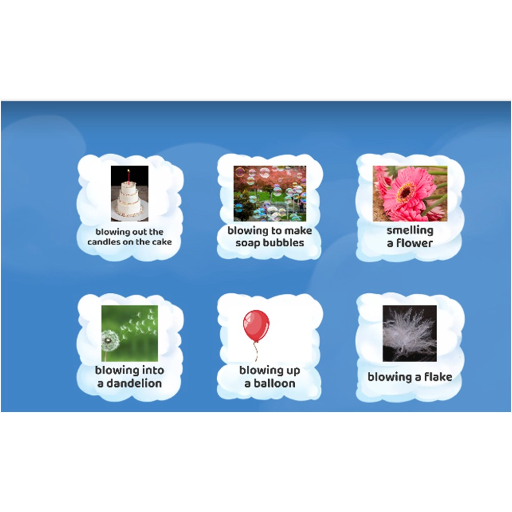
DIGITAL ACTIVITY
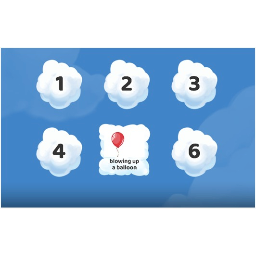
The children will choose a number from the proposed game, then they will perform the indicated action.
wordwall.net/resource/62708769/inhale-and-exhale-as-if-you-were
FOURTH BLOCK:
FULL ATTENTION TO EMOTION
Full attention to emotions
Emotions play a very important role in our lives, since they often determine the way we act in certain situations, therefore, it is necessary to teach children to identify them. They must be taught to be aware of what they feel and how to manage and control these emotions. Goals:
- Recognize the main emotions (calm, happiness, sadness, anger, fear, surprise, love, etc.).
- Develop oral expression and communication by acquiring emotional vocabulary.
- Learn to control emotions.
- Identify and express how they feel at a specific moment.
- Identify emotions represented through gestures.
- Promote attention.
- Pay full attention to breathing.
- Identify the different body sensations.
- Recognize the emotions felt throughout the meditation.
We show emotions
Practical activity:
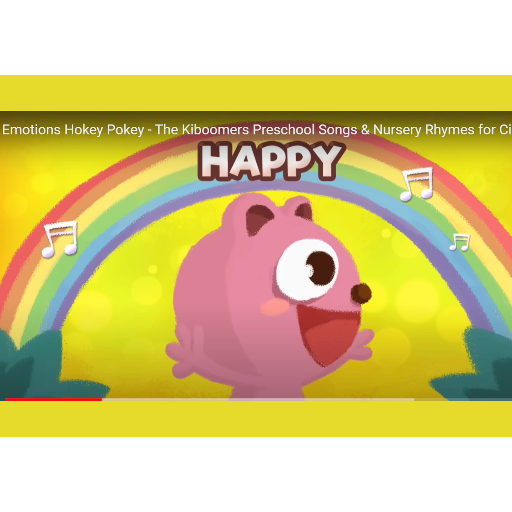
The fun is to perform the different faces mentioned in the song. A melody known to children, because it is a different version of "Hockey, Pockey". During the game we can cover and uncover the face with our hands, presenting faces in turn cheerful, sad, angry, frightened, surprised, unwise.
https://youtu.be/ZHS7vCdBeus
Practical activity:
Calming Jars
This sensory tube craft kit is great for using as a calming jar. These jars can be used as a visual sensory item to help manage stress and soothe their mind. This celestial themed relaxation jar comes with jars, liquid watercolor, glitter, star beads, and cotton that represents clouds. Kids can shake or spin the jar to watch the items swirl around. The concept is once the glitter settles to the bottom, your emotions will have settled as well.
You can also make your own DIY calm down jar. Fill a mason jar with paint, water, glitter, and other items you want to add.
https://www.youtube.com/watch?v=MHc9F02a3iU
https://www.youtube.com/watch?v=Ayi0TYcoMTI
DIGITAL ACTIVITY:
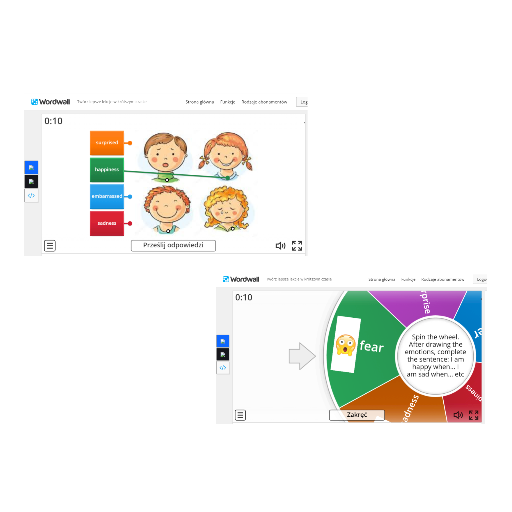
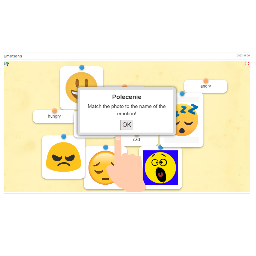
Children match pictures with emotions to their names (with the help of a teacher).
https://learningapps.org/display?v=p2aiidszj23
Children spin the wheel. After drawing an emotion, they must complete the sentence: I am happy when... I am sad when... etc
https://wordwall.net/pl/resource/63607616
Children match the drawing with the signature
https://wordwall.net/pl/resource/63608005
During the whole project we will teach our students the following poem (The evidence of this activity will be collected with that of the last block).
If in doubt, stop for a moment.
When you get angry,
Stop for a second.
When you get tired,
Stop for a second.
When you're stressed,
Stop for a second. And when you take a break,
Take a deep breath and be grateful.

COLABORATION ACTIVITY
Each group prepares an illustration of the selected emotion (in addition to the picture, its name is also needed). All images will be included in a virtual exhibition in Artsteps.
https://www.artsteps.com/view/655503cb6b9b67b1e1548c0b
ACTIVITIES CARRIED OUT BY FAMILIES:
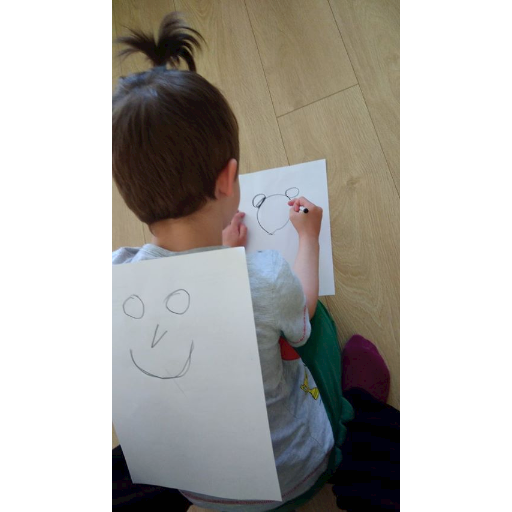
Drawing on the back A great relaxing fun, loved by all children, even the little ones. Draw a face on the back, sad, happy, angry, frightened, etc. The child has to guess which face the parent/brother drew.
FIFTH BLOCK:
FULL ATTENTION TO THE ENVIRONMENT.
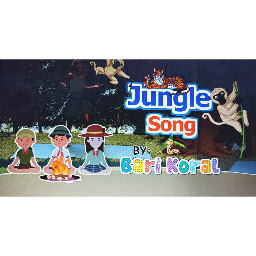
Put on your jungle boots, grab your night vision goggles and let's go to the jungle! We will see some snakes, zebras, tigers and more to entertain the children with yoga, music and movement. .
ttps://www.youtube.com/watch?v=IGeC6UymoAY
h
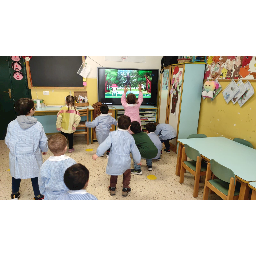
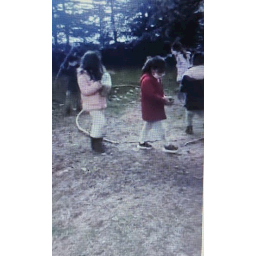
Whoever will do this activity in the garden does the rhythmic exercise in the video with natural
collected from nature.
https://www.youtube.com/watch?v=-ElC7Slo7Ss
https://www.youtube.com/watch?v=eogCSykQg_U

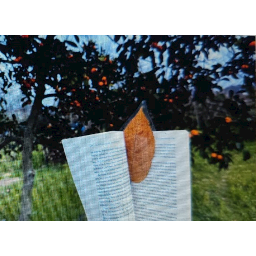
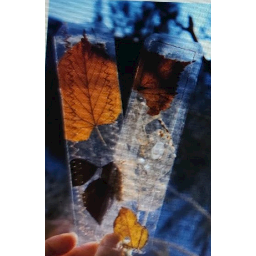
The bookmarks are made as in the example, with the natural materials we collect (leaves, flowers, etc.).
Construction phase:
The drawn leaves are completely covered with tape in the desired format.
Children listen to the sounds around them with their eyes closed (bird sounds, insect sounds, car noises, wind noise, etc.).
Children are asked to open their eyes and talk about the sounds they hear in the environment.
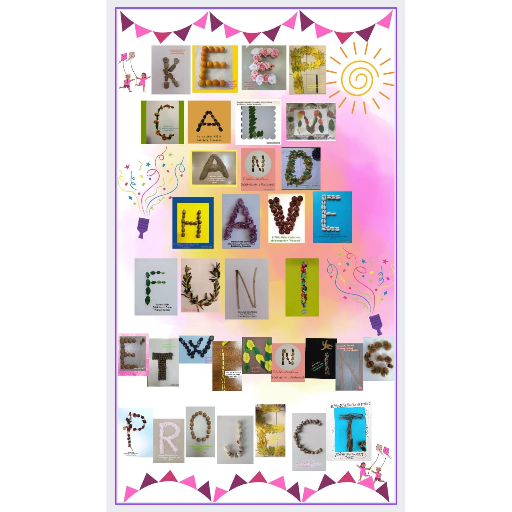
JOINT EVENT
Each teacher's class will study a letter of the project name using natural materials.
- Full access to our public library
- Save favorite books
- Interact with authors
- < BEGINNING
- END >
-
DOWNLOAD
-
LIKE(1)
-
COMMENT()
-
SHARE
-
SAVE
-
BUY THIS BOOK
(from $22.99+) -
BUY THIS BOOK
(from $22.99+) - DOWNLOAD
- LIKE (1)
- COMMENT ()
- SHARE
- SAVE
- Report
-
BUY
-
LIKE(1)
-
COMMENT()
-
SHARE
- Excessive Violence
- Harassment
- Offensive Pictures
- Spelling & Grammar Errors
- Unfinished
- Other Problem





COMMENTS
Click 'X' to report any negative comments. Thanks!