
Welcome, young astronomers!
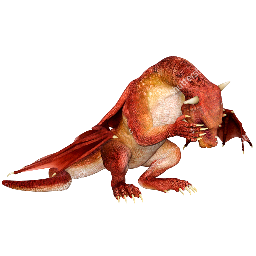
I'm Paff, the Space Dragon, and today I'll guide you through my exciting journey across the planets. I made this journey many, many years ago when I couldn't yet control my fire.
I accidentally burned down an entire forest, and in an effort to master it, I embarked on a journey to space where I learned so much! Each of these places is unique and interesting in its own way.
Let's explore together!


My first destination was Neptune, a giant gas giant covered in icy water.
Imagine swimming in a frozen ocean with violent winds! The temperature here is so cold that it could instantly freeze anything.
This planet was a real challenge for explorers like me. The interaction of all the gases is what creates the massive vortex in its atmosphere, known as the Great Dark Spot.
I had to learn to control my breath to maintain the temperature balance of the ice. After overcoming the challenge, I could explore the planet Neptune and continue my space journey.


Great Dark Spot
Characteristics of Neptune:
Our next destination was the small but impressive Mars. Here, I faced high mountains and enormous red rocks. All of Mars is red due to the iron oxide on its surface. It has mountains, valleys, dry riverbeds... and even polar ice caps at its poles!
These are mainly composed of frozen carbon dioxide and water. Here, I learned about endurance and patience as I climbed the mountains and jumped from rock to rock.
Mars taught me to understand the importance of endurance and patience.

Characteristics of Mars:
Rings: Mars does not have rings.
Moons: Two small moons: Phobos and Deimos.
Predominant gases: FeO on the surface and CO2 on the atmosphere.
After much flying, I landed on Venus, a planet full of microorganisms. Venus is similar to Earth, although its atmosphere is extremely dense. Here, I understood the importance of nature and how to keep it healthy.
Microorganisms can teach us valuable lessons about life and balance in nature: they are essential for ecological balance.
On Venus, I learned that nature must be cared for and protected to ensure the survival of all forms of life in the universe.
Characteristics of Venus:
Rings: Venus does not have rings.
Moons: Venus does not have moons.
Predominant gases: Primarily, CO2 and H2SO4.
An important fact: Along with Uranus, they have a retrograde rotatioan
My journey continued on the planet Mercury, where I faced intense heat as it's the closest planet to the Sun. Mercury has an elliptical orbit, meaning its distance from the Sun varies significantly during its orbit.
I landed there when it was quite close to the Sun. Due to this condition, I experienced substantial temperature fluctuations between day and night while I was there.
There, I learned to use my magical fire wisely and conserve energy. The lessons on energy management are crucial, even in such extreme places as Mercury.
Characteristics of Mercury:
An important fact: Mercury has an elliptical orbit.
- Full access to our public library
- Save favorite books
- Interact with authors
- < BEGINNING
- END >
-
DOWNLOAD
-
LIKE(2)
-
COMMENT()
-
SHARE
-
SAVE
-
BUY THIS BOOK
(from $3.39+) -
BUY THIS BOOK
(from $3.39+) - DOWNLOAD
- LIKE (2)
- COMMENT ()
- SHARE
- SAVE
- Report
-
BUY
-
LIKE(2)
-
COMMENT()
-
SHARE
- Excessive Violence
- Harassment
- Offensive Pictures
- Spelling & Grammar Errors
- Unfinished
- Other Problem





COMMENTS
Click 'X' to report any negative comments. Thanks!