Students searched for information about endangered animals in their area.
Then they worked in transnational teams to create 1 chapter for each country.
Each chapter has: the information about the endangered animals; a drawing; students reading the information and a little poem/story.
Enjoy reading it!

Project partners:
Ecole élémentaire publique Victor Quintius Thouron
Provence-Alpes-Côte d'Azur
Besse-sur-Issole
France
Dr. Francisco Sanches School Cluster
Braga
Portugal
Project partners:
IV Osnovno uchilishte "Dimcho Debelyanov"
Blagoevgrad
Bulgaria
PROTO DIMOTIKO SXOLEIO MELISSION
Melissia
Greece
CHAPTER 1
French endangered animals

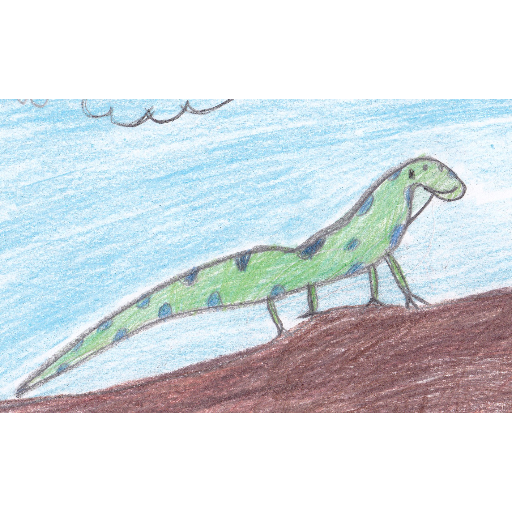
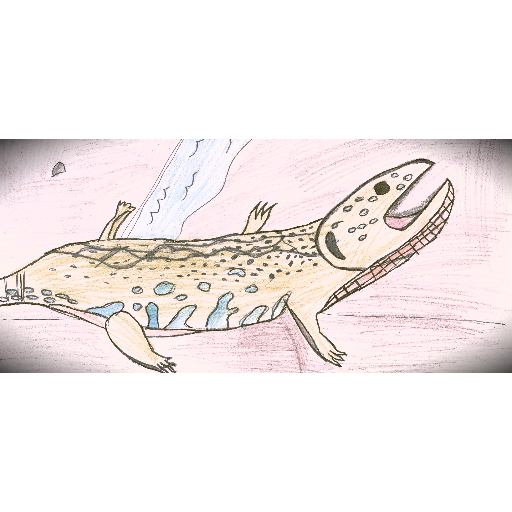
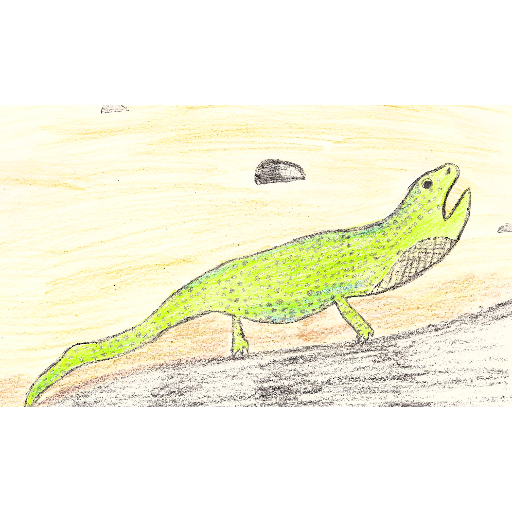
The ocellated lizard
It is the largest lizard in Europe. It can measure from 55 cm to 70 cm for males.
They live during the day in dry grass and bushy areas.
They mainly eat insects but are omnivorous.
Its predators are the eagle and the snake.
In the past, its image and rarity attracted collectors who captured or killed many of them.
Today, it is a protected species and its capture is prohibited.
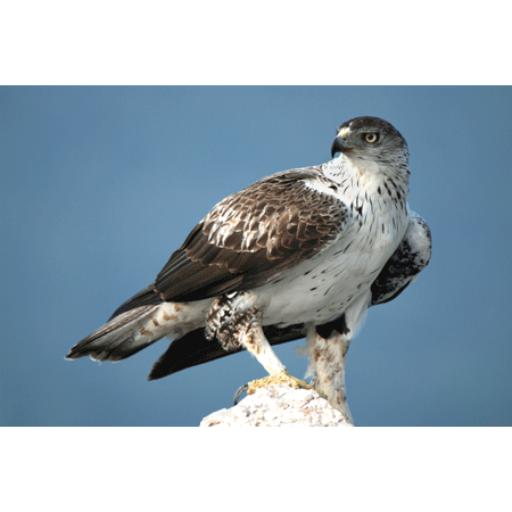
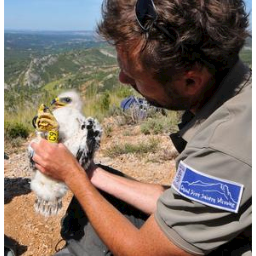
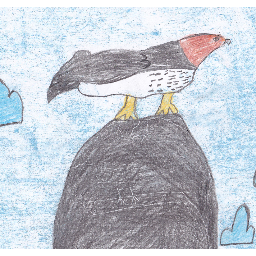
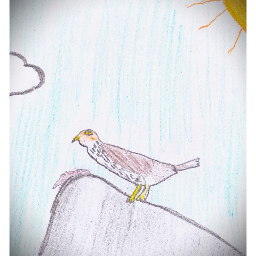
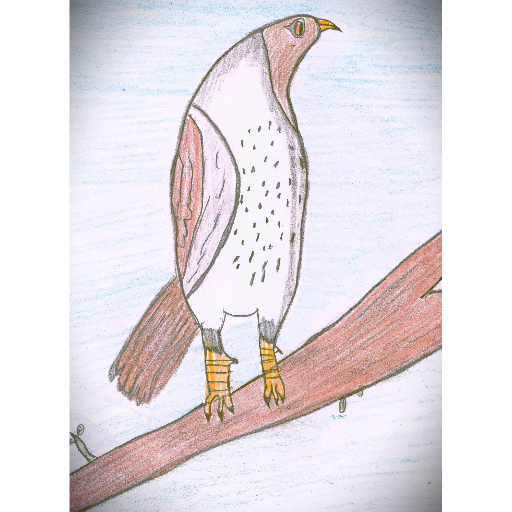
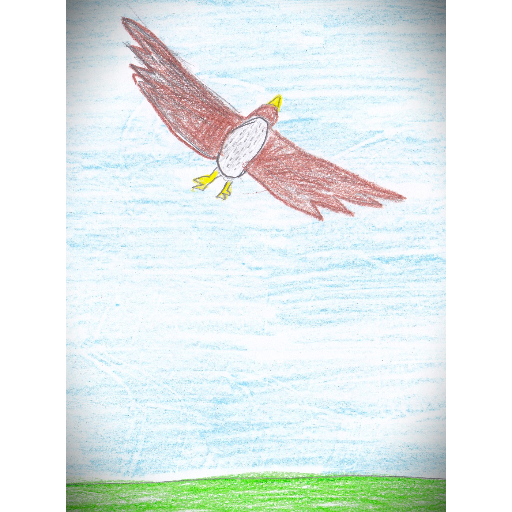
The Bonelli's
eagle
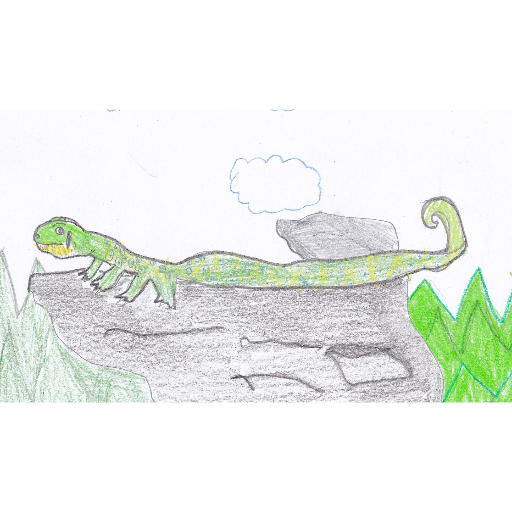
On the ancient stone green there is a small stone lizard.
It lies even in the hot day,
it does not run even in the bitter winter. You've been sleeping like this for centuries everyone just fell asleep for a moment. I would kiss that hand that she sculpted the little body. That's how she put it there your tiny lizard sculpted that and the ugly stone big next to it, it remained permanent.

Legend of the Eagle
The eagle lives the longest of all birds - about 70 years. To reach this age, he has to make a difficult decision. By the time it reaches 40, its claws are not as sharp, its beak becomes crooked, its aging wings cannot spread, making it difficult to fly. The eagle is faced with two options: either die or undergo a change. The eagle must go to the top of the mountain and make a nest. Then it hits its beak on the rock until it falls. When a new one grows, it pulls out its old nails. When new ones grow, he has to pluck his feathers too. After five months, the eagle takes its first flight after rebirth and lives another 30 years. Ask yourself why this change is needed? Often, in order to survive, we have to start thinking and behaving differently. It is necessary to shake off the memories, to reject our product in order to accept the present.
CHAPTER 2
Portuguese
endangered animals

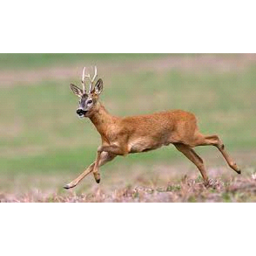
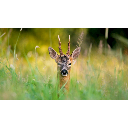
The roe deer
Scientific name: Capreolus capreolus
Physical characteristics: small body and thin and long limbs. The coat is reddish-brown in summer and greyish brown in winter. The belly region is lighter than the back.
Habitat: The roe deer prefers areas formed by woods and open areas with meadows or agricultural areas. It makes its "nest" and rests in areas of dense forest.
Food: It is a herbivorous animal that feeds on shrubs, tree leaves and herbaceous vegetation.
Predators: The wolf is considered its main predator. Man is also a predator, because he hunts this species.
Reasons for extinction: at the beginning of 20th century, the roe deer had disappeared from almost all of the Portuguese territory, largely due to overhunting and a great regression of forests.
Due to its adaptability and resilience, combined with the natural expansion of the species and several reintroduction projects, both in Portugal and Spain, the roe deer has managed to recolonize a good part of the original territory.
The roe deer
IBERIAN WOLF
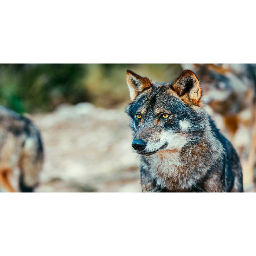
Scientific name: Canis lupus signatus
Physical characteristics: Male Iberian wolves measure between 130 to 180 cm in length and usually weigh between 30 to 40 kg. The head is large and massive, with relatively small triangular ears. The muzzle has a clear, off-white area around the mouth.
IBERIAN WOLF
Habitat: The wolf adapts to many different habitat types, such as forests, woodlands, and Mediterranean shrubland. The subspecies of the Iberian wolf is only distributed in Portugal and Spain.
Food: The diet is very varied, depending on whether or not there are wild preys. Its main prey is the mountain pig, roe deer and deer, and the most common domestic preys are sheep, goat, hen, horse and cow.
Predators: The main predator of the Iberian wolf is man.
Reasons for extinction: Their way of feeding poses a threat in rural areas, where the economy is sustained mainly by agricultural activity. It is in these areas where poaching and poisoning are making this species vulnerable and exposing it to its disappearance.
Once upon a time there was a deer who lived in the forest. His name was Michou and he loved to gallop. His house was well hidden because the wolves wanted to devour him.
One day, the wolves found the deer's house.
The wolves began by attacking the house by tearing up pieces of wood.
The deer remained motionless and at one point he heard the wolves howling. So he started running very fast. He was exhausted and tripped on a stone. He broke his leg.
The wolves caught him and ate him.
CHAPTER 3
Greek
endangered animals

Caretta-Caretta
The loggerhead sea turtle, Caretta-Caretta is found in the Atlantic, Pacific and Indian Oceans as well as the Mediterranean Sea.
They can have considerable dimensions but, in spite of this, they are fast.
Thanks to the big anterior and the stiff posterior fins they can reach 30kn/hour and so protect themselves from possible dangers. It spawns always in the same beach where it was born and for this reason it is important to keep the conditions for the nests survival in order to avoid the specimen extinction.
It spends most of its life in the seltwater and estuarine habitats, with females briefly coming ashore to lay eggs. The loggerhead sea turtle has low reproductive rate, females lay an average of four egg clutches and then become quiescent, produsing no eggs for two three years. The loggerhead reaches sexual maturity within 17-33 years and has a liespan of 47-67 years old.
The Red Deer of Parnitha Mountain ( Cervus Elaphus)
The red deer (Cervus elaphus) is the largest herbivore in Greece and definitely one of the most popular species of the Greek forest.As an inextricable part of Greek nature,red deer have a crucial role to play in the development and evolution of ecosystems,particularly now that free range animal husbandry is being gradually abandoned..
Life under threat:
Red deer used to live throughout the Greek mainland. In only a few decades, their populations have been depleted so dramatically that the species is now consired critically endangered according to The Red Data Book of Threatened Animals of Greece (Athensm 2009). Poaching is the greatest threat to deer in Greece.Nowadays, the remaining populations are isolated patches. The possibility of deer expansion to new areas is curtailed by the loss of adequate habitats as a result of intensified agriculture, settlement expasion and disturbance.
- Full access to our public library
- Save favorite books
- Interact with authors
- < BEGINNING
- END >
-
DOWNLOAD
-
LIKE
-
COMMENT()
-
SHARE
-
SAVE
-
BUY THIS BOOK
(from $8.19+) -
BUY THIS BOOK
(from $8.19+) - DOWNLOAD
- LIKE
- COMMENT ()
- SHARE
- SAVE
- Report
-
BUY
-
LIKE
-
COMMENT()
-
SHARE
- Excessive Violence
- Harassment
- Offensive Pictures
- Spelling & Grammar Errors
- Unfinished
- Other Problem





COMMENTS
Click 'X' to report any negative comments. Thanks!