
BLOCK 2: MAKING PLANS
FREQUENCY ADVERBS.
PREPOSITION OF TIME.
APOSTROPHE S-MEANING AND USES.






BLOCK TWO VOCABULARY
1-relatives:(noun) people are connected by blood or marriage.
e.g.His mother in law and sister in law go to the party,because they are relatives.
2-family:(noun) is a group of people of two parents and their children living together as a unit.
e.g. She lives with her father and mother.
3-Siblings:(noun) to refer to both male and female that is brothers and sisters.
e.g. I have four siblings but I am older.
4-Dining out:(phrasal verb) to go to a restaurant to eat your evening meal with someone or alone.
e.g. We often dining out in our favorite restaurant with some friends.
5-Road trip:(phrasal verb) going on a trip to explore new destinations nearby or distant cities/countries.
e.g. This summer we are going on a road trip around chalatenango.



6- Hang out: (phrasal verb) to spend a lot time with someone or in a place.
e.g. They spent the whole afternoon hanging out by the pool.
7-Weather(noun) The state of atmosphere with respect to cold or heat,wetness or dryness,calm or storm,clearness or cloudiness.Merrian Webster Dictionary,2023
e.g.Yesterday was partly sunny and Today is cloudy.
8-sun (noun) the star that provides light and heat for the earth. Cambridge Dictionary.
e.g. The sun rises in the east and sets in the west.
Sunny(adjective) bright because of light from sun.
e.g. we are having the wedding in the garden, so I hope it will be sunny



9-Rain( verb) ( noun) drops of water from clouds. Cambridge Dictionary.
e.g. Rain is forecast for tomorrow.
Rainy( adjective) mark by abounding with or bringing rain, rainy weather.Merrian Webster Dictionary.
e.g. In the rainy days is difficult for cars to drive the streets .
10-Spring:(noun) The season of the year between winter and summer,when the weather becomes warmer,leaves and plants start to grow again and flowers appear.Cambridge Dictionary.
e.g.Many flowers bloom in the spring
11-Autumn: (noun) the season of the year between summer and winter,when fruits and crops become ready to eat and are picked,and leaves falls.Cambridge Dictionary.
e.g. Last autumn they went to Italy, it was amazing.
12-Be a breeze:(Idiom) to be very easy to do.
e.g. The exam was not demanding because I studied so hard!.



FREQUENCY ADVERBS.
Modify or qualify the meaning of a sentence by indicating the frequency in which something occurs.
Indefinite Adverbs Definitive Adverbs.
-Always 100% -Weekly
- Usually 90% -Daily
-Normally 80% -Monthly
-Often 70% -Yearly
-Sometimes 50% -Once
-Occasionally 30% -Twice
-Seldom 10% -Ten Times
-Hardly ever 5% -Every
-Rarely 5% -Hourly
-Never 0%
IMPORTANT NOTE: Frequency adverbs are most used in the simple present, because they express occurrence and repetition.
Examples: -She always reads her book every day.
-He normally dines out at weekend.

Position of Indefinite Adverbs. This depends on the main verb.
1-After the verb TO BE 2-After the subject and before other verbs
examples:-He is always on time to his job. Examples:-She seldom work out after 5 pm.
-They are normally work on holidays. -We rarely sleep in the afternoons.
3-Adverbs at the start of a sentences:Usually,Normally,Often, Frequently,Sometimes,Occasionally.(Use comma with the adverb at the start of a sentence).
Examples:-Often,I like to eat tacos.
-Usually, I practice my listening skill.
4-Don't use Always,Seldom,Rarely,Hardly,Ever,Never at the beginning of a sentence.
5-The adverb "Sometimes" appear in front, in the middle and at the end of a sentence.
Example:-Sometimes,we sing together/-We sometimes sign together/-We sign together sometimes.
6-Use Hardly ever and Never with positive, not negative verbs.
Examples: - He hardly ever get up at 7 am.
-They never pay on the exact days.
Position of Definitive Adverbs.When we want to be more specific about the frequency and they are commonly use at the end of the sentence.
Examples:- I do shopping twice a month. -We traveling to another country yearly.
-She does cleaning daily -They paid him a wage hourly.
PREPOSITION OF TIME: IN,ON,AT.
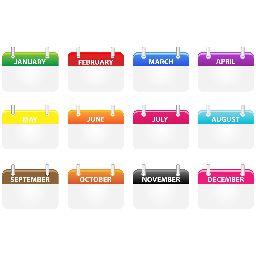
A preposition that allows you to discuss a specific time period such a date on the calendar, one of the days of the week, or the actual time something takes place. (GINGER,2023.)
AT
1.When talking about time, "AT" is used for a specific timer.
Example: -My meeting is at 7:00 pm
2- Common expressions with AT.
Examples: - I see you at night . -at wedding, at easter, at weekend
- she visits her grandparents at christmas. - at the same time, at sunrise,at sunset,etc.
ON
1-Use "ON" with dates and days.
Examples: - I will start working on monday. -on my birthday, on christmas day, -He was born on september 26th. on wedding day,on christmas eve,etc. IN
1-Use "IN"+ a period of time and for longer periods of time.
Examples: - My mom comes in a five minutes.
- She will do exercises in two weeks.
-I was born in 1997.
-There was a stunning movies in 20th century.

APOSTROPHE S - MEANING AND USES.
In order to use apostrophe + S for possession we must take into account the following rules:
General rule 1-for singular nouns:
Whether a singular noun ends in S or not,the possessive of a single noun is produced by adding an apostrophe followed by the letter S.
Examples: -The girl's doll. -They are Alexis´s parents.
General rule 2-for plural nouns:
When a plural noun ends in S, the possessive is produced by simple adding an apostrophe; otherwise, it is made by adding both an apostrophe and S.
Examples: -The siblings´ great-grandmother. - The godchild´s trampoline.
General rule 3-exceptions:
Use only an apostrophe for singular nouns that are in the form of a plural, or have a final word in the form of a plural-ending with an S.
Examples: - The Honduras´ government. -The Maldives´ blue lagoons.
When we show who owns something or has a close relationship with something.We use an apostrophe + S after the name of the noun.Dictionary Cambridge.
Conversation about Weather and Holidays .
Ana: Hi Lissa, How about going to the movies tonight?
Lissa: I´d love to go.
Ana: How about we meet at 5:00 o'clock.
Lissa: Sure, But it's cloudy today, I hope it does not rain at that time.
Ana: Normally, it rains in the afternoons, because we are in winter en el Salvador.
Lissa: I know , so I prefer the spring because it's sunny and partly cloudy or clear.
Ana: Yea, in that season the flowers bloom also in spring we celebrate April fools´ day .
Lissa: And what is your favorite season of the year?
Ana: my favorite season is autumn, there are winds and is coolness also fine.
Lissa : I remember on your wedding day was in autumn, it was great to see the color of the leaves of the trees.
Ana: Thank you, so I have to hang up. I see you in some hours at movie theater.

Let’s go shopping around the city!
For the development of this unit I have selected three important topics for me which are the following
-Simple present vs Present continuous
-Modal auxiliary verb “CAN”
-Prepositions of place
Presente simple versus presente continuo


Simple present
IT IS WHEN WE WANT TO EXPRESS SOMETHING EVERY DAY
Subject + verb + complement
I teach
You teach
he teaches
she teaches
It teaches
We teach
They teach
I play
You play
He plays
She plays
It plays
We play
They play
Affirmative
Affirmative examples
I chop the meat
You mash the potatoes
He grates the cheese
She boils the water
It burns easily
We season the salad
They grill the fish
NEGATIVE:
I don't teach
You don't teach
He doesn't teach
She doesn't teach
It doesn't teach
we don't teach
They don't teach
Negative examples
I don't beat the eggs
You dont't stir the ingredients
He doesn't pour the gravy
She doesn't fry the chips
It doesn't set
We don't saute the broccoli
They don't broil the salmon
Interrogative:
Do I clean the strainer?
Do you clean the colander?
Does he clean the grater?
Does she clean the beater?
Does it break apart easily?
Do we clean the pot?
Do they clean the rolling pin?
INTERROGATIVE:
Do I teach
Do You teach
Does he teach
Does she teach
Does it teach
Do we teach
Do they teach
when do we use the present simple?
1- Habits and routines
2-General truth
3-Permanent situations
4-Future (schedules)
- Full access to our public library
- Save favorite books
- Interact with authors
- < BEGINNING
- END >
-
DOWNLOAD
-
LIKE(2)
-
COMMENT()
-
SHARE
-
SAVE
-
BUY THIS BOOK
(from $5.59+) -
BUY THIS BOOK
(from $5.59+) - DOWNLOAD
- LIKE (2)
- COMMENT ()
- SHARE
- SAVE
- REMIX
- Report
-
BUY
-
LIKE(2)
-
COMMENT()
-
SHARE
- Excessive Violence
- Harassment
- Offensive Pictures
- Spelling & Grammar Errors
- Unfinished
- Other Problem






COMMENTS
Click 'X' to report any negative comments. Thanks!