
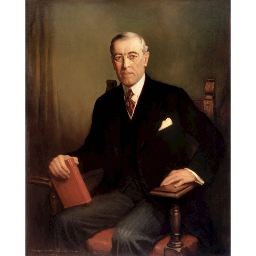
"The history of liberty is a history of resistance."
--Woodrow Wilson, President when the 19th Amendment was passed

I think that I would cope with Progressive Era difficulties by trying to stay active in my local community and fight to remedy some of known issues, specifically women's rights as that more directly affects me. During the Progressive Era, ambitious, almost ruthless personalities would succeed. Key figures were persisent and clever to reach their goals. The AI Inquiry activity gave me personal insight on what my own thoughts and situation would be like during the time, and what my own personality would be like. It allows me, as a modern teenager, to relate to a Progressive Era teenager, who would have a very different perspective from me. Perspectives are formed by the stimulation of one's mind early on, which is typically done by parent's or surrounding societies' views. This explains why my perspectives are different from those in the Progressive Era, as I am surrounding by effects of social change that hadn't yet occured in that period. These effects of social change are things that I am currently learning about, like the women's rights and labor movements.
Foreword
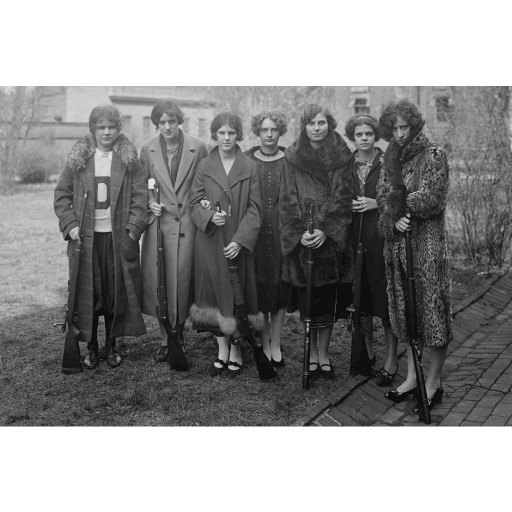
Progressive Era teenager girls, circa 1919
Early Life
Born in 1897 in coastal Virginia, I, Danielle "Dani" Winner was raised to be a rather curious girl. My father, as an architect, was able to provide a middle-class life for me, my mother, and my younger brother. I received a somewhat middling academic education and trained in classical ballet in my free time, both of which I quite enjoyed. In my teen years, I frequently encountered conditions of limited rights, as women were fighting for their rights, including the right to vote, which I cared deeply about. This is because it allowed me and women like me to have a voice in the laws and policies that affected every aspect of my life, from education to labor rights and environmental conservation.
Today school was quite fascinating. We learned Biology, which I find very interesting because of all the sea creatures I see so often on the beach. We also did quite a bit in Civics, which I find interesting but frustrating all at the same time since I cannot vote as a girl. I’ve been increasingly frustrated with this fact since I’ve started secretly attending Democratic Party meetings, sneaking out so my family doesn’t know I’ve left, and sneaking into the meetings just to observe. Many, like the boys at my school, say that women should be homemakers and nothing else, but I want to learn and fix our country!
Excerpt from diary, age 16, circa 1912

Concerns
As a young girl, one issue that frequently perturbed me was women's suffrage, which affected me greatly due to my existence as a woman in America, with the issue representing a struggle for equality and a potential for a voice in the democratic process, which directly affected my future and potential opportunities. Likewise, educational reform would expand and improve education for all, including women like me. Environmental conservation also held significant appeal, reflecting concerns for my immediate surroundings of the Virginia coast and the broader planet.
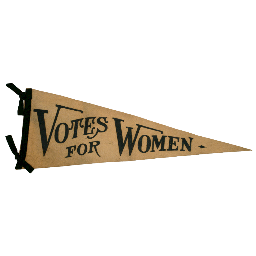

Suffragettes at the White House, later arrested, 1917

Further Education and Early Adulthood
After completing my secondary education with high honors,
I went on to be the first woman in my family to attend college. I studied business at Wesleyan College, in Macon, Georgia, and although I was heavily criticized for seeking higher education as a woman, I did enjoy my time there. After graduating college in 1918, I moved to Boston and used my business degree to open my own shop, selling clothes and working as a seamstress. Although I frequently visited my family back home in Virginia, I started a new life and a new family in Boston and was surrounded by likeminded people with similar views to me. Although I had to work hard to do so, I managed being a mother of two girls and being a successful business owner.
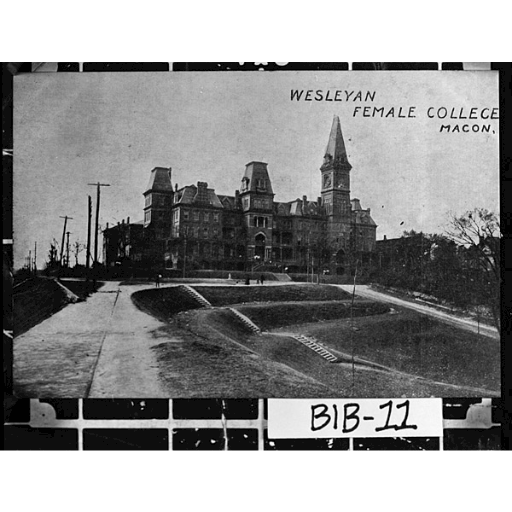
The campus where I received my education, 1843
After graduating from Wesleyan, getting married just a year later, and opening my shop, it was 1918, and social politics were heating up. All kinds of reform movements were in play, especially the Women's Suffrage movement. Although my life was becoming increasingly busy what with business, marriage, and motherhood, I frequently attended marches and rallies advocating for women's right to vote, as it was very important to me, especially as I reached 21, the age white men could vote at. My logic was, in my opinion, simple: if my husband could vote, then I should be able to as well. Additionally, my husband, Charles, even supported me in these, despite the ties and relationships he lost by doing so. We both wanted a world that our daughters could
have a part in.
Political Ideas

- Full access to our public library
- Save favorite books
- Interact with authors
"Historic and hearty.
-The Historic Review
"Phenomenal work, telling a perfect, paradigmatic recollection of women's rights through history."
-The New York Times
- < BEGINNING
- END >
-
DOWNLOAD
-
LIKE
-
COMMENT()
-
SHARE
-
SAVE
-
BUY THIS BOOK
(from $3.19+) -
BUY THIS BOOK
(from $3.19+) - DOWNLOAD
- LIKE
- COMMENT ()
- SHARE
- SAVE
- Report
-
BUY
-
LIKE
-
COMMENT()
-
SHARE
- Excessive Violence
- Harassment
- Offensive Pictures
- Spelling & Grammar Errors
- Unfinished
- Other Problem






COMMENTS
Click 'X' to report any negative comments. Thanks!