

Table of Contents
Jean Piaget's Cognitive Development Theory ... 4-5
Lawrence Kohlberg's Moral Development Theory ... 6-7
Erik Erikson's Psychosocial Development Theory ... 8-9
Infancy ... 10-11
Early Childhood ... 12-13
Middle Childhood ... 14-15
Adolescence ... 16-17
Early Adulthood ... 18-19
Middle Adulthood ... 20-22
Late Adulthood ... 23-24
Jean Piaget's Cognitive Development Theory
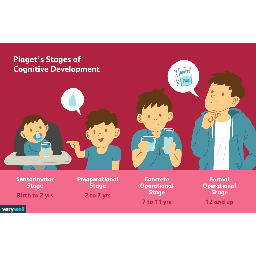
Piaget's theory explains how a child's intelligence grows in stages from birth to twenty years old. Parents can help their children build the skills, capabilities, and thought processes required to grow into a healthy adult
Sensorimotor stage (birth - 2)
- Children learn that their movements are connected to sensory satisfaction therefore they partake in motor activities that will bring a desirable result.
- They also develop object permanence (objects exist even when hidden). This could also lead to stranger anxiety
Preoperational Stage (2 - 7)
- Children cannot yet combine or seperate ideas or use logic
- They become more egocentric and are only able to view the world from their perspective
- At around age four, they begin to understand that relationships with other people are more complex than they previously thought and they become less egocentric.
- They are also unable to comprehend conservation (changing the shape or appearance of an object doesn’t change the object's mass) or centration (only paying attention to one aspect of an issue when there are more aspects to consider) because they are thinking one-dimensionally
Concrete Operational Stage (7 - 11 or 12)
- The child transitions to two-dimensional thinking and now understands principles such as conservations and centration
- They begin logical thinking
Formal Operational Stage (12 - adult)
- Children began abstract and hypothetical thinking. They also began planning and thinking of strategies.
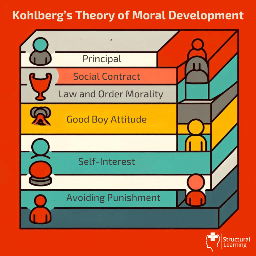
Kohlberg's theory of moral development focuses on how children develop morality and moral reasoning. Kohlberg's theory suggests that moral development occurs in six stages and that moral reasoning is primarily focused on maintaining justice. Parents can use this theory to help guide their children as they develop their moral character
Preconventional Stage (Infancy - 5)
Punishment/Obedience
Unable to differentiate between right and wrong
Punishment and authority figures dictate behaviour
Satisfying Needs
Based on obtaining satisfaction of a specific need
Preconventional Stage (Infancy - 5)
Punishment/Obedience
- Unable to differentiate between right and wrong
- Punishment and authority figures dictate behaviour
Satisfying Needs
- Based on obtaining satisfaction of a specific need
Conventional Stage (5 - 14)
Good boy & Good Girl Morality
- Focuses on living up to social expectations and role
Lawrence Kohlberg's Moral Development Theory
Conventional Stage (5 - 14)
Good boy & Good Girl Morality
Focuses on living up to social expectations and roles
Law & Order Morality
The individual now takes into consideration a larger perspective, that of societal laws. Moral decision making becomes more than consideration of close ties to others. The individual believes that rules and laws maintain social order that is worth preserving
Postconventional Stage (15 - adulthood)
Social Contract
Laws that an individual deems appropriate are obeyed and those that violate the individuals own moral code are disobeyed
Universal Ethical Principles
Individuals in this stage consider carefully how a certain moral decision would affect others and which decision would be in the best interest for a larger number of people
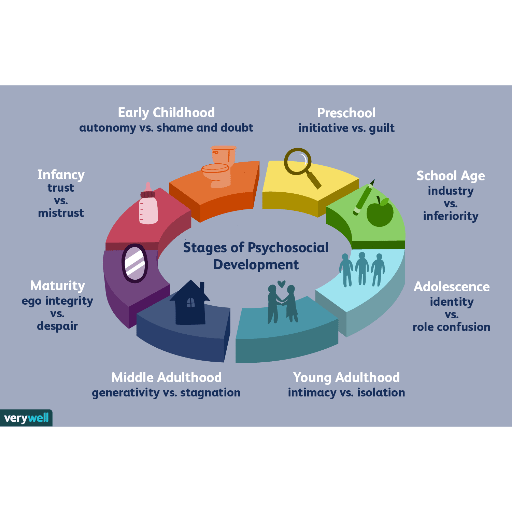
Erik Erikson's Psychosocial Development Theory
If parents understand this theory and the importance of social stages and development, they will be able to better support their child as they grow.
INFANCY
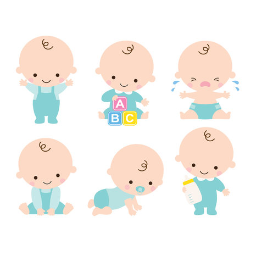

During infancy the sensorimotor stage is in play, your baby will begin to understand that their movements are tied to sensory satisfaction. Therefore, some strategies you could utilize are using toys that make sound, texture play, and music and rhythm activities since all of these incorporate one or more of their senses. This sensory stimulation is vital to your infant’s development because it helps them understand how their actions affect their surroundings, supports cognitive development, enhances their memory, and increases problem solving abilities. Additionally, at around 8 months your infant will learn object permanence which is their ability to know that objects still exist even when out of view. Peekaboo can help your baby learn object permanence. As you constantly hide your face, your baby starts to learn that you're still there even when they can't see you and they will laugh when they see you again. However, be sure to remember that once they learn object permanence, it could lead to stranger anxiety which is when children experience fear or distress when confronted with a stranger and their parents are nowhere to be seen. To help ease their anxiety, you need to slowly get your child comfortable around strangers and don’t dismiss their feelings.
Early Childhood
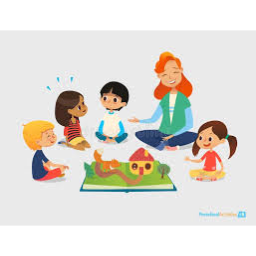
They will begin to develop their vocabulary and start using words and pictures to represent their thoughts. However they will struggle a bit with conservation and logical thinking. Nonetheless, they will be very curious about everything and constantly pester you with questions. As they begin to speak more and more they will also start to gain some independence. They will be accomplishing menial and basic tasks by themselves and making decisions on their preferences. You need to allow your kid to make choices of their own to better foster autonomy. For example, potty training is where your kid will develop a sense of autonomy. Your kid will be in charge of their bodily functions and that gives them a feeling of control and independence. However, you need to allow your child to make mistakes because that is how they will learn and grow. If you constantly correct them or put pressure on them, it could lead to your child having a low self esteem. You could also allow your child to have more control over food choices, toy preferences, and clothing selection.
Your child may also begin to concern themselves with how outside forces will judge their behavior and the consequences they will receive for “naughty” behavior. If your child learns that they can get away with “naughty” behaviors, they will continue to engage in the behavior if it gets them what they want. To combat this, you will need to implement some discipline strategies such as communicating clearly about punishments, time outs, or selective ignoring.
Middle Childhood


As your child ages, they will adapt to two-dimensional thinking and start to understand principles they didn't before like conversion and centration. Also, according to Kohlberg's conventional stage of morality, your child is now focused on living up to social expectations and roles. They will want to impress teachers, parents, and peers to gain validation. This can have either a positive or negative impact on school performance. They could work harder on their school work to impress their teachers or they may be swayed to engage in negative behavior which will diminish school performance because it wins the approval of their peers. Eventually, your child will transition to law and order morality where they will not be seeking approval from others but they will be responsible for upholding societal laws that are determined by authority figures. Their moral decisions will expand beyond the consideration of others and they will believe that laws that maintain social order are worth preserving.
- Full access to our public library
- Save favorite books
- Interact with authors
- < BEGINNING
- END >
-
DOWNLOAD
-
LIKE
-
COMMENT()
-
SHARE
-
SAVE
-
BUY THIS BOOK
(from $4.59+) -
BUY THIS BOOK
(from $4.59+) - DOWNLOAD
- LIKE
- COMMENT ()
- SHARE
- SAVE
- Report
-
BUY
-
LIKE
-
COMMENT()
-
SHARE
- Excessive Violence
- Harassment
- Offensive Pictures
- Spelling & Grammar Errors
- Unfinished
- Other Problem





COMMENTS
Click 'X' to report any negative comments. Thanks!