
is for apostrophe
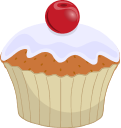
An apostrophe is used to show something belongs to someone.
The teacher's cake. This means the cake belongs to one teacher.
The teachers' cake. This means the cake belongs to more than one teacher. Now the teacher is sad because she has to share her cake!

'
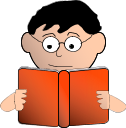
is for book
Books are very useful things and come in all different forms. Some are exciting stories about pirates or dragons, some have lots of lovely poems about nature and beauty. Some are very helpful, like a dictionary. And some tell you about different features of English, in alphabetical order.


is for commas

Commas are used to break up different parts of a sentence or to show that you are writing a list.
At the shop I bought jam, oranges, bread and milk.
They are very useful for making sure your teacher doesn't run out of breath when reading your work.
,
is for descriptive words

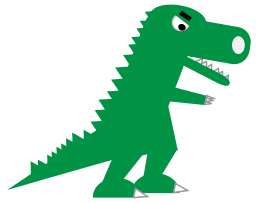
Descriptive words are also known as adjectives (these describe a thing) or adverbs (this describe an action) and are very important for making your writing more interesting.
The big angry t-rex stomped loudly across the quiet meadow.
is for exclamation mark

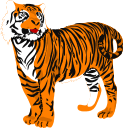
An exclamation mark can be used at the end of the sentence to show strong emotion, such as surprise. In a story, it might show that a character is shouting.
"Argh! A tiger!" cried James.
!
is for full stops

Full stops are used at the end of a sentence to show where one sentence stops and another one starts.
The teacher reminded the children to use full stops. It made their work much easier to read.
.

is for grammar

Grammar is a bit like a set of rules that show how a language is put together. It is important for making sure our writing makes sense.
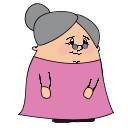
(It has been pointed out to me that this picture is of a grandma and not grammar. Easy mistake to make...)
is for homonym

Homonyms are words that sound the same but are written differently and have different meanings. We have lots of them in English.
see/ sea
bare/ bear
no/ know
pear/ pair
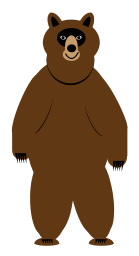
is for irregular verbs

An irregular verb is a verb that does not follow the rules that the other verbs do. English has a lot of them.
We say danced, walked, tip-toed but ran (not runned).
I am, you are, he/she is.
is for joy of reading

Reading is something that you do a lot during English lessons, but try to find time to read on your own too, just for fun. There is a whole world of magical things waiting to be read by you.

is for knight (and other silent letters)

Sometimes, words in English have a pesky silent letter. Unfortunately, there is no trick for knowing which ones, other than remembering them!
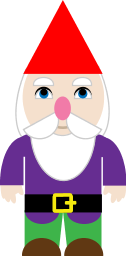
Knight, knife, gnome, pterodactyl, know, write etc.
is for language

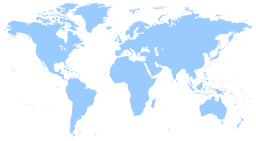
English is of course a language. It is the most widely spoken language in the world, with over 1.5 billion speakers. There are different types of English spoken all over the world, such as American English or New Zealand English.
is for metaphor

A metaphor is a way of comparing one thing to something else by describing it as that thing.
The moon was a floating lantern in the sky.

is for noun

A noun is another way of saying a thing.
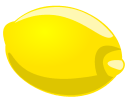
Book, lemon, man, hand are all nouns.
is for onomatopoeia

Onomatopoeia is the use of words that sound like the noise they are representing.
Oink, boom, splash, whizz, bang.

is for phonics

English is mostly a phonetic language, which means it is written how it sounds. However, some words are not phonetic. Phonics are a useful way of of figuring out how a word might be read or written.
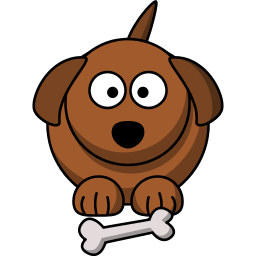
Dog is a phonetic word. d-o-g
- Full access to our public library
- Save favorite books
- Interact with authors
- < BEGINNING
- END >
-
DOWNLOAD
-
LIKE
-
COMMENT()
-
SHARE
-
SAVE
-
BUY THIS BOOK
(from $5.39+) -
BUY THIS BOOK
(from $5.39+) - DOWNLOAD
- LIKE
- COMMENT ()
- SHARE
- SAVE
- Report
-
BUY
-
LIKE
-
COMMENT()
-
SHARE
- Excessive Violence
- Harassment
- Offensive Pictures
- Spelling & Grammar Errors
- Unfinished
- Other Problem





COMMENTS
Click 'X' to report any negative comments. Thanks!