


3rd Primary School of Drama, Greece
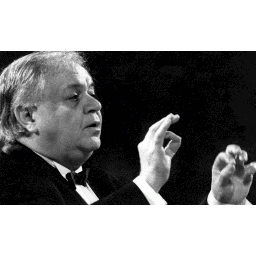

3rd Primary School of Vasiliko, Greece- Classes E1 & C1

He was a political activist, and cultural icon. His music blended classical, folk, and popular Greek styles, making him famous for works like Zorba the Greek, the Mauthausen Trilogy, and his oratorio Axion Esti. Theodorakis also composed symphonies, operas, and film scores. Politically active, he fought against fascism and served in parliament after the country's return to democracy. His art and activism made him a symbol of resistance and cultural pride in Greece.
Dionysis Savvopoulos
Primary School of Kato Scholari, Greece (4th grade)
Dionysis Savvopoulos (Thessaloniki, December 2, 1944) is a Greek singer-songwriter, composer, and lyricist.
He began his musical career in the 1960s. Influenced by rock and folk music, he combined traditional Greek elements with modern sounds, creating a unique musical style.
He wrote songs with political, romantic, and satirical content. He is considered the pioneer of the school of Greek singer-songwriters, who write their own music and lyrics and perform their own songs.
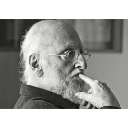
Phoebus Delivorias
Primary School of Kato Scholari, Greece
Phoebus Delivorias is a Greek rock musician, singer, and songwriter from Kallithea, Attica, known for his unique blend of traditional Greek music with modern influences. His work often features rich melodies, poignant lyrics, and a deep connection to Greek culture. Delivorias is celebrated for his ability to resonate emotionally with listeners, making him a notable figure in the contemporary Greek music scene. His songs often explore themes of love, life, and the human experience. His first album with children's songs and eighth album overall, "Say your name", was released in 2018.
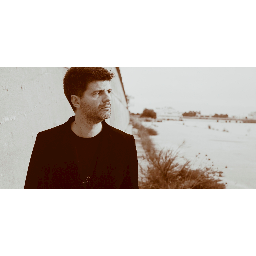
C.Ș.E.I „Delfinul”, Constanța, România

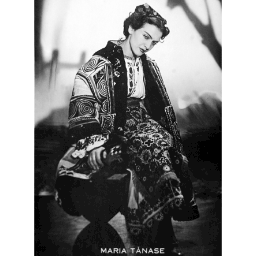
Maria Tănase (1913-1963) was a renowned Romanian singer and cultural icon, often referred to as "The Edith Piaf of Romania" due to her powerful voice and emotive performances. She is celebrated for popularizing traditional Romanian folk music, blending it with urban influences and bringing it to a wider audience both nationally and internationally. Her repertoire included a vast range of songs, from doinas and ballads to love songs and laments, capturing the soul of Romanian folklore. Maria Tănase’s contribution to Romanian music earned her a place in the hearts of many, making her a beloved figure in the country’s cultural history.
İdil Biret
Filiz Mancak Ernalbant, Çanakkale Ticaret Borsası İlkokulu, TÜRKİYE

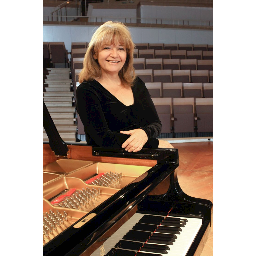
İdil Biret is a renowned Turkish pianist, celebrated for her exceptional technical prowess and wide-ranging repertoire. Biret showed extraordinary musical talent at a very young age. She studied at the Paris Conservatory under the tutelage of famed pianist Nadia Boulanger. There, she also studied with prominent figures such as Alfred Cortot and Wilhelm Kempff. Biret began playing the piano at the age of 3 and gave her first concert when she was just 16. She is regarded as one of the foremost interpreters of the Romantic repertoire, particularly the works of Chopin and Liszt. Over her long career, İdil Biret has received numerous awards, including the Grand Prix du Disque from the French Academy of Records and several national honors from Turkey for her contributions to music.
Suna Kan
Ergün Kaya, Çanakkale Ticaret Borsası İlkokulu, TÜRKİYE
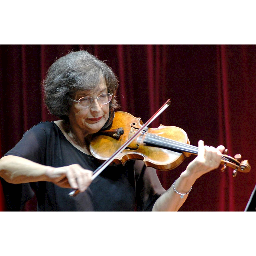
Suna Kan, is a highly regarded Turkish violinist, known for her technical skill, expressive playing, and contributions to the development of classical music in Turkey. Kan was recognized as a child prodigy when she started studying the violin under the guidance of her father, a violinist and conductor. By the age of 9, she performed her first concert with the Presidential Symphony Orchestra in Ankara. She then went on to study in Paris, supported by the Turkish government, where she trained under renowned violinists such as Gabriel Bouillon at the Paris Conservatoire. She also received guidance from Nadia Boulanger, much like her contemporary İdil Biret.
Gülsüm Demircan Atatürk Secondary School
Barış Manço was a prominent Turkish rock musician, singer, composer, and television personality. Born on January 2, 1943, in Istanbul, he is known as one of Turkey's most influential musicians, blending traditional Turkish folk music with rock and psychedelic elements. In the 1970s, he gained fame with his band Kurtalan Ekspres, producing iconic songs that became popular across generations.
Beyond his music, Manço was beloved for his TV show "7'den 77'ye" ("From 7 to 77"), which educated and entertained viewers of all ages. He traveled extensively for the show, sharing global cultures with Turkish audiences. His songs, such as "Gülpembe," "Dağlar Dağlar," and "Dönence," remain classics in Turkey. Barış Manço passed away on February 1, 1999, leaving a lasting legacy in Turkish music and culture.

MANUEL DE FALLA
CEIP JUAN RAMÓN JIMENEZ, TOMARES (SEVILLA)
DOLOREZ ROCÍO MANANO MORCILLO
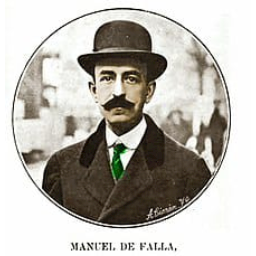
Manuel de Falla y Matheu (Cádiz, 23 November 1876-Alta Gracia, Argentina, 14 November 1946) was a Spanish composer of musical nationalism, one of the most important composers of the first half of the 20th century, along with Isaac Albéniz, Enrique Granados, Joaquín Turina and Joaquín Rodrigo.
Among his most famous works are El amor brujo, El sombrero de tres picos, the Siete canciones populares españolas for voice and piano, the Fantasía Bética for piano and Noches en los jardines de España, all composed on his return from his stay in Paris, where he met and learned from great European composers of the time such as Debussy and Ravel. He also composed the opera La vida breve, an opera for puppets, El retablo de Maese Pedro and others.

Among some anecdotes about this author, we can highlight that some biographers say that he was hypocritical.
biographers say that he was a hypochondriac.
He was a great friend of two great poets, Federico García Lorca and Juan Ramón Jiménez. Picasso created the sketches and costumes for his work El sombrero de tres picos.
Manuel de Falla lived in Granada for 17 years, where he composed his masterpiece El amor brujo. He called this city "my little Paris" and it is where his passion for flamenco was born.
The composer went into exile in Argentina at the outbreak of the Spanish Civil War, where he died in his sleep after heart failure.
ICM Beneventano, Ottaviano, Italy (class 2 F)

Laura Pausini is an Italian pop singer who rose to fame in 1993, winning the newcomer artists' section of the 43rd Sanremo Music Festival with her debut single "La solitudine",[which became an Italian standard and an international hit. Throughout her career, she has won numerous music awards in Italy and internationally.

ICM Beneventano, Ottaviano, Italy (class 2D)

Giuseppe Daniele (19 March 1955 – 4 January 2015), known as Pino Daniele, was an Italian singer, songwriter and musician. His influences covered a wide number of genres, including pop, blues, jazz, and Italian and Middle Eastern music. His debut in the Italian music world was in 1977 with the album Terra mia,[1] which proved to be a successful mix of Neapolitan tradition and Blues sounds.His debut in the Italian music world was in 1977 with the album Terra mia,[1] which proved to be a successful mix of Neapolitan tradition and Blues sounds.
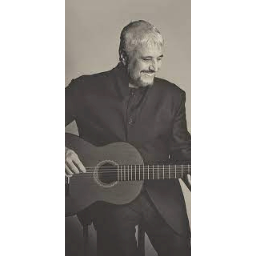
Santos Simões School, Portugal (Filipa Marques)

Fado is a traditional Portuguese music genre, known for its haunting melodies, expressive vocals, and profound themes of saudade—a word that roughly translates to a deep sense of longing, nostalgia, or bittersweet remembrance. Originating in Lisbon’s working-class neighborhoods in the early 19th century, fado is usually performed with a singer (fadista) accompanied by the Portuguese guitar and a classical guitar, blending to create an intensely emotional sound. The lyrics often reflect love, loss, fate, and the time passing*, rooted in the unique Portuguese cultural identity.
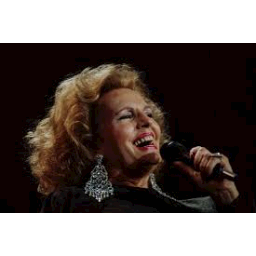
Santos Simões School, Portugal (Sofia Branco)

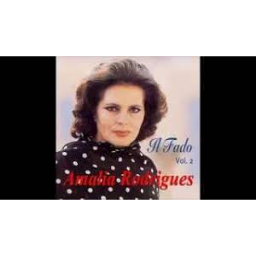
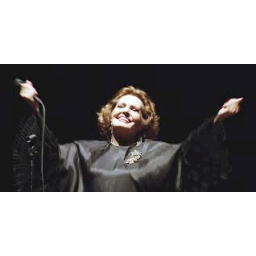
Amália Rodrigues, often called the “Queen of Fado,” was Portugal’s most famous and influential fado singer. Rising to prominence in the 1940s, Rodrigues became an international icon for fado, bringing global recognition to the genre. With her powerful voice and emotional performances, she transformed fado into a sophisticated art form and introduced new themes, even influencing the development of modern fado. Her recordings and performances left a lasting legacy, and she remains a cultural icon in Portugal and among fado lovers worldwide.
- Full access to our public library
- Save favorite books
- Interact with authors
- < BEGINNING
- END >
-
DOWNLOAD
-
LIKE
-
COMMENT()
-
SHARE
-
SAVE
-
BUY THIS BOOK
(from $4.59+) -
BUY THIS BOOK
(from $4.59+) - DOWNLOAD
- LIKE
- COMMENT ()
- SHARE
- SAVE
- Report
-
BUY
-
LIKE
-
COMMENT()
-
SHARE
- Excessive Violence
- Harassment
- Offensive Pictures
- Spelling & Grammar Errors
- Unfinished
- Other Problem





COMMENTS
Click 'X' to report any negative comments. Thanks!