
Have you ever looked up at the stars at night and wondered what is out there? The universe is a huge and amazing place, full of exciting things to discover! In this book, we will learn about galaxies, with a special focus on our galaxy, the Milky Way. We’ll also explore the Sun and how it helps our planet, Earth. Let’s start this fun journey to learn more about our universe
Galaxies and Our Universe
What do you think is the most exciting part of the universe?
The universe is an enormous expanse filled with numerous galaxies! A galaxy is a large collection of stars, planets, gas, dust, and dark matter, all held together by the force of gravity. One of the most famous galaxies is the Milky Way, which is our home galaxy.
Our Galaxy: The Milky Way
The Milky Way appears as a massive spiral shape, with its arms reaching out into the vastness of space. It contains billions of stars, including our Sun. The Sun is a unique star because it provides the light and warmth essential for life on Earth.
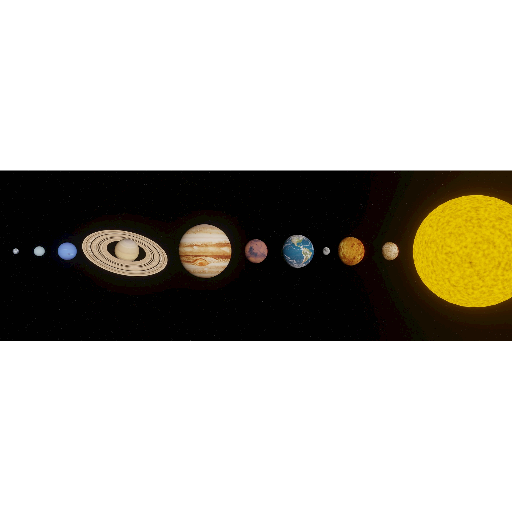
The Sun and Our Solar System
Why do you think the Sun is essential for life on Earth?
Our planet, Earth, orbits the Sun. This means that as Earth rotates on its axis, it also moves in a circular path around the Sun. It takes approximately 365 days for Earth to complete one full orbit, which is the reason we have a year. The Sun’s gravitational pull keeps all the planets, including Earth, in their stable orbits. The eight planets in our solar system can be categorized into two types: smaller, rocky planets that have solid surfaces (Mercury, Venus, Earth, and Mars) and larger gas giants (Jupiter, Saturn, Uranus, and Neptune).
In conclusion, the universe is an amazing place! Our galaxy, the Milky Way, has the Sun, which is very important for life on our planet. Learning about the universe helps us understand how special our world is.
Motion of the earth around the sun
Great Journey of the Earth
The Earth revolves around the Sun every year. This motion affects the weather and the seasons.
In addition to revolving around the Sun, the Earth also revolves around itself. This turn is called rotation and lasts for 24 hours, which is why we have day and night! When part of the Earth is in front of the Sun, it is day, and when it is behind, it is night.
Do you see that line around the Sun? That's because the Earth, instead of rotating on its axis, also makes a complete turn around the Sun and it takes 365 days to make one turn,so that's a whole year!
This phenomenon is called translation and has an almost circular shape. The motion of this almost circular shape is called the orbital trajectory.
The Earth is not straight when it travels on its orbit. It is inclined 23,5 degrees on its axis. This inclination is very important to understand why we have four seasons in one year.
During Earth travels around the Sun, this inclination causes different parts of the Earth to receive more or less sunlight at different times of the year. When one hemisphere is inclined towards the Sun, it is summer in that part of the planet. When it is inclined on the opposite side, it is winter.
We can notice these changes by observing the temperature, the length of the days and the activities of nature throughout the year. It all depends on how we are positioned in our orbit around the Sun!
The solstices and equinoxes are special times of the year that mark the beginning of the seasons and affect the length of day and night in different
The solstices occur twice a year and mark the days when the Earth reaches the points in its orbit furthest and closest to the Sun, due to the tilt of its axis. This creates two important moments:
- Summer solstice (around 21 June).
- Winter solstice (around 21 December)
The equinoxes also occur twice a year and are the times when the Earth is neither tilted towards the Sun nor in the opposite direction, so the Sun is directly over the equator. This makes day and night almost the same length all over the planet.
- Spring equinox (around 20 March)
- Autumnal Equinox (around 22 September)
To sum up, thanks to the Earth's rotation and translation, we have days, nights and seasons. Our planet is on a constant journey that makes possible the life and changes of our environment every year!
Earth's composition
Introduction
Imagine that we are traveling on the ground as if we were space explorers, but instead of stars, we are going to discover the secrets hidden under our feet.
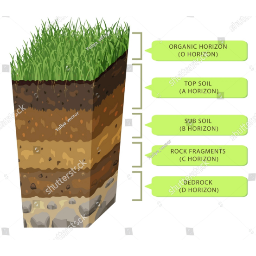
Our first stop is Layer O, also known as the Organic Layer. Look around! Here there are crunchy leaves, twigs and plant debris that are decomposing. Tiny creatures, like earthworms and microorganisms, are hard at work turning all this into nutrients - it's like a big feast for the plants!
Continuing our journey, we arrive at Layer A, or Superficial Soil. This layer is dark and rich in minerals and nutrients, perfect for plants, and the roots of trees and flowers seek these nutrients to grow strong and healthy. The roots of trees and flowers seek these nutrients to grow strong and healthy - the most fertile layer of all!
Now we descend to Layer B, known as Subsoil. Here, the soil is denser and more compact. Although there is less organic matter, this layer stores minerals that have seeped down from above. It's like a treasure box for the soil!
We continue our descent to Layer C, where we find decomposed parent rocks. In this layer, the rocks slowly decompose and begin to form soil - a fascinating place to learn about soil formation!
Welcome to the next stage of our subway journey! Now that we know about the layers of the soil, it's time to understand how water plays a key role in the life of this subway ecosystem, sowe will explore how water affects the soil.
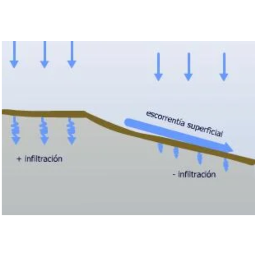
Let's imagine that it starts to rain. As the water droplets fall, they infiltrate the soil, moving through the pores between the soil particles, a process called infiltration. It is as if the water is performing a magical dance as it enters the ground!
Now, let's talk about porosity. Pores are the small spaces between soil particles. The more pores the soil has, the more water it can absorb! It's like a sponge that soaks up water when you submerge it.
Finally, we come to permeability. This refers to the ease with which water passes through the soil. But not all soils are the same! For example, sandy soil allows water to pass through quickly, while clay soil is slower. Imagine that water is running in a race; in sandy soil, it reaches the finish line very quickly! In clay soil, it has to go slower.
- Full access to our public library
- Save favorite books
- Interact with authors
- < BEGINNING
- END >
-
DOWNLOAD
-
LIKE
-
COMMENT()
-
SHARE
-
SAVE
-
BUY THIS BOOK
(from $6.59+) -
BUY THIS BOOK
(from $6.59+) - DOWNLOAD
- LIKE
- COMMENT ()
- SHARE
- SAVE
- Report
-
BUY
-
LIKE
-
COMMENT()
-
SHARE
- Excessive Violence
- Harassment
- Offensive Pictures
- Spelling & Grammar Errors
- Unfinished
- Other Problem





COMMENTS
Click 'X' to report any negative comments. Thanks!