
This book was created and published on StoryJumper™
©2014 StoryJumper, Inc. All rights reserved.
Publish your own children's book:
www.storyjumper.com

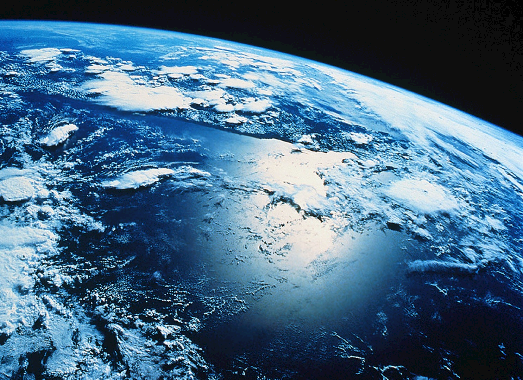
 Planet Earth is where we live.
 The water and sun
 allow us to survive here.
Something we cannot do yet on
other planets in our solar system.
 We should start first
on the outer limits of Earth.

Chapter 1
Earth's
Atmosphere

The atmosphere is the envelope of gases that surround Earth. It
protects us from the vacuum of outer space, electromagnetic radiation
from the sun and small objects flying through space such as
meteoroids. It also holds the oxygen we need to survive. A majority of
the atmosphere is made up of nitrogen molecules. However, it also
contains the carbon dioxide plants need to survive and the oxygen we
need. It is broken up into layers in which different things happen.
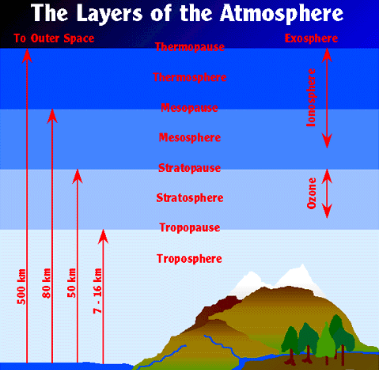
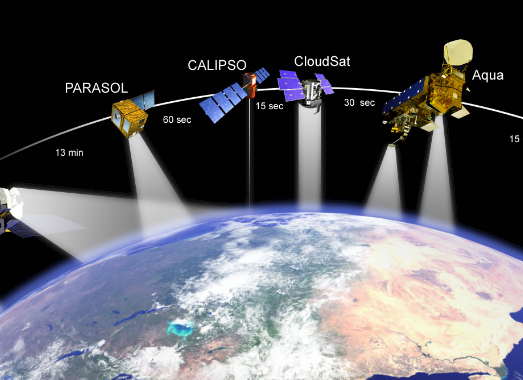
The exosphere layer is the thinnest and farthest away from Earth. This
is where many of the satellites orbit Earth.
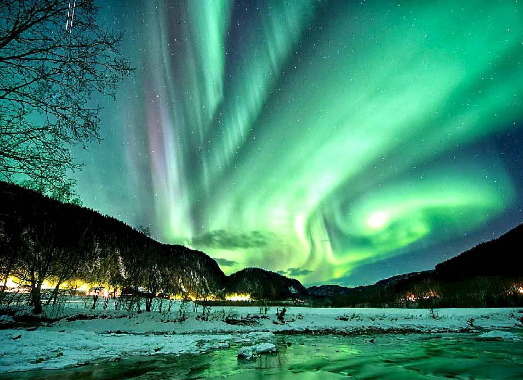
The next layer is the thermosphere. This layer has a high temperature
and high energy caused by solar radiation. Although the temperature
is high here, there is actually very little heat because the atoms are so
spread out. This is where the space station and other spacecraft spend
most of their time and where aurora borealis (northern lights) and
aurora australis (southern lights) occur.
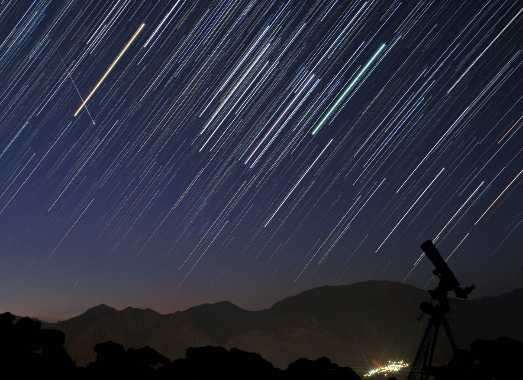
The mesosphere has the lowest temperature and is the coldest layer
of the atmosphere. This is where most meteors burn up when they
enter the atmosphere. We sometimes see these and call them
'shooting stars'. The ones that do make it through are then called
meteorites.
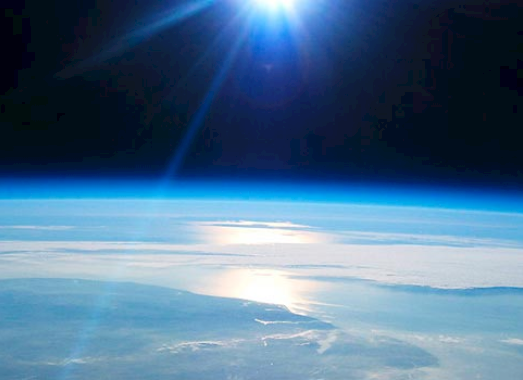
The next layer down in the stratosphere. This layer has a very large
change in temperature, changing from cold and getting up to 0
degrees Celsius which is very warm in the atmosphere. Weather
balloons, military aircraft and spy aircraft fly in this layer. This layer
also includes the ozone layer, or ozonosphere, which is very important
to life on Earth.
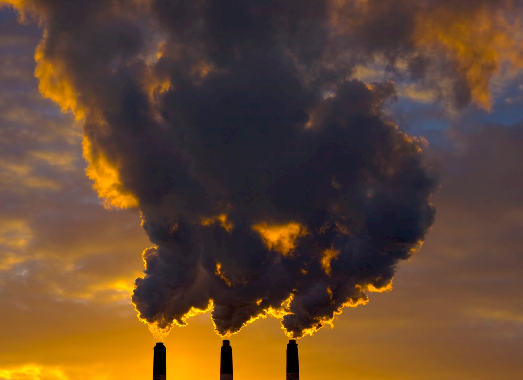
The ozonosphere protects us from much of the suns harmful UV
(ultraviolet) rays. Ozone molecules actually capture the UV rays and
change them into IR (infrared) radiation. Without this layer, the
stratosphere would be much cooler. Due to overwhelming amounts of
pollution, a ozone hole has occurred.
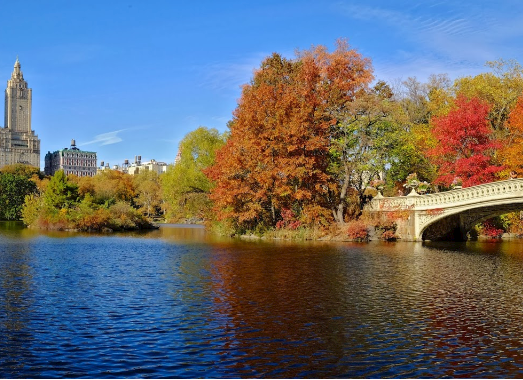
he layer closest to Earth is known as the troposphere. This is where
we live, weather occurs, clouds develops, hot air balloons, commercial
jets, and birds fly, and pollution collects. This layer has lots of water
vapor in it.

Chapter 2
Earth's Layers
Although scientists have never studied any materials from the Earth at
a deeper depth than 7 miles, they have other ways of studying the
matter. The most important tool for studying deep beneath Earth's
surface are seismic waves. These are waves of energy caused either
by earthquakes or by massive man-made explosions. Scientists are
able to measure these waves as the pass through the Earth. As the
waves encounter different materials, getting longer, shorter, slower or
faster. This provides scientists with valuable information. Geologists
are scientists that study what the Earth is made of and how is was
formed. Geologists have also been able to use Earth's magnetic field to
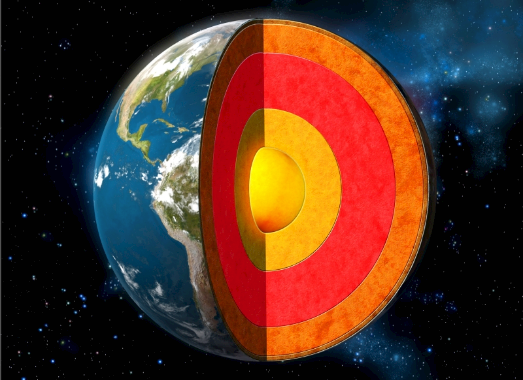
help determine was is under the surface. There are four distinct layers
known as the crust, mantle, the outer core and the inner core.
Although there are other special layers known as the athenosphere,
lithosphere and a difference between continental crust and oceanic
crust.
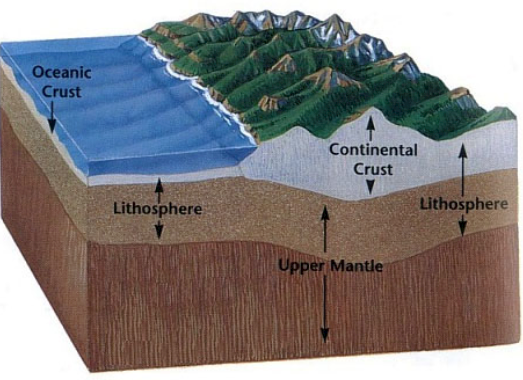
The first ten miles down into the Earth is known as the crust. This layer is made up
of rocks and other loose materials. The continental crust, which is the land we live
on, is almost 3 times as thick as it is in under the oceans. The continental crust is
made up of rocks that consist primarily of silica and alumina called the "sial".
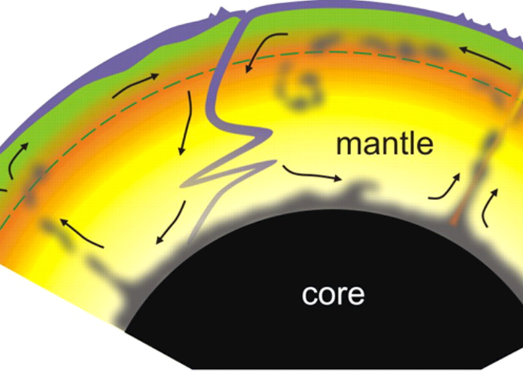
Beyond the crust is the mantle. This layer extends to approximately
1,800 miles beneath the surface. It is made of a thick, solid, rocky
substance that represents about 85% of the total weight and mass of
the Earth. It's made up of slightly different silicate rocks with more
magnesium and iron.
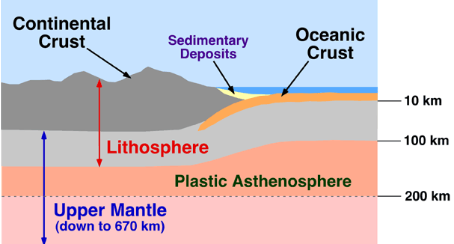
The lithosphere or tectonic plates are a combination of crust and outer
mantle.
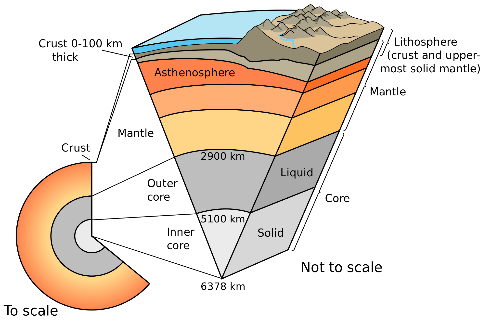
Next is the Earth's outer core which extends about 3,000 miles
beneath the surface. It is believed that this layer is compromised of
liquid molten lava. This lave is made up of iron and nickel and is very
hot (4,400 to 5,000+ degrees C). The outer core is very important to
earth as it creates something called a magnetic field. The magnetic
field the outer core creates goes way out in to space and makes a
protective barrier around the earth that shields us from the sun's
damaging solar wind.
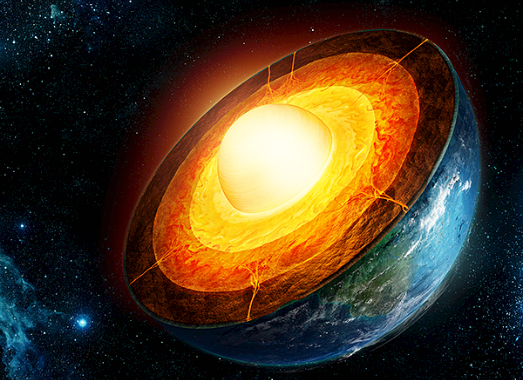
The Earth's inner core is made up of iron and nickel, just like the outer
core, however, the inner core is different. The inner core is so deep
within the earth that it's under immense pressure. So much pressure
that, even though it is so hot, it is solid. The inner core is the hottest
part of the Earth, and, at over 5,000 degrees C, is about as hot as the
surface of the sun.


Chapter 3
Water Cycle
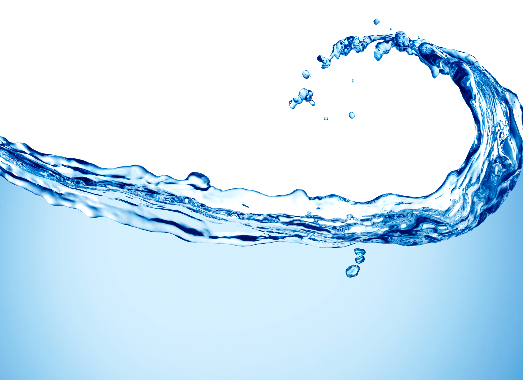
Water exists as either a solid, liquid, or gas. The gas stage of water is
known as vapor. Any water that we interact with today has been
around pretty much as long as the Earth has. The Earth only has a
limited amount of water. It keeps moving around and around in the
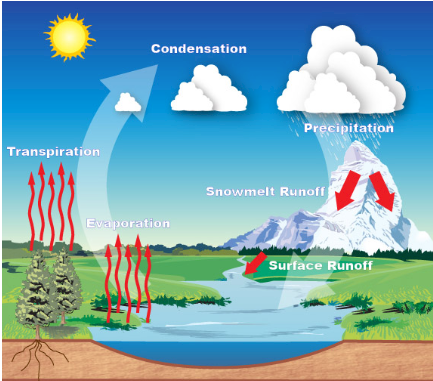
water cycle. This cycle is made up of a few different stages;
evaporation (and transpiration), condensation, precipitation, runoff,
and collection.
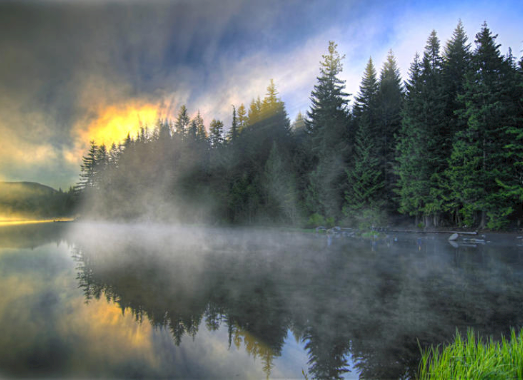
Evaporation is when the sun heats up water molecules in rivers, lakes,
or oceans and it turns the water into vapor. Plants sweat, or transpire,
which also lends to the vapor.
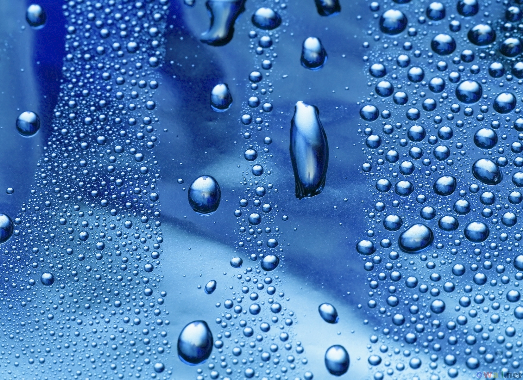
Condensation is when water vapor gets so cold that it turns back into
liquid, which forms clouds. You can see condensation on you glass
during a warm day. This water did not somehow seep through the
glass but the vapor in the air was made cold enough when it hit it to
turn back into liquid. The dew point of water allows this water to
collect on glass, leaves, and pretty much everything else. Dew is the
accumulation of water that you can see. Humidity is something that
often accompanies many of the different types of storms. Essentially,
humidity is the moisture, or water vapor, in the air. There are 3 ways
to measure humidity; relative humidity, specific humidity and absolute
humidity. Specific and absolute humidity measure the exact number of
water molecules in the air while relative humidity measures how much
is in the air versus how much could be in the air.
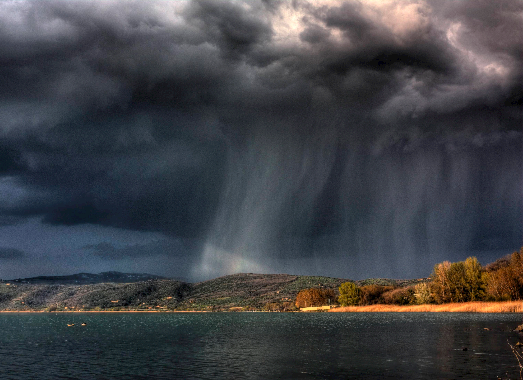
Precipitation occurs when so much water has condensed in the clouds
that they can no longer hold it in. This is what causes rain, hail, sleet
and snow.
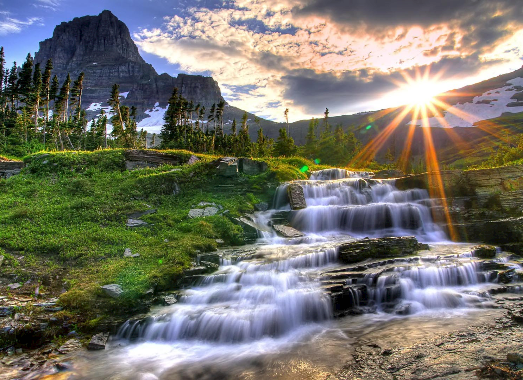
Runoff occurs when the excess water cannot soak into the ground or
soil. Instead it rolls off the hills and mountains into lower lands,
collecting in rivers, lakes and the ocean.This happens when it rains or
snow melts. The water that soaks into the ground becomes part of the
water table which provides water for people, plants and animals.
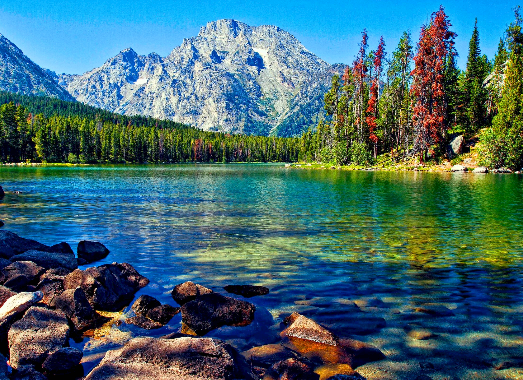
Collection is when this rain, hail, sleet, or snow water collects into the
rivers, lakes, streams and oceans.

Chapter 4
Weather and
Natural Disasters
Weather is the state of the atmosphere at a place and time as regards
heat, dryness, sunshine, wind, rain, etc. Natural disasters are a
natural events such as a floods, earthquakes, or hurricanes that cause
great damage or loss of life. Many natural disasters are caused by the
weather.
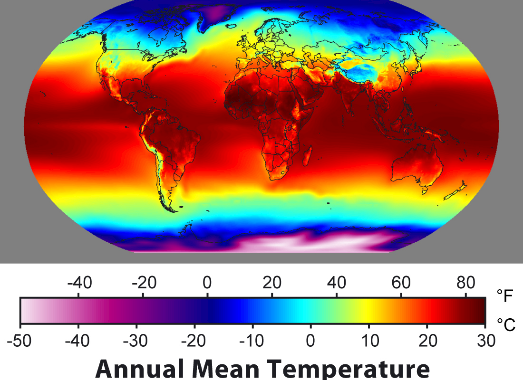
Temperature is a good place to start when talking about weather.
Temperature is the measurement of heat. Everyone knows what cold
and heat feel like, but what are they really? Cold is actually just the
absence of heat. Since temperature measures heat, when the
temperature is low we say it is cold.
Heat is actually a form of energy. In any object with heat, tiny
particles and constantly vibrating and bumping into one another.
When something feels hot, the vibrations of the molecules, are
transferred to our skin, making it feel hot. We usually use
thermometers in order to measure the temperature. The freezing
point of water on the Celsius scale is 0 °(written as 0 °C.) and the
freezing point of water on the Fahrenheit scale is 32 °(written as 32
°F.)This is important when discussing weather.
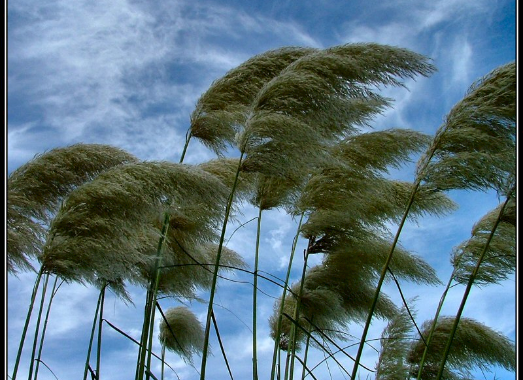
Wind is the result of air moving around in the atmosphere caused by
changes in pressure. Cool air is heavier than hot air which can create
an area of high pressure while hot air will create an area of low
pressure. This is what will cause wind. The greater the difference
between the temperature of the two areas of pressure, the faster the
wind will blow.
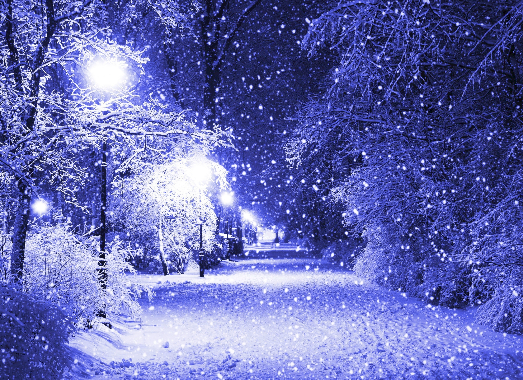
Precipitation, as we talked about before, is rain, sleet, hail or snow.
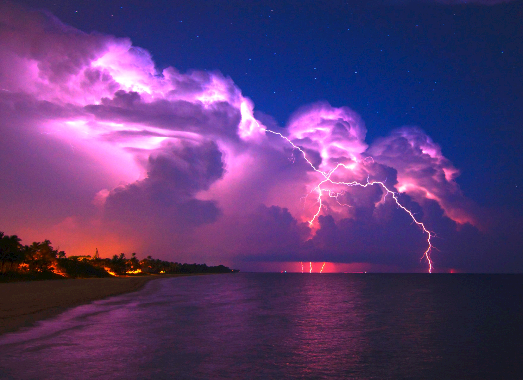
These fall from the clouds of which there are 3 main types. Cumulus
clouds are the big puffy white clouds. They look like floating cotton.
Sometimes they can turn into cumulonimbus or tall towering cumulus
clouds. These clouds are thunderstorm clouds. Cirrus clouds are high,
thin clouds made of ice crystals. They generally mean good weather is
on the way. Stratus clouds are the low flat and large clouds that tend
to cover the entire sky. They give us those "overcast" days and can
drop light rain called drizzle. Fog is a cloud that forms right at the
surface of the Earth.
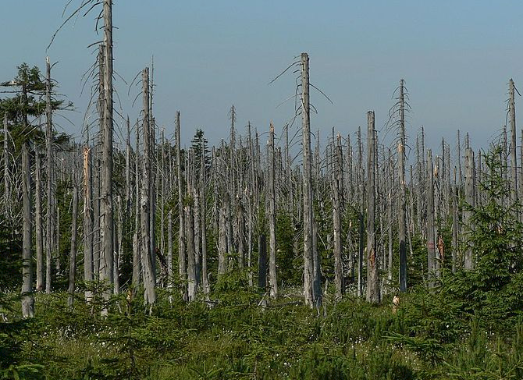
Acid rain, however, is not as good as regular rain. In fact, acid rain
can destroy forests instead of making them grow and will poison the
animals living in rivers and lakes. Acid rain occurs when the rain forms
in polluted air. There is so much nitrogen and sulfur in the air, that it
condenses with the water to form acid rain.
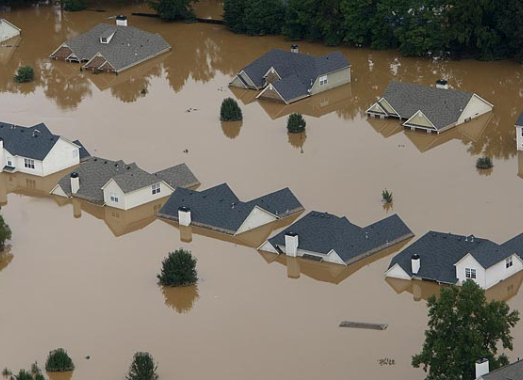
Floods also occur because of rain. Floods are when large amounts of
rain water or runoff overflows its normal confines. Basically, floods
happen when rivers, streams, lake, or gutters overflow with water.
Floods are extremely dangerous. Sometime we will build a levee, a
type of barrier, in order to keep water from overflowing it's boundaries
or to keep people and homes safe. A flood plain is an area of low-lying
ground adjacent to a river, formed mainly of river sediments and
subject to flooding. A drought is basically the opposite of flooding. It
means the absence of water for a long period of time, at a place where
it is considered not normal compared to its usual conditions.
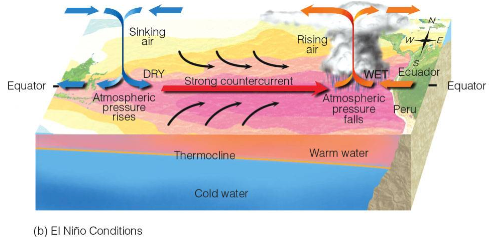
El Niño is a phase of El Niño-Southern Oscillation (ENSO) cycle when
there is an abnormal warming of surface temperatures in the Eastern
tropical Pacific part of the ocean. Basically this is a way for rainstorms
to be made.
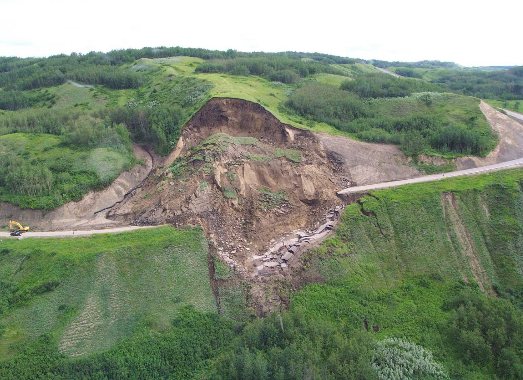
Landslides take place when dirt, pebbles, rocks and boulders slide
down a slope together. Sometimes these landslides are small, and
hardly noticeable. Other times however, they can be substantial,
involving the entire side of a mountain. Landslides are often caused by
rainfall adding weight to the side of a slope. However, they can also
happen without rain.
You've previewed 64 of 98 pages.
To read more:
Click Sign Up (Free)- Full access to our public library
- Save favorite books
- Interact with authors


- < BEGINNING
- END >
-
DOWNLOAD
-
LIKE(4)
-
COMMENT()
-
SHARE
-
SAVE
-
BUY THIS BOOK
(from $19.59+) -
BUY THIS BOOK
(from $19.59+) - DOWNLOAD
- LIKE (4)
- COMMENT ()
- SHARE
- SAVE
- Report
-
BUY
-
LIKE(4)
-
COMMENT()
-
SHARE
- Excessive Violence
- Harassment
- Offensive Pictures
- Spelling & Grammar Errors
- Unfinished
- Other Problem





COMMENTS
Click 'X' to report any negative comments. Thanks!