This book is intended for audiences in
Grades 9-12.

The term "media" is defined as "various channels of communication used to disseminate information to the public". Media, based on this definition, has existed for centuries, and has taken the forms of oral storytelling to printed newspapers to television channels to online webpages, demonstrating its adaptation and evolution over time.
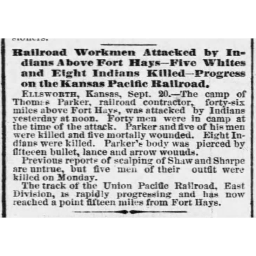
Newspaper article describing railroad workers encounter with Native Americans, 1867


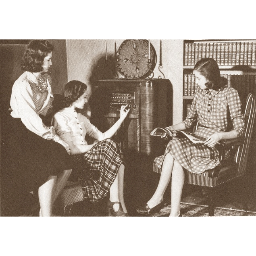
People listening to radio news broadcast, 1940s
Introduction
The intention of media is to convey information to the audience in a way that the audience will understand what is being described and how it is impactful. Members of the media whose job it is to broadcast that information, such as reporters, journalists, and anchors, become the people that the audience looks to and ultimately puts their trust in to provide information in the most honest and comprehensible way. The trust the audience places in these individuals leads them to become dependent on them to understand the ongoing events in the world. During a time in the United States of America when some of its most historically, economically, politically, and culturally significant events were occurring, most people in this country looked to one man in the media for this very purpose: Walter Cronkite.
Walter Cronkite was a broadcaster for various networks and news outlets, including United Press International (UPI), ABC, and, most notably, CBS. His time at CBS made him the face of media during the 1960s and 1970s, as he reported on some of the most significant events in American history. His commitment to delivering honest
and accurate information was key to his popularity as a newscaster and helped cement his legacy.
Who Was Walter Cronkite?

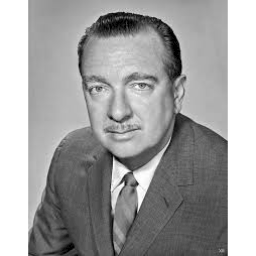
Walter Cronkite, 1962
Early Life
Walter Cronkite was born on November 4, 1916, in St. Joseph, Missouri. Walter grew up at the tail end of The First World War and the beginning of the Great Depression,

which was a time of great chance in America. His family moved to Kansas City when he was young, where he developed a love for storytelling and writing, especially through journalism.
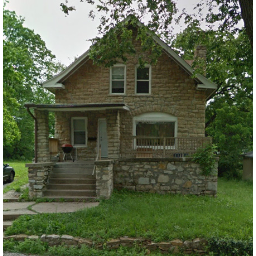
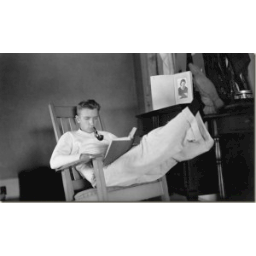
Cronkite family home, Kansas City, MO
Introduction to Broadcasting
As a teenager, Cronkite was fascinated by the world of radio and newspapers, and by the time he graduated from high school, he was already working as a reporter for a local newspaper. He continued to pursue his passion for

journalism at the University of Texas, where he studied broadcast journalism and joined the school newspaper. But his education was interrupted when World War II broke out.
Walter Cronkite, University of Texas
World War II
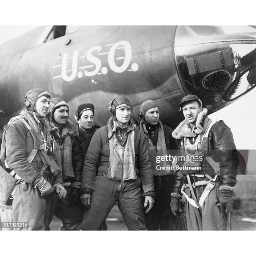
During World War II, Walter Cronkite served as a war correspondent for United Press International, reporting on major battles in Europe and the Pacific. He was among the first to report directly from the front lines, covering key events like D-Day and the liberation of Paris.

Cronkite (far right) at an English airfield, 1944
These experiences shaped him into a skilled journalist and reinforced his commitment to truthful reporting, no matter how tough.
CBS
After World War II, Cronkite returned to the U.S. and worked for various news outlets, including United Press International and ABC. At this time, there were only
three major television channels

that presented the news and other
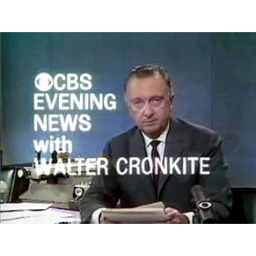
shows: CBS, NBC, and ABC. In 1950, he joined CBS as a correspondent, covering a broad range of stories. By 1962, he became the anchor of the CBS Evening News, where he became a household name while reporting on major events in America.
Walter Cronkite, CBS Evening News, 1980
JFK Assassination
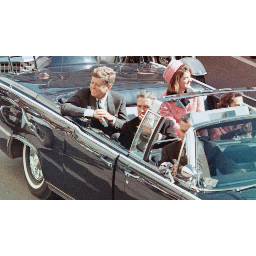
On November 22, 1963, while anchoring the CBS Evening News, Cronkite broke the news of President Kennedy’s assassination. His calm, steady voice guided Americans through the shock and grief, and when confirming the president’s death, his voice briefly cracked, revealing his humanity. This emotional moment

connected viewers to the tragedy, with Cronkite’s coverage helping define how Americans would remember that day.
President John F. Kennedy moments before his assassination, 1963
- Full access to our public library
- Save favorite books
- Interact with authors

- < BEGINNING
- END >
-
DOWNLOAD
-
LIKE
-
COMMENT()
-
SHARE
-
SAVE
-
BUY THIS BOOK
(from $2.99+) -
BUY THIS BOOK
(from $2.99+) - DOWNLOAD
- LIKE
- COMMENT ()
- SHARE
- SAVE
- Report
-
BUY
-
LIKE
-
COMMENT()
-
SHARE
- Excessive Violence
- Harassment
- Offensive Pictures
- Spelling & Grammar Errors
- Unfinished
- Other Problem

COMMENTS
Click 'X' to report any negative comments. Thanks!