
Brief overview of guide:
The aim of this information pack is to develop the knowledge of educators on the topic of "Dyslexia." Looking into topics such as lexism and exploring personal accounts of those who identify as "dyslexic". As well as delving into topics such as accommodations you, as educators can make, looking at education from preschool age all the way to university. It was designed by a student from Liverpool Hope University who identifies as neuro-divergent and has been created in line with a social model perspective shedding light on why the use of the medical/ individual model of disability may be harmful.

Contents Page:
1) What is dyslexia?
2) What is dyslexia continued
3) What is dyslexia continued.
4) What is your responsibility as an educator
5) Your responsibility in specific settings.
6) Labels what is the point?
7) Negatives of a label
8) The role of the SENCO
9) Reflection of personal accounts
10) Reflections continued.
11) Dyslexia, is it a learning or teaching disability?
12) Masking
13) Dyslexia in higher education
14) CPD
15) Conclusions
16)Notes
17) References
What is dyslexia?
First of all it is important to acknowledge that even before the term "dyslexia" existed there were accounts of individuals who were seen to "struggle" with language/literacy comprehension (Collinson, 2014).
There are many medical definitions of "dyslexia" however, this is not what this document will be focusing on, instead the social model perspective will be explored which puts blame on societal barriers as opposed to "impairments". If you are intrigued the British Dyslexia Association (BDA) , have adopted the Rose (2009) definition which is as follows: Dyslexia is a learning difficulty that primarily affects the skills involved in accurate and fluent word reading and spelling. Characteristic features of dyslexia are difficulties in phonological awareness, verbal memory and verbal processing speed (British Dyslexia association, 2010).

What is dyslexia continued:
-As stated previously, before the term dyslexia existed "problems" with language and literacy comprehension skills were still present. People from this time period , who we now see as having "dyslexia" are classed as proto dyslexics. This illistrates the temperal problem of dyslexia, by showing how terms and standards are continually changing throughout history.
Example of proto dyslexia in history: "He is no fool, he hears and sees as well as any (The Athenian Gazette, 1693 cited in Collinson, 2014, pp. 156)." - this is a teacher referring too a student who was "struggling" with language and literacy skills.

What is dyslexia continued:
As previously stated this document focuses on the social model of disability. To explain, the social model of disability blames societal issues as opposed to "the perceived deficits" of an individual, unlike the individual/medical model. To give an example, According to Riddick (2011), there is a hierarchy of language difficulty with English being seen as a more complex and less phonetically understood language, so when looking from a social model perspective, it is English its self that is the barrier. Another example by Riddick (2011) is that historically spellings were interchangeable and therefore there was more lenience however, now a barrier is the strictness of spellings in modern society.
If this is something you wish to explore in more detail, which as educators I encourage you to do, The Disability Studies Reader (Davis, 2017) provides more in depth information.
What is your responsibility as an educator?
As educators, it is your responsibility to provide individualised education and support to all pupils. This would be impossible without an understanding of so-called “impairments”. This is necessary, whether you teach early years provision following the early years foundation stage (EYFS), work with older children following the teacher standards or work in higher education.
-All educational institutions have a legal obligation to follow disability rights legislation (Gov. uk, 2010) With the main points being as follows:
-You must not directly/indirectly discriminate against an individual (both staff and students) due to a protected characteristic.
-You must not victimise , for example suspending a disabled student because they’ve complained about harassment”
Despite it being the responsibility of educators to provide tailored support, Research has found that in most education settings, there is a lack of understanding of topics such as dyslexia. Finding that children in education with dyslexia, therefore experience, low self-esteem and motivation (Burdett and Burden, 2005). For more information on your specific responsibilities, depending on your role, the SEND code of practice provides additional information including the need for a SENCO (2014).
Your responsibility in specific settings.
EYFS (Gov.uk, 2024):
-Safeguarding, this may include additional risk assessments.
-Require a SENCO
-Must have an understanding of the 0-25 SEND Code of Practice.
Teacher training standards:
-Must have a clear understanding of the needs of all pupils, including those with special educational needs, evaluating teaching approaches to engage and support them” (Department for Education, 2011, p. 12). (Gov.uk, 2014 & 2021).
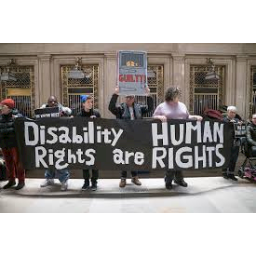
Labels, what's the point?
Research found that academics often dismiss the legitimacy of "dyslexia" taking an anti label approach. A survey then took pace to understand if removing the label was beneficial, concluding that additional support was put in place when a diagnosis was present (Macdonald, (2010). The survey also found that with an early diagnosis, yes there was stigma, but this was not necessarily bad with children being able to better understand and explain the barriers they face. Improving self esteem and academic performance. This is confirmed by Pollitt and Waller (2004) who explain it makes a child feel less lazy as they have a positive understanding.
Negative consequences of a label?
-Despite all the positives of having a label in place there are a few drawbacks. Including:
-children having a higher likelihood of being singled out by there peers (Sowards, 2015).
-Children with labels such as dyslexia tend to get lumped together as "low attainers" and assumptions around ability are made often unintentionally (.Dyson and Peter (2004)
-Lexism (which will be explored fully later on)
-following on from the last point this can knock confidence as children recognise differences for instance in a colour based system children will know (Marks, 2013).
The Role of the SENCO
Since 1994, the SEND code of practice was introduced (Hallett, 2010). It explains that a SENCO must be present with in educational provision. Explaining that the SENCO must be a qualified teacher within an institutions leadership team. Their role being to:
-Promote inclusion
-Encourage partnership - this can both be within the school, external organizations and family units.
-Work to meet individual needs, look at how they can best be supported.
-Provide send provision and resources, what do they need to thrive.
-Help teachers to plan
-Receive ongoing training.
However, positive it is to have a SENCO in place, there are still issues. For instance, where they must be a qualified teacher. Alongside teaching responsibilities, it can be hard to find time to complete the additional tasks of a SENCO, as well as this there is often lack of funding (Hallett, 2010).
Reflection of personal accounts
Although me, the writer of this guide, identifies as dyslexic my experience will not be the same as everyone else. Therefore I feel as though it is important to reflect on experiences of others, this will also allow for you as educators to gain a better understanding of what it is like to have "dyslexia."
I think I was in one of the lower reading groups, you know, the bands, my mum complained and I ended up being put up at a level that everyone else was at and I quite enjoyed actually reading proper books instead of the bland ones
Caroline (Cited in Gibson and Kendal, 2010).
I was diagnosed when I was at university,
but I have struggled all my life and
looking back over all my primary school
reports and secondary school reports, we
can see the theme throughout all of it.
which is quite interesting, although I call
it a learning difficulty I am quite passion-
ate about the fact that it’s been created
because of the education system.’
Zoe (Cited in Gibson and Kendal, 2010)

What is lexism?
Barden (2014), defines lexism as "an alternative conceptualisation of what defines dyslexia" (pp.227). He explains that it is similar to other types of prejudice and discrimination but in this instance against those who take on the term dyslexia, due to the belief that there is only one normative understanding of literacy/language comprehension.
This is similar to Able-ism which is the belief that non disabled individuals are superior, that there are only one way of doing things (Hehir, 2002).
Continued:
Example of lexism: Yeats (2001) argues that there is a notable level of disdain directed at individuals who struggle with spelling, especially when those individuals are academic. The main assumption is that the intellectual upkeep associated with scholarly achievement is incompatible with the challenges of dyslexia.
Example 2: In some scenarios including educational settings, assistive technology is banned as it is seen as "cheating" for instance banning of spell check ( Collinson, 2018).
What accommodations could you put in place for the children you work with.
Firstly I feel it is important to address that by giving a child accommodations, you are in no way, making it unfair for other students.To illustrate this, it is the same logic as giving glasses to a child who is visually impaired or a hearing aid to a child who is hard of hearing it allows them to fully participate. An accommodation simply is an adjustment you can provide to a student to allow them to demonstrate their knowledge in a way that is accessible to them (Johns, 2024 & Schneider et at, 2015).
Every child with dyslexia will have different support needs. However, some examples of adjustments you could make include: providing in large text, different background colours, online resources, reading aloud, allowing oral responses as opposed to written ones, extra time to process information (Johns, 2024 & Schneider et at, 2015). It is important to communicate with the child and their support team in order to see what is working.
- Full access to our public library
- Save favorite books
- Interact with authors
Mather, N, et al. (2001) Perceptions and knowledge of preservice and inservice educators about early literacy instruction. Journal of Learning Disabilities. Vol: 34 (5). Available from: <Sage Journals> Accessed: [03/11/24].
- < BEGINNING
- END >
-
DOWNLOAD
-
LIKE
-
COMMENT()
-
SHARE
-
SAVE
-
BUY THIS BOOK
(from $4.79+) -
BUY THIS BOOK
(from $4.79+) - DOWNLOAD
- LIKE
- COMMENT ()
- SHARE
- SAVE
- Report
-
BUY
-
LIKE
-
COMMENT()
-
SHARE
- Excessive Violence
- Harassment
- Offensive Pictures
- Spelling & Grammar Errors
- Unfinished
- Other Problem






COMMENTS
Click 'X' to report any negative comments. Thanks!