 To all the wonderful children of the world
This book was created and published on StoryJumper™
©2014 StoryJumper, Inc. All rights reserved.
Publish your own children's book:
www.storyjumper.com

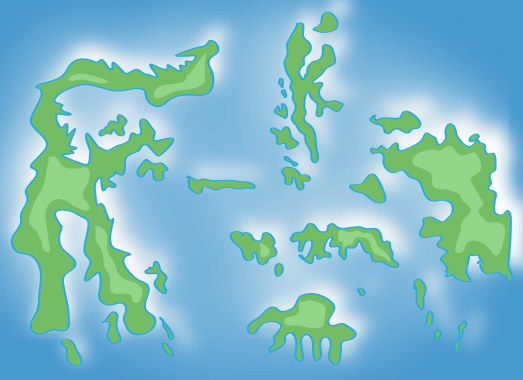


 The Age of Exploration
2
The Age of Exploration3
 Why did the Exploration Start?Europeans set sail to find new trade routes, new
goods, the desire to travel around the unknown
world, and the main contributor, money.
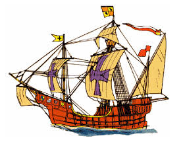
 How did the Explorers Travel?The explorers used newly invented ships
to travel which often resulted in very
dangerous sailing until after using
obtained wealth from trade, made a new
type of ship, the caravel. The caravel
was faster, more reliable, and had a
larger cargo area than previous ships.
In order to navigate, a tool called the sextant was
used which determined the latitude and longitude of a
certain point in the world.
4
 ExplorersPedro Alvars Cabral- A Portuguese explorer
who got lost at sea and ended up discovering
South America by accident. He also claimed
Brazil for Portugal in 1500.


 In 1492 Columbus sailed the
ocean blue!Columbus- A Spanish explorer who
thought he could find Asia by sailing
west based on the stories of Marco Polo
but ended up landing in the Caribbean and
Central America, calling it the Indies. He
had four round trip voyages overall.


5
ExplorersAmerigo Vespucci- An explorer from Spain who saidhe found a new world, America, not like Asia as Columbus
said. He wrote many letters about the animals, natives and
everything he saw on his journey. America was later named
after him.Jacques Cartier- A French explorer who journeyed to find
the Northwest Passage. He discovered the St. Lawrence
river in Canada and encountered polar bears and Huron
Indians during these discoveries.

6
 Triangular TradeTriangular Trade- A system of trade between
Europe, Africa, and the Americas.
Triangular trade had three stages.Stage 1: Raw materials to Europe
(tobacco, rum, sugar)Stage 2: Manufactured goods to Africa
(guns, cloth, rum)Stage 3: Slaves to the Americas to make
raw materials.

 Think of a triangle!


7
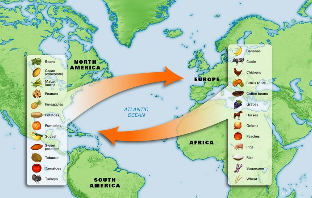
 Colombian TradeColumbian trade, also referred to as the Colombian exchange, was a period
 of cultural and biological exchanges between the New world and the
Old World. After Columbus' discovery in 1492,
the Columbian exchange
enabled many years of
expansion and discovery.
Exchanges of animals,
plants, technology,
and some diseases
transformed European
and Native American's
way of life.
8
 ConquistadorsIn Spanish, the word conquistador means "conqueror". When the
 Spanish realized that there were no spices or silk in the Caribbean,
they turned their attention to the American mainland, Mexico,
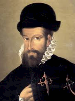
Panama, and Peru. Two main conquistadors were Herman Cortes
and Francisco Pizarro. In 1519, Cortes arrived in Mexico with 450
soldiers looking to find gold. He ended up capturing Motecuzoma II
and Tenochtitlan in 1521. Pizarro led a Spanish expedition from
Central America to Peru with 600 soldiers. Pizarro and his army
captured the Inca Capital of Cuzco in 1533, murdered Atahualpa and
stole gold.

9
 The New WorldThe new world is now referred to as the western hemisphere,
or the Americas. Hence, the old world is now Africa, Asia,
and Europe. Amerigo Vespucci was one to take the early
voyages to the "New World" in around the 15th century. By
 Home sweet home!that time, the vikings had
 already made settlements in
North America and Christopher
Columbus had discovered
several American islands. Using
Vespucci's letters as a guide, a
German Cartographer created a
map naming South America in
Vespucci's honor.


10
 Impact of ExplorationExploration had many beneficial and negative effects. Beneficial effects- The Columbian Exchange and Triangular
Trade introduced new foods and goods to different countries.
Travel lead to the discovery of new lands. Countries advanced
in technology and ships after gaining wealth from trade.Negative effects- Widespread disease spread in result of
infected countries trading with others. Slavery formed when
trading people for goods from Africa to the Americas. Wars
started over colonizations.

11
You've previewed 11 of 17 pages.
To read more:
Click Sign Up (Free)Benefits:
- Full access to our public library
- Save favorite books
- Interact with authors
12

READ

- < BEGINNING
- END >
-
DOWNLOAD
-
LIKE
-
COMMENT()
-
SHARE
-
SAVE
BUY THIS BOOK (from $3.39+)
-
BUY THIS BOOK
(from $3.39+) -
BUY THIS BOOK
(from $3.39+) - DOWNLOAD
- LIKE
- COMMENT ()
- SHARE
- SAVE
- Report
Liked By
X
Encourage this author
-
BUY
-
LIKE
-
COMMENT()
-
SHARE
Problem with this book
X
- Excessive Violence
- Harassment
- Offensive Pictures
- Spelling & Grammar Errors
- Unfinished
- Other Problem
Which pages have problems?
Please describe the problem:
left text
right text
"The Exploring Elf"
An informative book about the Age of Exploration, including explorers, trade routes, and its impact on the world today.
(18 pages)
Privacy level:
PUBLIC
27 reads
Report





COMMENTS
Click 'X' to report any negative comments. Thanks!