Throughout the years, young female immigrants have struggled to move forward in everyday American life. As a young girl, I had moved from Germany to America in hopes for better opportunities. Immediately, I started off as a seamstress at the factory down the street, and it was unexpected the horrible conditions and wages that were here in the "land of the free." Despite the reputation America had in the Eastern hemisphere, people were continuously fighting for their rights here. I supported the Women Suffrage Movement, a movement led by many influential women, that fought for our right to vote, own property, and for overall respect. I also was for the Labor Unions because of the disgusting conditions that us hard workers went through for these corrupt, big businesses. I am sick of seeing rats crawl around my workspace, and any little mistake I had made was put against my wage. Even running 5 minutes late could run you a lot of money. I continue to march with my fellow co-workers, giving out pamphlets and encouraging young girls to fight for their rights. As a German, it also made it difficult to navigate with the stereotypes and discrimination because I was an immigrant. In current times, it still is difficult to earn respect even with working. However, we have fought for years, and that time will never decrease or bring us down.
"The best protection a woman can have is courage." - Elizabeth Cady Stanton

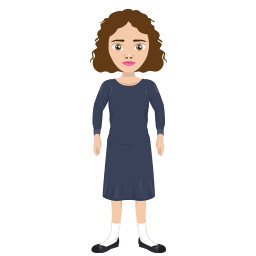
My name is Abigail, and I used to live in Germany. It was a hard place to live because many people were poor and struggling after the recent Revolutions. My family had a tough time making enough money to support us. So, my parents decided to send me to live with my Aunt in Milwaukee, America. Sadly, my brother and parents could not come with me.
I had to travel by ship to America and go through Ellis Island. My parents believed that I could have a better life there. They thought America was a land of new chances and freedom for everyone. I didn’t think the journey would be so hard, but I packed my bags with hope for the future.
I dreamed that I would save enough money so my parents could join me in America. Leaving my homeland would be tough, but I kept thinking about the American Dream and the better life I hoped to find there!



Finally, the time came to get on the big boat. It was packed with other immigrants like me, all hoping to leave their homes for a better life. The boat was very crowded, and it rocked back and forth, making me feel sick. I found it hard to stay still, and I barely ate. But one day, everyone rushed to the front of the boat. Through the fog, we could see the famous Statue of Liberty standing tall. She is a symbol of freedom and new beginnings.
When we arrived at another island, many immigrants like me had to wait for a ferry to Ellis Island. People with more money got to go in right away, while we had to wait for hours or even days. Finally, I made it to the Main Building, where lots of different immigrants rushed inside. There were officers checking everyone. Some looked closely at people's eyes with lights, while others asked questions about where we were going and what our names were.
The officers sometimes gave new names to the immigrants. Some people went through quickly, while others took a long time. When it was my turn, I felt so excited as I finally stepped onto American soil. It was a dream come true!


When I finally arrived in America, I met my new family: my aunt, her husband, and their three kids. We lived in a small, crowded apartment that was really only meant for three people. I soon learned that American apartments weren't fancy at all. They were often dirty, with bugs and trash everywhere. People would throw their garbage out of their windows, making the streets wet and messy.
My family settled in Milwaukee, which isn't as big as New York City. A lot of Germans lived there, making up about 40% of the city's people. Wisconsin was cheaper to live in, so many immigrants chose to move there. I found out that there wasn’t much free time because everyone had to work hard to pay for things like clothes, food, and bedding. I didn’t expect life to be so tough, but at least it wasn’t like the war back in Germany.
Because things were so expensive, I had to start working at a sewing factory down the street. I was used to doing chores, but I had never earned money before. I wanted to save my money to help my family back home and to support my aunt with buying the things we needed.




Working at the factory was hard, with strict rules that we had to follow. If you were just five minutes late, they would take money from your pay. Even a tiny mistake could put your job at risk. Some girls would suddenly disappear, but new workers were always ready to take their place. The factory was messy, with boxes and clothes everywhere, and it was always noisy. Everyone worked seriously because many girls wanted to help their families and learn how to live in America.
There were reporters outside the factory, waiting to ask girls questions about their jobs. I was scared to lose my job over a small mistake, so I kept quiet, worked hard, and came in every day. I heard rumors about girls protesting, saying the working conditions were unfair. Some girls wanted to change things, while others thought it was better to keep working.
I didn’t want to get into trouble, but I couldn’t help thinking about the protests. It made me wonder if things could be different for us working in the factory.



Back at home, most of my family had to work hard. Even though I worked every day, we still earned very little money each week. I tried to take as many hours as I could to save money for my family and myself, but I often had to give all my wages to my aunt. I had dreams of an American life filled with fun activities that I had heard about in Germany, but it was different than I expected. As a girl, it was harder for me to earn respect and make good money.
Many workers at the factory kept disappearing as groups started to fight for better working conditions. I began to wonder if a big group of workers could stop working together to make the companies treat us better. I thought maybe even the government would have to step in. Work was really exhausting, and coming home to a crowded, messy house made it even tougher. Life in America felt like a lot of hard work and trying to earn respect.
The factories were so different from Germany; it felt like a whole new world! There were huge buildings, and smoke came from tall factories. People were always rushing to work or hurrying home to their families. Even with all these struggles, I still believed there was a better life waiting for me. I wanted to learn more about American culture and find my way up in this new place.

Many factory girls in America have been standing up for their rights by leaving their jobs. In Germany, we were taught to deal with problems quietly, but here, people often protest when they are unhappy. There have been important movements like Labor unions, women’s rights, and civil rights, where many citizens, including immigrants, fought for better treatment.
These movements are crucial because they help to stop unfairness and give people hope for a better life. If the government listens, I could earn enough money to help my family back home and even bring my parents to America. But it’s risky because the factory owners have a lot of power.
Many police officers arrest peaceful protesters, making it hard for them to get out of jail, especially when they don’t have money. I believe this is my best chance to earn better pay and really become part of American life. Not everything here is perfect, but I want to help improve this country for everyone.
One day after work, I gave my paycheck to my aunt. My family was having a hard time paying rent, so I wanted to help. While we were getting dinner ready, I talked to my aunt and her husband about the recent protests by workers wanting better rights.
At first, my aunt and her husband were worried that these protests would hurt workers. But after I shared reasons why the labor unions could help in the long run, they started to understand. I explained how big factories were struggling to keep their workers, and many people were leaving their jobs to join the unions.
My aunt was especially supportive of women’s rights. She encouraged me to follow my dreams and fight against unfair systems that made life harder for families like ours. She believed that everyone deserves better treatment and more rights.

After our talk, I approached one of the protesters. She introduced herself and helped me sign up for the union. The other girls were very nice and excited to have more girls join. I signed my name and read some rules that the leaders made us follow. Then, I got directions to my old workplace so I could stand outside and persuade the workers to join our protest.
There were more union workers than regular workers outside the factory. I started by handing out pamphlets to share our message. I was told not to shout or touch anyone, or I could get arrested. Many police officers were waiting nearby, ready to take action if the protesters got too close to the factory workers. I had already seen a few of my friends get arrested, and it was only my second week working!
Even though I was young, I managed to convince a couple of young immigrant girls to join the union. The experienced protesters praised me for my efforts, which made me feel proud. The older ladies were very kind and helped me every step of the way, showing me how to make a difference.

- Full access to our public library
- Save favorite books
- Interact with authors
- < BEGINNING
- END >
-
DOWNLOAD
-
LIKE
-
COMMENT()
-
SHARE
-
SAVE
-
BUY THIS BOOK
(from $2.99+) -
BUY THIS BOOK
(from $2.99+) - DOWNLOAD
- LIKE
- COMMENT ()
- SHARE
- SAVE
- Report
-
BUY
-
LIKE
-
COMMENT()
-
SHARE
- Excessive Violence
- Harassment
- Offensive Pictures
- Spelling & Grammar Errors
- Unfinished
- Other Problem





COMMENTS
Click 'X' to report any negative comments. Thanks!