Thank you!!!!

Introduction:
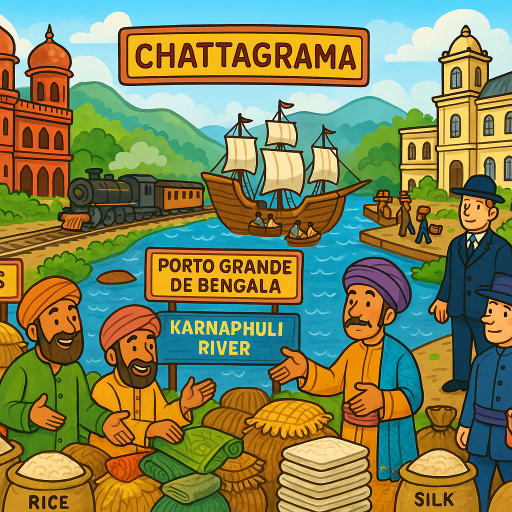
Long ago, in East Bengal, there was a city by the Karnaphuli River named Chittagong—a place known by many names throughout history: Chatigaon, Chattala, Islamabad, and Porto Grande De Bengala. This city was once rich in economy and culture, and the main centre for trade in the ancient port.
According to Portuguese historian João de Barros, "the most famous and wealthy city of the Kingdom of Bengal.” Chinese traveller Xuanzan stated about Chittagong, "a sleeping beauty rising from mist and water.”
In time, under British colonial rule, the city became an important trading post and exporting material with Burma and England as well military point. This city was connected railway line to another area of Bengal and India in 1865. But in 1930, a group of young revolutionaries would stand against the British Raj to protect their motherland.....
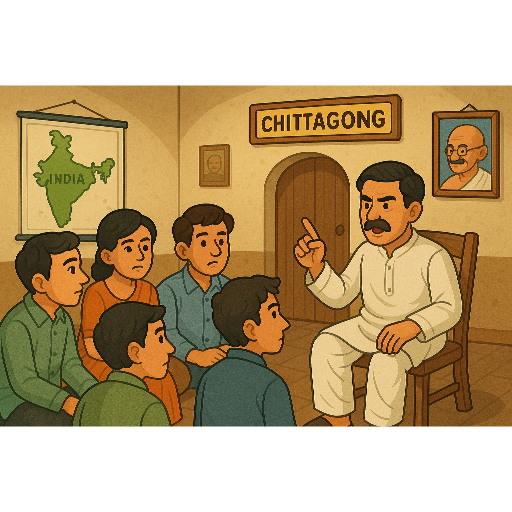
In a quiet room in Chittagong, a group of young revolutionaries gathered to speak with their leader, Master Da, whose real name was Surya Sen.. People called him lovingly Master Da. He joined the National School, Nandankanan, as a maths teacher in 1918.
Tripura Sen: “Master Da, we all came here urgently to meet you in Chittagong.”
Master Da: “What happened?”
Anand Prasad: “Gandhiji ended the non-cooperation movement”
Master Da: “Why did Gandhiji stop?”
Bilash Day: “In Gorakhpur, the Police beat common people for a peaceful protest, but suddenly....”
Master Da: “So then?”
Bidhubhusan Bhattacharya: “People are furious with British police officers; they couldn't control them, and our peaceful protesters fight back against the policemen.”
Master Da: “But the Police were doing wrong”
Himangshu Sen: “Common people killed 22 police officers near Chauri Chaura police station, and some people also died.”
Master Da: “Oh!! Kali Maa !!! How are our people, and how is Gandhiji?”
Nani Gopal Deb: “Freedom fighters are not in good condition, and the Britishers took Gandhiji to the Remand jail.”
Master Da: “We have to do something. The Britishers have not done right. We have to do something, and this protest as well.”
Anand Prasad: “But Gandhiji is very sad because of the non-violence that happened in Chauri Chaura, now his path of direction has changed. He was not willing to do any further protests.”
Master Da: “Oh... God !!! How are our people, and how is Gandhiji?”
Nani Gopal Deb: “Freedom fighters are not in good condition, and the Britishers took Gandhiji to the Remand jail.”
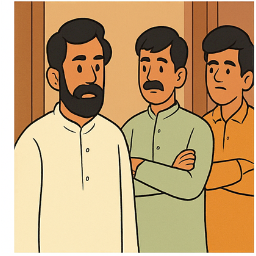
Master Da: “We have to do something. The Britishers have not done right. We have to do something, and this protest as well.”
Anand Prasad: “But Gandhiji is very sad because of the non-violence that happened in Chauri Chaura, now his path of direction has changed. He was not willing to do any further protests.”
Master Da: “We have to do something. The Britishers have not done right. We have to do something, and this protest as well.”
Anand Prasad: “But Gandhiji is very sad because of the non-violence that happened in Chauri Chaura, now his path of direction has changed. He was not willing to do any further protests.”
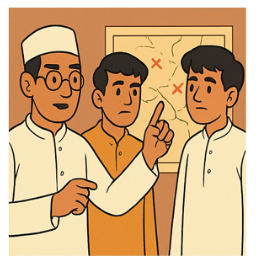
Master Da: “ No, but we cannot stop ourselves; we have to do something for our freedom. I want freedom from this British Raj; who is with me?”
All revolutionaries together said: we are all with you, Master Da....
Master Da (raising his fist): “Inquillab Zinda Baad…”
All revolutionaries: “Inquilab Zindabad!”
Surya Sen, inspired by the freedom fighters of India as well as by the Russian Revolutionaries. He was furious with the British Raj because they were looting peasants, labourers, and the Jallianwala Bagh massacre and the partition of Bengal. He worked with revolutionary organisations like the Jugantar Party and the Anushilan Samiti.
He knew they needed to act so….( Master Da deciding plan with all his associates who are with his mission.)
Master Da: “We have to give the first physical training to all youth and teenagers participating in this revolution.”
Ambika Chakraborty: “Yes Master Da”
Master Da: ” I strongly believed in individual bravery and didn't even fear death. We need to be physically fit to fight against British soldiers.”
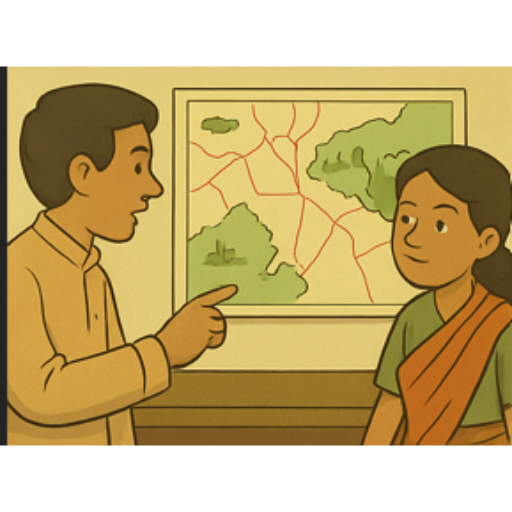
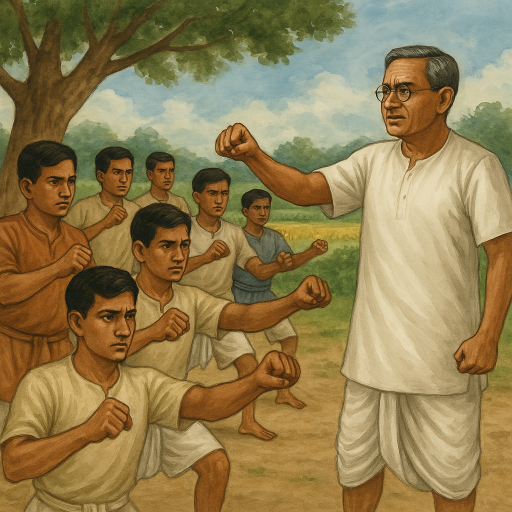
The young revolutionaries were trained in guerrilla warfare. They learned to hide underwater while holding their breath, and even how to make gun cotton. Among them were brave women like Kalpana Dutta, Mani Dutta, and Pritilata Wadedar.
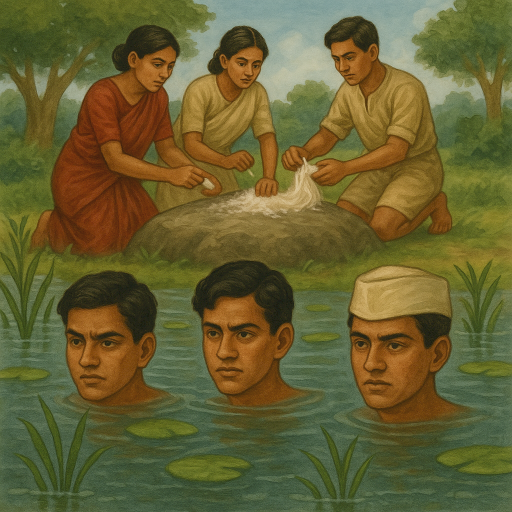
Surya Sen wanted to raid the two main British armouries in Chittagong and distribute weapons to other revolutionaries who could establish an armed unit.
He divided two youth groups of revolutionaries to destroy the telegraph and telephone office, destroy the dam dam airport, attack the British hotel, club and cinema halls and take hostage European people, cut the electricity and communication system of the British and destroy the railway line as well.
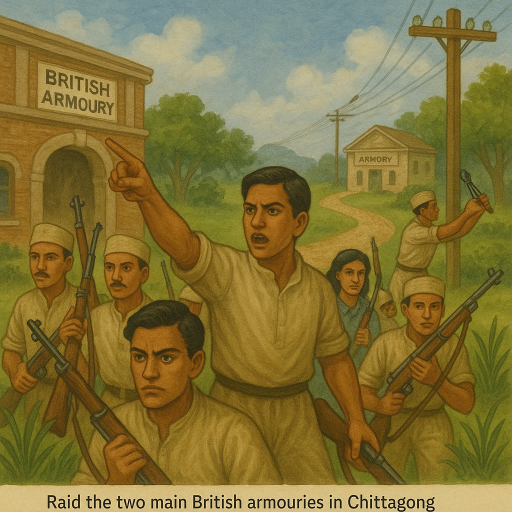
Chittagong Armoury Raid (18 April 1930)
At Midnight, 10 o'clock on 18th April 1930. Under the leadership of Surya Sen, his associates set the mission, and one of six groups, led by Ganesh Gosh, took out the police Armoury.
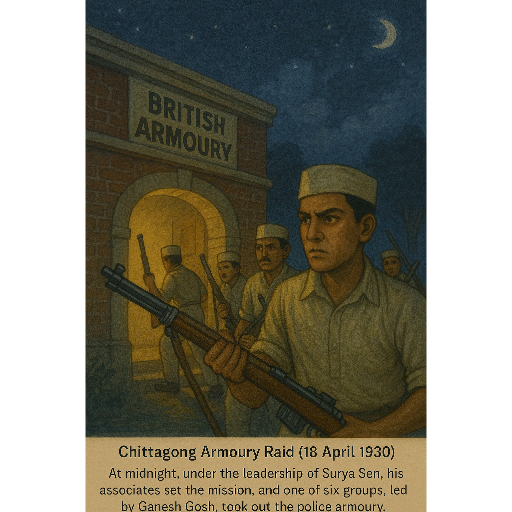
The other 10 members of the group, headed by Lokenath Pal, captured the Auxiliary Forces, which contained Lewis guns and 303 army rifles, but they failed to find bullets and weapons.
Under Surya Sen, Kalpana Dutta, Pritilata Waddedar achieved their target of cutting the telephone and telegraph lines and disrupting railway movement.
- Full access to our public library
- Save favorite books
- Interact with authors
- < BEGINNING
- END >
-
DOWNLOAD
-
LIKE(3)
-
COMMENT()
-
SHARE
-
SAVE
-
BUY THIS BOOK
(from $4.99+) -
BUY THIS BOOK
(from $4.99+) - DOWNLOAD
- LIKE (3)
- COMMENT ()
- SHARE
- SAVE
- Report
-
BUY
-
LIKE(3)
-
COMMENT()
-
SHARE
- Excessive Violence
- Harassment
- Offensive Pictures
- Spelling & Grammar Errors
- Unfinished
- Other Problem






COMMENTS
Click 'X' to report any negative comments. Thanks!