contents
1 The Wóthïhä Language
2 History and territory of the piaroa people
3 Worldview and culture practices
4 Linguistic Structure of Wóthïhä
5 Oral Literature and traditional stories
6 The languague today
7 Basic Wóthïhä–Spanish–English Glossary
8 Revitalization and learning Resources
9 Voices of the Piaroa People
10 How would it be used on different social networks?
What Is Wóthïhä?
Wóthïhä is the language spoken by the Piaroa people, native to the Amazon rainforest.
It is more than a language — it’s a way of seeing the world, naming life, and keeping memory alive.
Speaking Wóthïhä means staying connected to rivers, spirits, and ancestors.
When a language is lost, a unique way of understanding nature and the universe disappears with it.
History and Territory of the Piaroa People
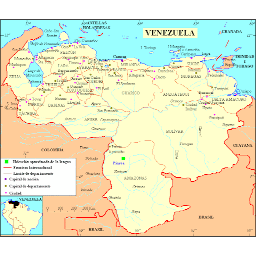
The Piaroa are an Indigenous people of the Venezuelan Amazon.
They live in the states of Amazonas and Bolívar, and also in parts of Colombia.
They have cared for these lands since ancient times, protecting the rivers, forests, and mountains.
Despite colonization and contact with the outside world, their culture and language have survived with strength.
Worldview and Cultural Practices
To the Piaroa, the world is a living web. Everything has spirit: water, trees, animals.
The forest is not to be exploited, but respected.
The shaman, or mehane, is the community’s guide and speaker with the invisible world.
Festivals, songs, and dreams are also ways of learning.

Linguistic Structure of Wóthïhä
Wóthïhä is a unique and rich language.
It has special sounds and long words that carry deep meanings.
You can tell if something was seen, heard, or dreamed — just by how the verb changes!
Example:
Yupëtë = He ate (I saw it)
Yupëkë = He ate (someone told me)
Oral Literature and Stories
Piaroa stories are told at nightfall.
They speak of talking animals, the origin of fire, and the first shaman.
Storytelling is memory-keeping.
Sample line:
"In the ancient days, the jaguar walked like a man. But his heart remained wild..."
The Language Today
Wóthïhä is still spoken in many communities.
But in schools and cities, Spanish is used more often.
Many children understand it, but not all speak it.
Some youth are working to reclaim and proudly teach it.
Basic Wóthïhä–Spanish–English Glossary
| Wóthïhä | Spanish | English |
| Mënä | Agua | Water |
| Däka | Tierra | Earth |
| Yuwë | Sol | Sun |
| Päkä | Comer | To eat |
| Wïjö | Fuego | Fire |
| Hano | Casa | House |
- Full access to our public library
- Save favorite books
- Interact with authors

- < BEGINNING
- END >
-
DOWNLOAD
-
LIKE
-
COMMENT()
-
SHARE
-
SAVE
-
BUY THIS BOOK
(from $3.19+) -
BUY THIS BOOK
(from $3.19+) - DOWNLOAD
- LIKE
- COMMENT ()
- SHARE
- SAVE
- Report
-
BUY
-
LIKE
-
COMMENT()
-
SHARE
- Excessive Violence
- Harassment
- Offensive Pictures
- Spelling & Grammar Errors
- Unfinished
- Other Problem

COMMENTS
Click 'X' to report any negative comments. Thanks!