 Dedicated to
 Ms. Rowley-Welsch 1st period Individuals and Societies
Sources
Anne. (n.d.): n. pag. Web.
"Betsy Ross." History.com. A&E Television Networks, n.d.
Web. 05 Feb. 2015.
"Betsy Ross and the American Flag." Ushistory.org. Independence Hall
Association, n.d. Web. 08 Feb. 2015.
"Historic Philadelphia." First American Flag.
N.p., n.d. Web. 08 Feb. 2015.
This book was created and published on StoryJumper™
©2014 StoryJumper, Inc. All rights reserved.
Publish your own children's book:
www.storyjumper.com

Long ago on December 1, 1760 a little girl
named Deborah was born in Plympton
Massachusetts. Little did she know she would
grow up to fight in the Revolutionary War.
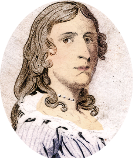
Although Deborah was a direct descendant of
William Bradford (a Mayflower Pilgrim) she still
grew up in poverty. When she was young, her
father left and never returned.
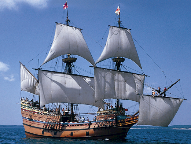
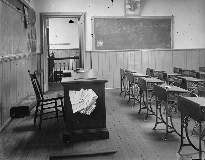
When Deborah completed her servitude, she
became a teacher from 1779-1780 until she
heard news of the Revolutionary war.
As soon as she heard news of the
Revolutionary war, she joined the military.
Deborah was no ordinary soldier, she had a big
secret that no one could find out.
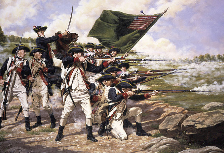

Deborah had to disguise herself as a man! She
sewed herself a man's coat, shirt and pants and
once she put them on, Deborah Sampson was no
more! She enlisted in Captain George Webb's Light
Infantry in May 1781 as Robert Shurtliff.
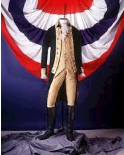
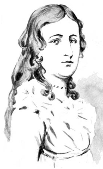
Deborah Sampson was no more! She was as
strong, sturdy and as tall as a man standing at
5' 8" tall.
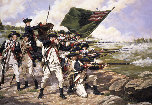
Near the Tappan Zee, Deborah fought her first
battle in "No Man's Land". Deborah received a
sabre wound across her face, but tended to it
herself for a fear of being discovered.
After spending weeks in lower Westchester,
Sampson marched to Virginia and participated
in the siege of Yorktown. She received many
minor injuries but on October 19, 1781 Lord
Cornwallis surrendered to General Washington,
ending the last battle of the Revolutionary War.
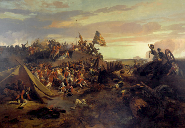
In June of 1782 she got a bullet wound that
could expose her identity.In order to avoid
discovery Deborah removed the musket-ball
bullet herself. Soon she was again ready to fight
in the war.
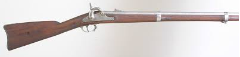
Deborah fought in many battles, but on
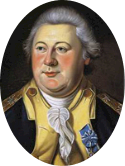
October 23, 1783 she received an honorable
discharge from General Henry Knox.

On April 7, 1785 she married Benjamin Gannet,
and they had three children, Earl, Mary, and
Patience. She also had an adopted child named
Susanna.
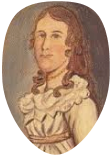
On February 20, 1804, Deborah Samson wrote
a letter, with the help of Paul Revere, to
Congressman William Eustis in regards to a
pension. The following year Deborah received
the pension she had attempted to get for many
years, and in 1821 she was awarded a general
service pension.

You've previewed 13 of 20 pages.
To read more:
Click Sign Up (Free)- Full access to our public library
- Save favorite books
- Interact with authors
- < BEGINNING
- END >
-
DOWNLOAD
-
LIKE(1)
-
COMMENT()
-
SHARE
-
SAVE
-
BUY THIS BOOK
(from $3.99+) -
BUY THIS BOOK
(from $3.99+) - DOWNLOAD
- LIKE (1)
- COMMENT ()
- SHARE
- SAVE
- Report
-
BUY
-
LIKE(1)
-
COMMENT()
-
SHARE
- Excessive Violence
- Harassment
- Offensive Pictures
- Spelling & Grammar Errors
- Unfinished
- Other Problem





COMMENTS
Click 'X' to report any negative comments. Thanks!