Dedicatory
To anyone who intends to teach languages.
This guide is meant to be as an aid to teaching/learning processes in L1 and L2 to achieve meaninful and fun experiences.

Table of Contents:
page 2
Page 3.... How to manage student anxiety while learning a new language? (According to Innatis and Sociocultural perspectives).
Page 5.....How to teach to different type of learners?
Page 10.....The "silent" period. How to improve the speaking ability in a silent student? (According to Innatis perspective).


How to manage student anxiety while learning a new language?
The idea of the “Affective Filter” by Krashen, and also the Innatist and Sociocultural perspectives, tells us that learning English is not only about grammar or rules, but also about feelings. If students feel nervous, afraid, or stressed, the filter goes up, and learning becomes difficult. But if they feel relaxed, safe, and motivated, the filter goes down, and they can learn better.
page 3



Learning English from an innatist and sociocultural perspective
page 4
This perspective says that the brain is ready to learn languages. Students can learn English if they have enough input, like listening to songs, watching movies, or hearing English in class. But if they feel afraid or shy, the affective filter goes up, and it blocks learning. The teacher must create a safe place where students can try to speak English, make mistakes, and feel that mistakes are normal.



From the sociocultural view, learning English is not only an individual process but also a social one. Students progress more when they work in pairs or groups, do dialogues, role-plays, or projects together. In this case, learning English happens in interaction: classmates correct each other, support each other, and the teacher guides them in the zone of proximal development. In this way, English becomes a real tool for communication, not only a set of grammar rules.
page 5



How to teach to different type of learners?
page 6
To learn a new language is necessary to develop four integral skills: Input composed by reading and listening and Output composed by speaking and writing.
Some students develop different skills in a natural order according to Krashen's hypothesis. As a result, teachers need to adapt step by step some strategies to make students learn in their rythm and verify the process.
An example of these strategies is: how would you help a student who is very good at memorizing rules but struggles to speak fluently?
According to the language learning perspectives, the student is influence by behaviourist perspective, because they can memorize, mimic and understand the tenses and vocabulary of the language, but they are having limitations to put into practice that knowledge.
page 7
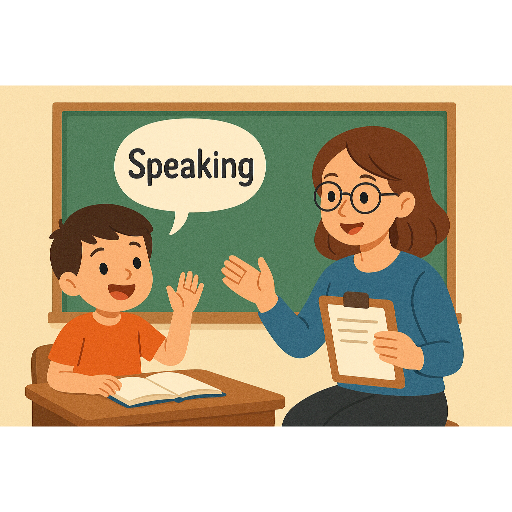
page 8
Here you have some ideas to develop the other language skills on your students:

Innatis Perspective: Try to apply Comprenhensible Input hypothesis, Acquisition learning hypothesis and monitor hypotesis. Let the student think by himself, explore the language and expose to it through videos or movies. Embrace making mistakes as a normal part of learning process and strive for consistent practice rather than perfection.
Cognitive perspective: Here the objective is to transform that declarative knowledge into procedural knowledge. Help the student identifying the patterns learning entire phrases and not just individual words to build natural sounding pronunciation. In addition, it is important to propose interactive and meaningful practice activities with scenarios about topics that students enjoy and will be useful in real life situations. Such as: How to cook a cake?, How to fix things?, How to order in a restaurant?, How to plant a plant?
page 9
Sociocultural perspective: Learning by talking with others is the key to speak fluently. Create collaborative dialogue to practice speaking focusing on communicate the message effectively. You could use engaging activities such as: role - plays, pair/team work, storytelling about topics students enjoy like hobbies or music using the previous knowledge.

- Full access to our public library
- Save favorite books
- Interact with authors
- < BEGINNING
- END >
-
DOWNLOAD
-
LIKE
-
COMMENT()
-
SHARE
-
SAVE
-
BUY THIS BOOK
(from $2.99+) -
BUY THIS BOOK
(from $2.99+) - DOWNLOAD
- LIKE
- COMMENT ()
- SHARE
- SAVE
- Report
-
BUY
-
LIKE
-
COMMENT()
-
SHARE
- Excessive Violence
- Harassment
- Offensive Pictures
- Spelling & Grammar Errors
- Unfinished
- Other Problem





COMMENTS
Click 'X' to report any negative comments. Thanks!