
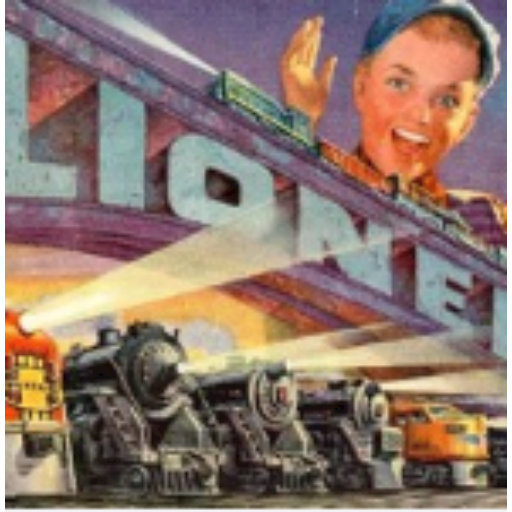
LIONEL is the best train company in the world they also make model buildings
Lionel gest had there 125th anniversary
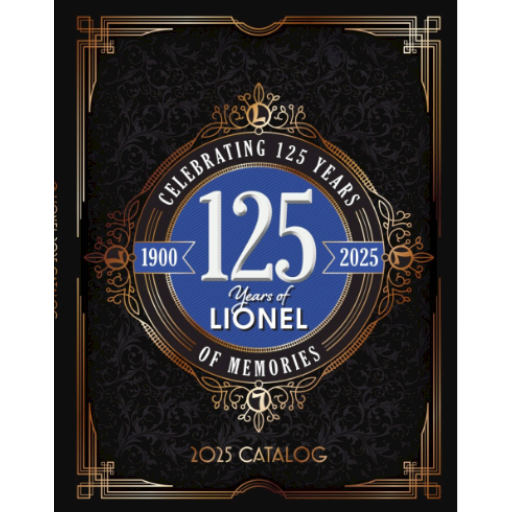
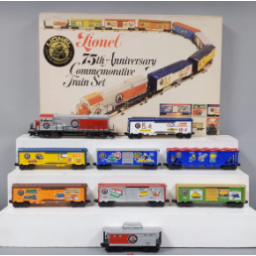
every anniversary Lionel makes a new catalog with new trains and they have a anniversary train set
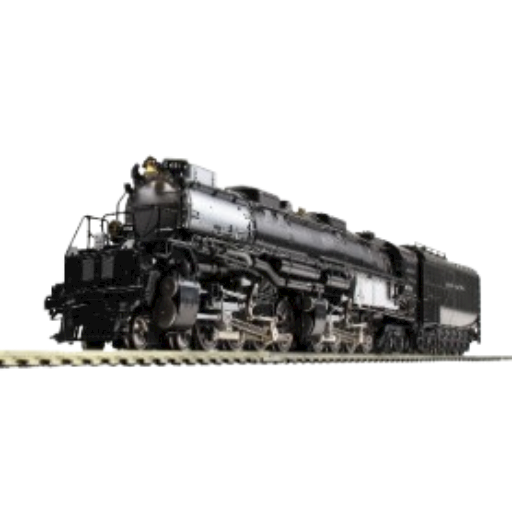
Lionel also made the vison line BIG BOY
"When Lionel founder Joshua Lionel Cowen's immigrant family arrived in New York after the Civil War, the railroads were literally America's engines of progress. The "Golden Spike" meeting of the Union Pacific and Central Pacific lines in 1869 unified the continent and signaled the birth of a world power. Cowen was born in 1877, just before Edison's first electric light. He grew up with real trains, amid dizzying change. Around the time he founded Lionel in 1900, passenger lines like the peerless Twentieth Century Limited symbolized American technology and sophistication.
Cowen was already a successful inventor when he created his first toy train. But The Electric Express and its offspring soon became a sacred mission, and Cowen would spend a lifetime stoking America's imagination with the romance of the rails. He told boys that Lionel's would prepare them for adulthood. Soon Dads too were encouraged to join Youngsters in model train enthusiasm, to future father-son bonding. With growing prosperity, Lionel's layouts cropped up in more living rooms, especially at Christmas. Before mid-century, railroads were our economic lifeblood, as well as cultural icons -- but it was not to last.
And when Americans started driving to suburbia and flying cross-country, they stopped buying Lionel trains. By the 1960s, freight lines were being scrapped, and fathers and sons were on opposite sides of the "generation gap." That decade saw the tragic demise of New York's Pennsylvania Station, the retirement of The Twentieth Century Limited, and the passing of Joshua Lionel Cowen.
But now the Lionel dream is back and better than ever. As Lionel looks to the future, it strives to ignite the imaginations and hearts of today’s children and adults through continued success with branded and licensed products, an increased presence in the digital space and recapturing its rightful place “under the tree.” Through partnerships with evergreen brands such as NASCAR, Warner Bros., Crayola, Coca-Cola, John Deere and many others, Lionel has lined itself up for guaranteed success for many years to come.
Lionel's history
With innovative products such as the LCS, iCab, Battle Trains, Lionel Tracks and a revamped, more user-friendly Lionel.com, the 125-year-old company has made sure it stays on the cutting-edge of technology. The Lionel name has always been synonymous with Christmas and a train set under every Christmas tree, and now more than ever the company’s ensuring that they are a major player in any holiday plans. For Lionel, the future is indeed bright."
Youthful inventor Joshua Lionel Cowen wasn't the first to manufacture toy trains. But his talents as an engineer and salesman soon put Lionel ahead of its competitors. Cowen designed his first train, the Electric Express, not as a toy, but as an eye-catching display for toy stores. During Lionel's early days, Americans were captivated by the railroads and awed by electricity, still a rarity in many homes. Lionel's first trains were powered by wet-cell (acid-filled!) batteries, soon replaced by the 110-volt electric transformer. By 1906, with the introduction of preassembled track and a selection of engines and cars, the Lionel we know today was already taking shape.
The No. 5 electric locomotive appears, and is decorated for the Baltimore & Ohio.
Three-rail "Standard Gauge" track, designed to eliminate short-circuits, debuts. So do the first transformer, steam locomotives, and assorted cars.
Lionel's history
Proclaims Lionel electric trains to be the "Standard of the World"!
The decade between 1910 and 1919 saw Lionel's sales increase 15-fold. This resulted from a bustling economy, the growth of electric power, World War I defense production, and the end of German toy imports.
Changing times were reflected by "Racing Automobiles" and a passenger train with internal lighting, the retirement of the quaint "Pay-As-You-Go" trolley, and the introduction of a war train with cannons. Smaller, less expensive O-gauge track debuted (and is used by Lionel to this day).
Though the company became a corporation, the family tradition continued, with Cowen's son Lawrence ("The Happy Lionel Boy") gracing catalogs, packaging, and sales materials.
Lionel's new "racing automobiles" presage the slot-car craze of the 1960s. Lionel introduces the Multi-Volt transformer and rheostat to control engine speed.
O-gauge trains and track debut, ultimately replacing Standard Gauge by the 1930s.
"Pay-As-You-Enter" trolley retires in the last year of pre-war innocence.
Lionel marks an O-gauge armored train complete with a cannon-equipped locomotive.
An era of expansion is marked by a new company name - The Lionel Corporation.
Following a brief recession, Lionel entered an era of unprecedented growth. People wanted to forget the war and indulge in life's pleasures - and more of them could afford luxuries like toy trains, thanks to easy credit. Cowen was among the finest practitioners of modern advertising. Lionel ads appeared nationally in newspapers, boys' magazines, and "Grown-up" publications like The Saturday Evening Post.
Cowen got endorsements from celebrities, and even started a Lionel radio show. Slogans such as "Lionel: The Father and Son Railroad," and "Real enough for a man to enjoy - simple enough for a boy to operate," were the first of many to pitch family themes. Meanwhile, Lionel's fabulously illustrated catalogs became children's cherished "wish books." The products they portrayed - like the No. 402 electric engine, the Hellgate Bridge, and the No. 840 Power Station - grew ever more elaborate. Working accessories - including crossing gates, highway flashers, and traffic warning bells - became more and more lifelike. This was a golden age for Lionel, but like the Roaring Twenties, it wouldn't last.
Lionel establishes La Precise in Italy, where some if its finest prewar products were tooled.
The Standard Gauge No. 402 passenger set is featured on the cover of the 1924 Lionel consumer catalog.
With the purchase of competitor Ives Manufacturing, Lionel gains the reversing unit, an innovation allowing trains to change direction.
The magnificent Hellgate Bridge debuts, just one of a dizzying array of detailed accessories.
The luxurious State Set passenger train appears, just before "Black Monday" ends the decade with a crash.
During the Great Depression, Lionel's sales and profits slumped, and 1931 was its first year in the red. Ironically, as times grew tougher, the company introduced its greatest standard-gauge steam locomotive, the No. 400E, whose $42.50 price was beyond the means of most families. In 1934, financial troubles led Lionel into court-ordered receivership to stave off bankruptcy.
That year the company's fortunes were boosted by the debut of the wildly popular Mickey and Minnie handcar, a $1 windup toy. Meanwhile, streamlining was all the rage on America's railroads, and Lionel followed suit with its own designs, like the Union Pacific, the Hiawatha, and the Flying Yankee. Lionel showed profits again in 1935, and the receivership was discharged. The No. 700E New York Central Hudson, with its blueprint-accurate details, appealed to adult hobbyists. It also marked the ascendancy of affordable O gauge over the more expensive standard gauge, which was discontinued in 1939.
In an attempt to capture the "female market," Lionel introduces a porcelain-steel, working electric range for girls, soon discontinued.
The magnificent No. 400E is released. The largest of all Lionel's standard-gauge steam locomotives, it heads up the stunning Blue Comet passenger set.
The Mickey wind-up handcar - priced at only $1 for Depression-era families - boosts Lionel's fortunes. The streamlined Union Pacific diesel M10000 is released with great fanfare.
The steam whistle comes to Lionel Lines. The No. 45N automatic gateman debuts. Lionel manufactures this all-time classic accessory to this day.
The No. 700E New York Central Hudson steamer signals Lionel's emergence as a world-class scale-model builder. Lawrence Cowen joins Lionel's board of directors.
The No. 97 coal elevator sets the tone for future accessories - rugged, stylish, and wildly popular.
Lionel participates in New York's World Fair.
Lionel benefited financially from defense production during World War II, but toy train production was put on hold. So boys (and their dads) were encouraged to "plan your postwar railroad" in Lionel's Model Builder magazine and Railroad Planning Book. Lionel engineers were busy too, and in 1946 the company unveiled a stunning array of milestone products. These included locomotives with real puffing smoke (like the all-new Pennsylvania S-2 steam turbine), a remote-controlled coupling system, and a realistic water tower with a moving spout.
Lionel's offerings, many styled to match actual railroads, reflected America's renewed love affair with trains. And the postwar baby boom was just getting started...
Several animated accessories appear, including the No. 313 bascule bridge, which raises and lowers automatically, and the No. 164 log loader, with its working conveyor belt.
Lionel ceases production of electric trains and builds compasses and compass cases for the war. The hard-to-assemble Lionel "paper train" is produced during the holiday season.
Lionel perfects the magnetic knuckle-coupler concept and readies it for postwar production.
"Smoke" for Lionel steam locomotives debuts, as do the Pennsylvania S-2 steam turbine locomotive and a realistic water tower. Remote uncoupling is introduced with Lionel Electric Set.
Lionel's version of the massive, twenty-wheeled Pennsylvania GG-1 electric engine features working pantographs that draw power from overhead catenary lines.
The F3 diesel locomotive, its all-time biggest seller, and the mighty ZW transformer, whose 275 watts could power four trains at once.
Lionel expands its offerings with the NW2 diesel locomotive switcher, No. 6462 New York Central gondola car, No. 6520 searchlight car, and No. 3656 cattle car and platform.
Lionel was at its peak in the early 1950s, with record profits and some of its best products ever. Its catalogs of the period were absolute stunners. Unfortunately, Lionel was selling far more engines and rolling stock than existed on real railroads, which were rapidly overwhelmed by competition from highways and airlines.
Lionel actually had its own television show, but the new medium soon mesmerized America, and interest in toy trains waned. Lionel products of this period included a stereo camera, the pastel-colored Lady Lionel train set, and trains with space age and Cold War themes. The "father and son railroad" of Joshua Lionel Cowen and Lawrence Cowen ended in 1959, when they sold their interest in Lionel to distant relative Roy Cohn.
Joe DiMaggio, star player for the New York Yankees, hosts the "The Lionel Club House" on NBC television. Lionel equips its engines with Magne-Traction, which uses magnets to increase traction, pulling power, and grip at high speeds.
The No. 445 animated switch tower premiers and becomes an instant classic. A set of sleek aluminum passenger cars is released to run behind the powerful No. 2343 Santa Fe.
The highly detailed No. 6417 porthole-window caboose debuts. Lionel announces record profits. It is the world's largest toy manufacturer, and a household name to millions.
Two popular accessories appear - the No. 342 culvert unloader, which grabs metal pipe, and the No. 464 animated sawmill, with "whirring blades".
The No. 746 Norfolk & Western debuts as Lionel's greatest steam locomotive. Lionel releases the ill-fated Super O track with plastic ties. The Lionel No. 6800 flatcar with 6800 Beechcraft Bonanza airplane appears.
Lionel introduces the No. 175 rocket launcher car, "Atomic Energy Commission" rolling stock, and HO gauge.
New items include the No. 470IRBM missile-launching base (complete with radar array and Quonset hut), and the No. 6470 exploding boxcar. Joshua Lionel Cowen and Lawrence Cowen sell their shares to an investment group headed by Roy Cohen, ending the Lionel Cowen era.
Lionel in the 1960s was a company that had lost its founder and its bearings. America was undergoing social upheaval, and the idealized image of Lionel railroading no longer fit in. In a doomed effort to diversify, the company introduced slot cars, science kits, and even phonographs. Despite several creative covers, Lionel catalogs soon featured uninspiring product shots, devoid of all romance.
Joshua Lionel Cowen passed away in 1965 at the age of 88. Another American legend, the venerable Twentieth Century Limited, made its last run in 1967. That same year Lionel filed for bankruptcy. The company licensed its electric train manufacturing to breakfast-cereal conglomerate General Mills in 1969.
Former U.S. Army general John Medaris becomes president of Lionel.
New train cars that launch satellites and Minuteman nuclear missiles debut.
The Talking Teddy, containing a hidden speaker, is wired to a Lionel-Spear phonograph. The No. 3357 "Cop and Hobo" train car is introduced.
- Full access to our public library
- Save favorite books
- Interact with authors
- < BEGINNING
- END >
-
DOWNLOAD
-
LIKE
-
COMMENT()
-
SHARE
-
SAVE
-
BUY THIS BOOK
(from $4.39+) -
BUY THIS BOOK
(from $4.39+) - DOWNLOAD
- LIKE
- COMMENT ()
- SHARE
- SAVE
- Report
-
BUY
-
LIKE
-
COMMENT()
-
SHARE
- Excessive Violence
- Harassment
- Offensive Pictures
- Spelling & Grammar Errors
- Unfinished
- Other Problem





COMMENTS
Click 'X' to report any negative comments. Thanks!