Discussion 3
Submitted to Prof. Derrick Millard.

The Night I Felt Close to Home
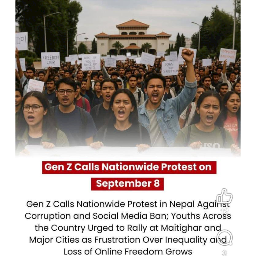
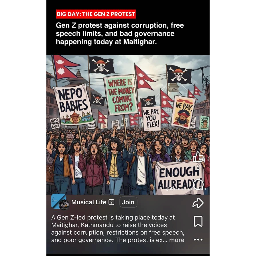
In 2025, during the Gen Z protests in Nepal, I experienced something that changed me. I was sitting in my room, thousands of kilometers away from home. I opened TikTok casually, expecting entertainment. Instead, I saw a live stream
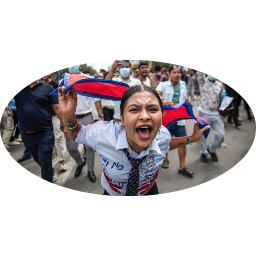
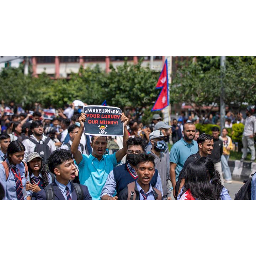
from Maitighar Mandala. Young people of my generation were gathered in large numbers. They were chanting. Holding placards. Demanding change.


The comments were moving fast:
“Stay safe!”
“We are with you!”
My heart started beating faster. I wasn’t there physically. But I didn’t feel far away. In that moment, I realized something powerful that TikTok Live was not just social media. It was a political space.
Watching History in Real Time
The specific technology that shaped my experience was TikTok Live.
It was raw, unedited and immediate.
Unlike traditional television news, this was happening right now. I could see faces. Hear voices crack with emotion. Read comments from people across the world reacting instantly.
Our course explains that technology enables modern political movements by connecting individuals in real time (Module 4: Technology and Society, 2025).
As I watched, I understood this theory not as a student — but as a participant. I was part of a digital crowd.

I Finally Understood Network Society
Before this moment, activism felt distant to me. I thought change only happened through politicians or official leaders.
But Manuel Castells (2012) describes today’s world as a network society, where power is formed through connected individuals rather than institutions.
That night in 2025, I saw that theory happening in Nepal.
No single leader controlled the live stream.
No traditional media filtered the message.
It was youth speaking directly to each other.
Technology had shifted power.
For the first time, I felt that my generation was not waiting for change — we were creating it.
(Castells, 2012)
Digital Movements Around the World
Our course discusses how digital tools shaped major movements like: Arab Spring, Black Lives Matter, Idle No More, Bring Back Our Girls, etc.
In those cases, hashtags organized and united people online (Module 4: Hashtag Section, 2025). In Nepal’s 2025 movement, TikTok Live played that organizing role. Instead of waiting for newspapers, young people:
Streamed protests themselves.
Shared updates instantly.
Created solidarity through comments and shares.
Zeynep Tufekci (2017) explains that digital platforms can accelerate movements quickly by lowering barriers to participation. That is exactly what I witnessed.
(Tufekci, 2017).

- Full access to our public library
- Save favorite books
- Interact with authors
Submitted by: Asmita Neupane

- < BEGINNING
- END >
-
DOWNLOAD
-
LIKE
-
COMMENT()
-
SHARE
-
SAVE
-
BUY THIS BOOK
(from $2.99+) -
BUY THIS BOOK
(from $2.99+) - DOWNLOAD
- LIKE
- COMMENT ()
- SHARE
- SAVE
- Report
-
BUY
-
LIKE
-
COMMENT()
-
SHARE
- Excessive Violence
- Harassment
- Offensive Pictures
- Spelling & Grammar Errors
- Unfinished
- Other Problem

COMMENTS
Click 'X' to report any negative comments. Thanks!