SOCI13454G Techno Humans: How Technology Disrupts Our World
Discussion #3

The Technology Behind It:
Big Data and Recommendation Algorithms
Big data and recommendation algorithms play an important role in how people experience the internet today. Every time we search, watch videos, like posts, or click on links, platforms collect data about our behavior. Algorithms analyze this data to predict what content we are most likely to engage with next. As a result, social media and video platforms constantly recommend content based on our interests.
These systems are designed to keep users online for longer periods of time. By studying user behavior, algorithms learn what type of content attracts attention and continue recommending similar material. While this makes online experiences more personalized, it also means that much of what we see online is shaped by data and algorithms.
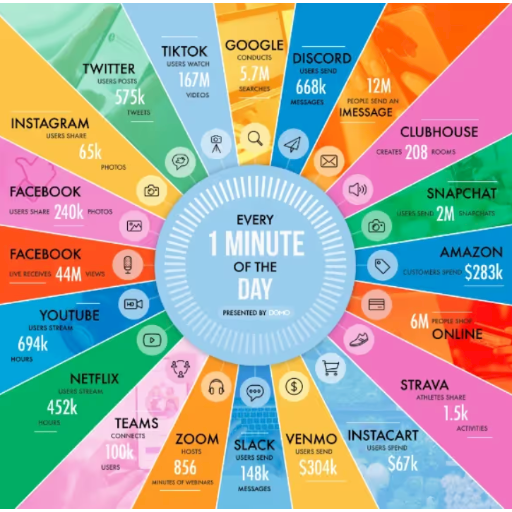
According to course materials, millions of searches, messages, and posts are created every minute on the internet. This large amount of data allows companies to continuously improve their algorithms and better predict user behavior.
Learning about big data and recommendation systems made me realize how much these technologies influence what we see online and how we use the internet.

The Moment I Noticed the Big Data and Algorithm
I was born in 1988, so I have experienced the rise and development of the internet, from the early days of the web to today’s AI-driven digital world. For many years, the internet was a big part of my daily life. I spent a lot of time online playing games, using social media, and watching short videos on platforms like TikTok. These activities slowly filled more and more of my time, and at one point they occupied almost every free moment of my day.
A few years ago, while I was scrolling through TikTok, I suddenly noticed something strange. The content I liked seemed to appear everywhere on my screen. However, when I talked with other people, they often did not know about the same trends or videos that I was seeing all the time. This made me curious and a little confused.
That was the moment I started to think about how these platforms work. I realized that not everyone sees the same content online. Instead, algorithms and big data analyze our behavior and show us content that matches our personal interests. Because of this, most of the information I saw online was carefully selected for me.
I once believed that the internet would help broaden my perspective and allow me to see more of the world. However, at that moment I began to realize that big data and recommendation algorithms might actually be narrowing my view instead of expanding it.

My Decision: Leaving Social Media and Video Platforms
After realizing how much big data and recommendation algorithms were shaping what I saw online, I decided to make a change. I chose to step away from content that is constantly pushed by algorithms. I deleted all of my social media and video platforms.
Instead of spending my free time scrolling through endless short videos or online posts, I started trying other activities. When I have time, I read science and educational books. This helps me learn useful and objective knowledge, rather than constantly consuming entertainment content recommended by algorithms.
At the same time, I realized that AI tools such as GPT can actually be helpful. Unlike social media platforms, AI does not continuously push unnecessary content. Instead, it answers questions and helps search for information online. This allows me to find useful information more quickly while avoiding a lot of irrelevant or distracting content.
Of course, AI should still be used carefully. The information it provides should be checked and understood critically. For me, AI is not a replacement for thinking, but a helpful tool that supports learning and finding information more efficiently.
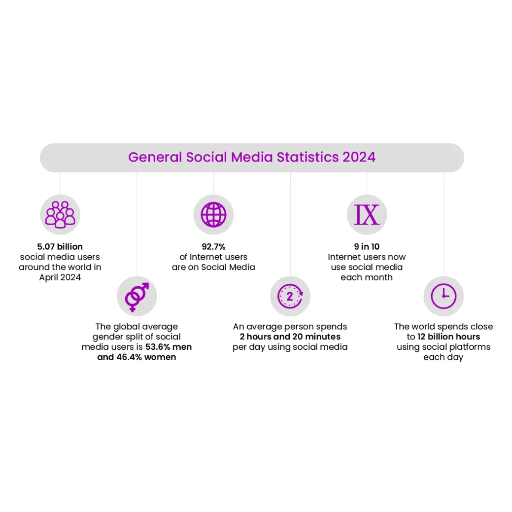
Social Media Influencing Behaviour
Companies use social media data to understand user behaviour and keep people engaged online.
Social Media Shapes What People See
Algorithms analyze user behavior
"Today, the online world has changed drastically due to social media and the ability to communicate around the world in nanoseconds. Furthermore, our online identities are now integrated into our roles as students, employees, and world citizens. This means one’s online profile is almost inseparable from one’s day-to-day life; everything we do online is tracked and becomes part of who we are. "
People Getting News From Social Media
Social media has also changed the way people receive news and information. Instead of relying on traditional news sources, many people now get their information mainly through social media platforms. While this makes news easier and faster to access, it can also affect how much people understand about important issues.
According to course materials, “Americans who mainly get their news on social media are less engaged, less knowledgeable.” This suggests that when people depend mostly on social media for information, they may not receive a complete or balanced understanding of events.
This idea helped me reflect on my own experience online. When recommendation algorithms constantly show content based on personal interests, it becomes easy to stay inside a limited information space. Instead of exploring different perspectives, people may only see content that matches their preferences. Realizing this made me more aware of how social media can shape what we see and how we understand the world.
Reference
Oracle. (2024). What is big data? Oracle. https://www.oracle.com/big-data/what-is-big-data/
GeeksforGeeks. (2025, August 1). What is big data? GeeksforGeeks. https://www.geeksforgeeks.org/data-engineering/what-is-big-data/
Syracuse University School of Information Studies. (2025). What is big data?
https://ischool.syracuse.edu/what-is-big-data/
Encyclopaedia Britannica. (n.d.). Big data.
https://www.britannica.com/technology/big-data
- Full access to our public library
- Save favorite books
- Interact with authors
- < BEGINNING
- END >
-
DOWNLOAD
-
LIKE
-
COMMENT()
-
SHARE
-
SAVE
-
BUY THIS BOOK
(from $2.99+) -
BUY THIS BOOK
(from $2.99+) - DOWNLOAD
- LIKE
- COMMENT ()
- SHARE
- SAVE
- Report
-
BUY
-
LIKE
-
COMMENT()
-
SHARE
- Excessive Violence
- Harassment
- Offensive Pictures
- Spelling & Grammar Errors
- Unfinished
- Other Problem






COMMENTS
Click 'X' to report any negative comments. Thanks!