This book is dedicated to people who love history, traditions and culture.

Under the rule of Emperor Higashiyama and Shogunate Tokugawa Tsunayoshi, the Genroku Era brought prosperity and artistic growth to Japan. It became known as the “Golden Era”. The introduction of a rigid hereditary hierarchy meant that the people could be controlled to maintain peace and stability. This allowed for the arts to flourish.
The ruling elite consisted of the samurai. Farmers and peasants were ranked second as they provided rice for the samurai. Artisans and craftsmen were ranked third as they provided goods and services for the samurai. The merchant class were the last to be ranked. Their lowly status was a result of not producing anything and making money from others. Life inside the palace walls was different to life outside.
The aristocracy existed separately to the class system, and this included Emperor Higashiyama, his family and court nobles. They lived in the Kyoto Imperial Palace. They had very little power but were prestigious. Located in the Kyoto Imperial Garden was the Arisugawa-no-miya Residence. Arisugawa-no-miya Yukihito and Saeki-no-Irako had a daughter called Yukiko. Yukiko became a secret weapon in helping to secure the “Chrysanthemum Throne”.

Yukihito was an ambitious high ranking imperial prince. He played an important role as he offered military leadership and expertise to the government. Being a member of a branch of the imperial family, two special duties were required. Firstly, the family could provide an arrangement with offspring and the imperial palace to guard the succession of the imperial throne. The Second function of the family was to act as custodians of the traditional arts. In the Arisugawa-no-miya household, calligraphy and Waka Poetry were passed down from generation to generation. As an expert, Yukihito made sure these arts were taught at home to Yukiko, the Emperor Higashiyama and court members.
Weekly, Yukihito would go to the imperial palace and teach Emperor Higashiyama calligraphy and poetry. It was during this time that he was able to get close to Emperor Higashiyama. Discussion would take place regarding traditions and culture. Emperor Higashiyama became committed to developing the arts and making them flourish and established himself as a patron. Yukihito had the added advantage of being able to experience things outside the palace walls and therefore could tell stories of Noh, Kabuki, Bunraku theatre, different painting styles, wood block printing and literature. The interaction encouraged Emperor Higashiyama to want to know more. He became further intrigued by the Arisugawa-no-miya family.
Upon hearing that Yukihito had a daughter, Emperor Higashiyama believed it was a good idea for her to join his court. Yukihito was very happy. It was his plan all along to introduce Yukiko to Emperor Higashiyama. He felt that the Emperor Higashiyama would see the merits in the union. Yukiko provided an opportunity to bring together imperial bloodlines, and this was seen as being unique. She offered a chance for succession via a male heir for the throne. The diplomatic alliance meant that two very strong families would be joined and therefore add strength So naturally, the Tokugawa Shogun approved of the union. Emperor Higashiyama’s softer and kinder side saw the gifts of calligraphy, poetry and koto playing that Yukiko would bring to his court.
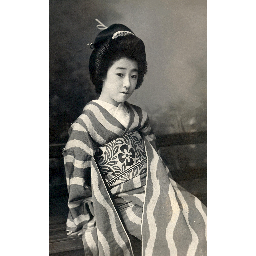
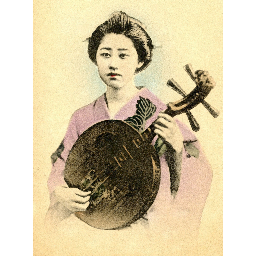
Yukiko at 16 was slightly apprehensive about moving to live at the imperial court. The fact that she was of imperial blood, meant that she was given a higher status in the household. She was provided with accommodation that was closer to Emperor Higashiyama’s living quarters. A routine of making herself presentable, composing poetry, playing koto and shamisen, practising calligraphy and refining her tea ceremony skills consumed her days. She also began to learn how to run the large imperial household.

- Full access to our public library
- Save favorite books
- Interact with authors

- < BEGINNING
- END >
-
DOWNLOAD
-
LIKE
-
COMMENT()
-
SHARE
-
SAVE
-
BUY THIS BOOK
(from $3.99+) -
BUY THIS BOOK
(from $3.99+) - DOWNLOAD
- LIKE
- COMMENT ()
- SHARE
- SAVE
- Report
-
BUY
-
LIKE
-
COMMENT()
-
SHARE
- Excessive Violence
- Harassment
- Offensive Pictures
- Spelling & Grammar Errors
- Unfinished
- Other Problem

COMMENTS
Click 'X' to report any negative comments. Thanks!