
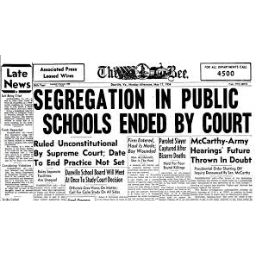
The newsprint that let all of us know that schools would no longer be segregated.
Brown v. Board of Education (1954)
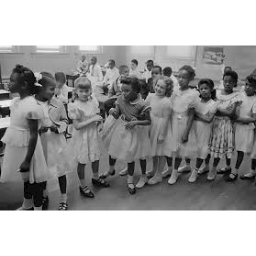
One of the first fully mixed classes in school
When I was little my parents sat me down one day before school started saying they needed to tell me something important. Me and my brother were sitting down at the kitchen table with our parents when they told us that our supreme court had decided to get rid of segregated schools. I was very confused why the black children are now allowed to be in the same class as me. It had never been okay before, so I asked, “why do they go to my school now?”. My parents thought for a second before telling us that some people in the world think it's unfair that the black people don't get the same treatment as us. So, some really brave dude went to our government and said, “this is against our constitutional rights”. The government was shaken that this guy was so brave and came up, but they still didn't agree with him, so the government and the man fought about it. But as the government heard the man's story they all decided that having black children and white children separated was against our constitution. That day at school was very strange, only a few colored kids came, then the next day there were more, until my class was almost half made up of black children.
Montgomery Bus Boycott (1955–1956)
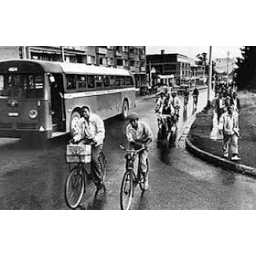
All the black people started to not use the busses, riding there bikes instead.
After a while the streets were filled with black people walking instead of riding the buses.
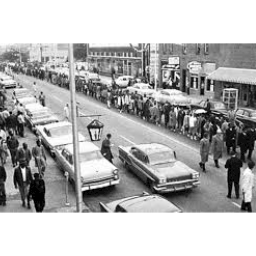
A little while after the first Black children began attending my school, I noticed that many of them walked instead of riding the bus. Every day, I would see groups of Black men, women, and children walking long distances, sometimes early in the morning or late in the afternoon, just to get where they needed to go. Some looked tired, but they also seemed determined, like they were doing something important. My family sometimes rode the bus, but other days we used our car, and I noticed that the buses were mostly filled with white passengers, which made me start to wonder why things were that way. One evening, I was watching the news with my parents, and they explained why Black peoplehad stopped riding the buses. The reporter said they were protesting the unfair, segregated system, where Black people were treated unequally, and it all began when Rosa Parks refused to give up her seat to a white man. I was a little confused why it mattered at the time but I know it was for a good cause now.
Little Rock Nine (1957)
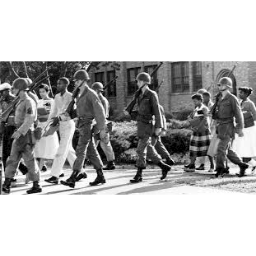
The first kids to go into a prestigious all white collage. Minnijean, Elizabeth, Ernest, Thelma, Melba, Gloria, Terrence, Jefferson, Carlotta
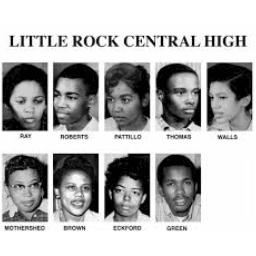
They even had to be escorted for their safety, because of riots.
A few months after the Bus Boycott, the government chose nine Black students to attend an all white school. The school was Little Rock High School, and the decision was part of ending segregation. It felt very unusual at the time, and I knew many people in my school and other family members were upset about it. Students at my school began calling them the Little Rock Nine because the event took place in Little Rock and there were nine students. When I heard the news, I learned that the Governor sent the National Guard to stop them from entering the school. One of my friends said that was stupid because they were already allowed in. Later, President Eisenhower had to send federal troops toescort the students safely inside. The reporter said there were many protests, threats, and attacks as the students continued attending the school. I'm thankful I lived far enough to only hear and watch the things that happened over the news.
Greensboro Sit-ins (1960)
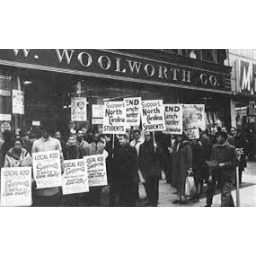
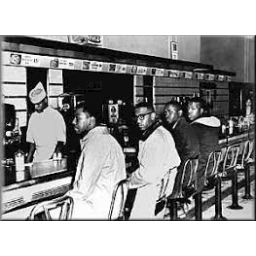
Collage students refused to leave Local restaurants and establishments until they were helped or served.
People protested and got arrested for the cause.
I remember first hearing about what happened in Greensboro, about how it started with just a few college students sitting down at a white only lunch counter inside a restaurant. At first I thought it would be over quickly, but instead more and more students joined them each day in peaceful protest. People said the students from North Carolina A&T State University were being brave, even though they were insulted and threatened. I saw on the news how they just stayed seated quietly, even when others yelled at them or tried to scare them away. It surprised me how they didn’t fight back, even when the situation became tense and some people were arrested. The reporter said the protestsbegan spreading to other cities because of what started in Greensboro. Over time, it felt like something bigger was happening, like people were finally standing up for equal treatment. Eventually, I heard the lunch counter in Greensboro was desegregated, and it showed that peaceful protest could actually bring change.
Freedom Riders (1961)
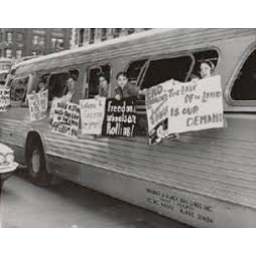
People rode in a bus for about 1,100 miles, to challenge segregated interstate bus terminals
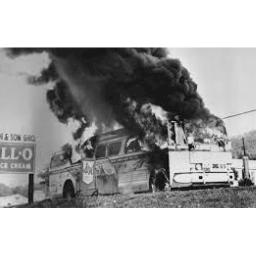
in Alabama the freedom riders had a bomb thrown into the bus.
I remember hearing about the Freedom Riders in 1961 and feeling shocked by what they were doing. I saw on the news that they were riding interstate buses through the South to challenge segregation rules that were still being enforced in stations and waiting rooms. It looked dangerous because they were traveling into places where many people were angry about them being there. I remember reports showing crowds attacking them when they reached cities like Birmingham and Anniston in Alabama. In one story, I heard that a bus was even stopped and set on fire, and some riders were beaten when they tried to continue their journey. Even though it was scary to watch, they didn’t turn back and kept ridingthe buses anyway. I kept thinking about how brave they must have been to keep going when they knew they could be hurt. Later, I heard that the government had to send protection because the violence became so serious during the Freedom Rides.
March on Washington (1963)
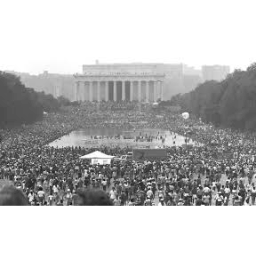
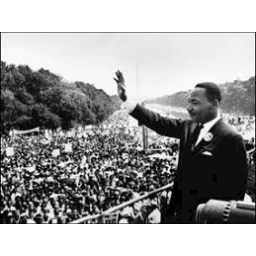
and estimated 250,000 people attended the march, led by MLK jr.
The march on Washington ended with MLK jr.'s Famous "I Have a Dream" Speech
The March on Washington in 1963 was something we all talked about for weeks. It felt so different compared to other events I had seen on the news. I saw people from all over the country traveling to Washington, D.C., and it looked like one of the largest peaceful gatherings I had ever heard of. When I watched the news, I noticed how organized everything was, with people walking together, carrying signs, and standing calmly instead of fighting or causing chaos. It surprised me how peaceful it was even though they were demanding big changes for civil rights and jobs. The moment that stood out most to me was when Martin Luther King Jr. gave his speech, and the whole crowd seemed to go silent and listen closely. Hiswords about equality and hope made the event feel even more powerful and emotional. Martin Luther King Jr. 's speech would always be in my mind after that and I think I'm starting to understand why they are all protesting.
Freedom Summer (1964)
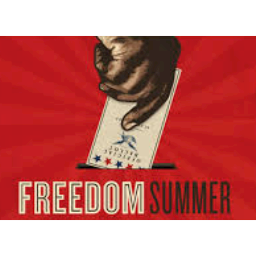
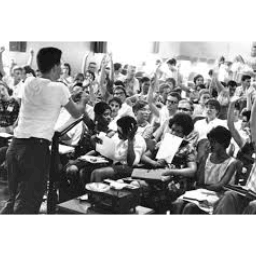
"Freedom Summer" is a program to help back Americans vote, by teaching them how to pass the literacy test
Freedom school teaching blacks how to read, so they can vote
I remember hearing about Freedom Summer and feeling like it was one of the most intense civil rights efforts happening at the time. I saw that volunteers were going down to Mississippi to help register Black voters, even though the risks were very high. I went there myself and helped out for a month, working alongside other volunteers who believed in the same goal. We spent a lot of time speaking with local communities and trying to support people who wanted to register to vote. I quickly realized how much fear there was, because many people were threatened just for trying to take part in the process. I remember hearing about violence and arrests happening around us, which made every day feel uncertain. Even so, people stayed determined because they believed voting was something everyone deserved. Being part of the Freedom Summer showed me how powerful and risky the fight for civil rights really was and that I'd keep helping where I could for my fellow Americans.
- Full access to our public library
- Save favorite books
- Interact with authors
- < BEGINNING
- END >
-
DOWNLOAD
-
LIKE
-
COMMENT()
-
SHARE
-
SAVE
-
BUY THIS BOOK
(from $4.59+) -
BUY THIS BOOK
(from $4.59+) - DOWNLOAD
- LIKE
- COMMENT ()
- SHARE
- SAVE
- Report
-
BUY
-
LIKE
-
COMMENT()
-
SHARE
- Excessive Violence
- Harassment
- Offensive Pictures
- Spelling & Grammar Errors
- Unfinished
- Other Problem






COMMENTS
Click 'X' to report any negative comments. Thanks!