To my family, who have always believed in my potential and who are my biggest supporters.
To my mom, who is always making sure that I study even when there is nothing to study, she has always said ''Well, do some practice tests before you get on that game.''
I am also thankful for all the amazing teachers whom I have had over the years. I thank them for teaching not only me but many other students to acheive academical greatness.
Tiant Vick

Introduction
When you think of the word ''evolution'' what is the first thing that comes to mind?
The word evolution means the change in the inherited traits of a biological population or organism over successive generations.
The theory of evolution was first expressed by Charles Darwin. He theorised that all living species come from the same common ancestor and that evolution is also driven by natural selection.
Fossils

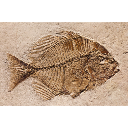
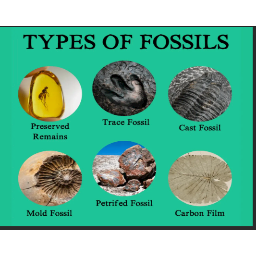
A fossil is defined as the preserved remains, impression, or trace of any organism that was living in the past from geological age. Examples of fossils include bones, shells, exoskeletons, imprints made in stones of animals or microbes, objects that are preserved in ambers, hair, petrified wood, oil, coal, and remnants of DNA.
Fossil evidences can show records of evolution by examinig how the fossils of living organisms from the past compares to same type of organism today.

Fossil evidence can show and prove how animals such as mammals evolve over a period.
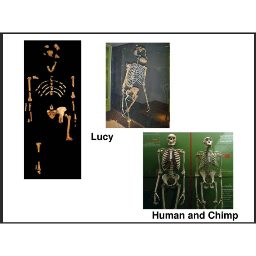
Take for instant the Lucy fossil which shows evolution evidence of an intermediate bipedalism stage.
There are also bird fossils of the Archaeopteryx that shows how birds evolved from theropod dinosaurs.

Law of Superposition
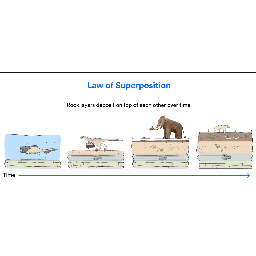
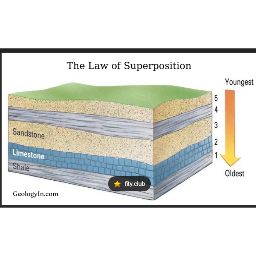
The Law of Superposition is a geologic principle that is used to determine the relative ages of rock layers. This law also states that the rocks are layered with the oldest rock at the bottom and the youngest rock will be found at the top.
Examples of the Law of Superposition can be found in fossil records, volcanic ash, and sedimentary rock layers.
Have you ever taken the time to pick up a rock and examine it? Well, depending on the type of rock you pick up, you might see that the rock has layers.


The first image gives us an illustration of how evolution has occurred according to the Law of Superposition. It shows a layer of how organisms can be traced back millions of years.
The second image shows how, over time, layers of rocks have evolved from the oldest layers that we walk on.
Homologous Structures
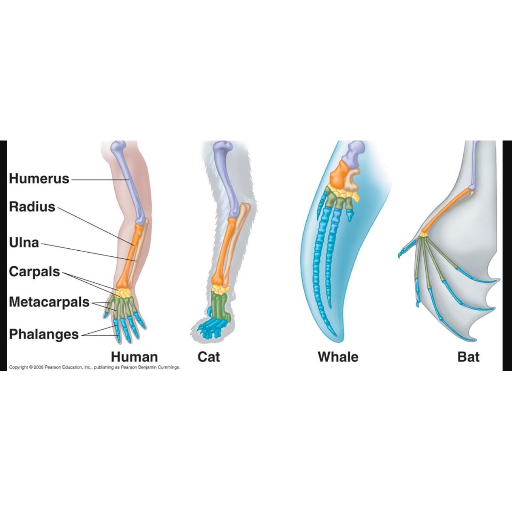
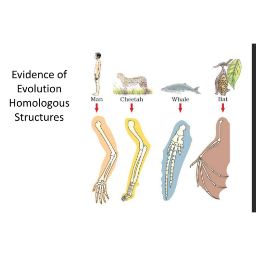
The word Homologous Structure is defined as the physical features that are found in different organisms, which suggest that they share the same common ancestor. This also means that they share DNA with a common ancestor.
Two examples of homologous structures are body limbs and vestigial structures.

Evidence that shows that Homologous structures evolved in time can be found in fossil records, embryology, comparative anatomy, and molecular biology.
This evidence can show evolution from a common ancestry by findings such as how the body limbs and features of the organism have changed over time.


Vestigial Structures.
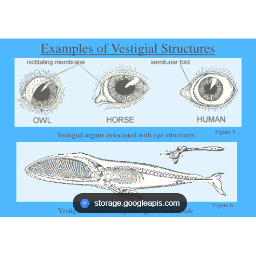
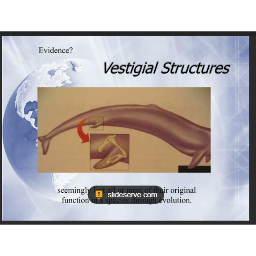
A vestigial feature is defined as an anatomical feature of an organism or a behaviour that no longer serves the present organism.
An example of a vestigial structure is the appendix that is found in humans. In our earlier ancestors, the appendix served to help in the digestion of food. However it present day, it does not really serve a purpose.


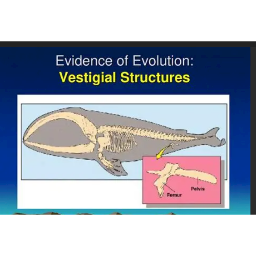
Evidence of evolution through an organisms vestigial structure can be found in the femur and pelvis of a whale. Scientist have theorised that the reason why a whales vestigial structure is so small is because it evolved from an ancestor that used to walk on land.
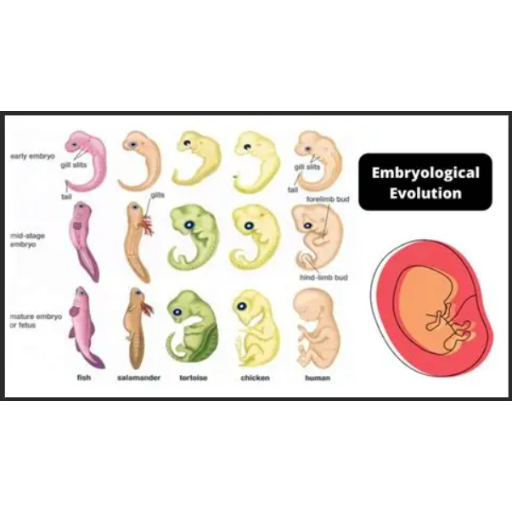
Comparative Embryology
Embryology is defined as the study of embryos, or unborn offspring.
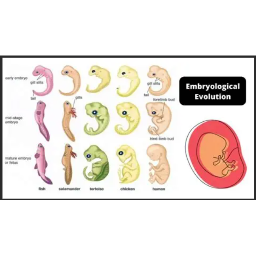
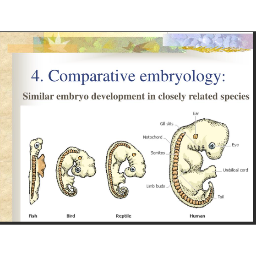
Compartaive Embryology is the branch of embryology that compares and contrasts embryos of different species, in order to show how all animals are related.
An example of comparative embryology can be found in the formation of ears, jaws, throats and tail formation of the oragnisms embryo.

- Full access to our public library
- Save favorite books
- Interact with authors


- < BEGINNING
- END >
-
DOWNLOAD
-
LIKE
-
COMMENT()
-
SHARE
-
SAVE
-
BUY THIS BOOK
(from $3.59+) -
BUY THIS BOOK
(from $3.59+) - DOWNLOAD
- LIKE
- COMMENT ()
- SHARE
- SAVE
- Report
-
BUY
-
LIKE
-
COMMENT()
-
SHARE
- Excessive Violence
- Harassment
- Offensive Pictures
- Spelling & Grammar Errors
- Unfinished
- Other Problem

COMMENTS
Click 'X' to report any negative comments. Thanks!