 For Bryan
Thank You for supporting me
throughout this semester.
One more to go.
This book was created and published on StoryJumper™
©2015 StoryJumper, Inc. All rights reserved.
Publish your own children's book:
www.storyjumper.com


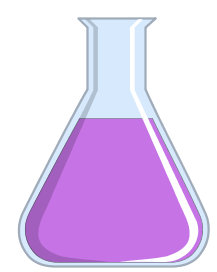

This is Miles. He is a very curious boy. He is always
asking questions. Specifically, about science.
Miles loves learning about anything that has to do
with Science. He wants to know everything, like the
Earth, electricity the elements, the Periodic
Table, the kingdoms, classification, and the
cell.

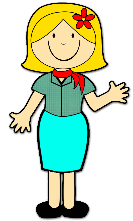
His teacher, Mrs. Thomas,
is always happy to answer
all of his questions.
On the first day, Miles asked Mrs. Thomas about the planet Earth. Mrs.
Thomas explained everything she could.
She told him that Earth has different communities, populations,
ecosystems, and biospheres.
She explained that the biosphere is what is the surface of the Earth. This
is where all living things live. This is divided up into three more
components.
She told him that the lithosphere is the layer with soil and solid
matter.
And the hydrosphere, which is the liquid layer, or environment, of
Earth.
Finally, she told him about the atmosphere, which is the thin layer
around the whole planet.
She told him that all of these things worked together to keep the Earth a
good place for all living things to live.
On the second day, Miles asked about the different kingdoms.
Mrs. Thomas told him that there are six kingdoms. Each kingdom has different
characteristics. These include being unicellular, having only one cell, or
multicellular, having many cells. Another is being prokaryotic, having no
nucleus or eukaryotic, having a nucleus. Finally, being a heterotroph, having to
eat for energy, or an autrotroph, producing energy by itself.
The six kingdoms are: animalia (humans and animals), plantae (plants), fungi
(mushrooms), protista (amoeba), archaebacteria (halophiles), and eubacteria
(E. Coli).
Most organisms are multicellular and eukaryotic- animalia, plantae, fungi (some
unicellular), and protista (this is an exception, mostly unicellular with some
multicellular).
Only archaebacteria and eubacteria are unicellular and prokaryotic and both auto-
and heterotrophic (protista are also both hetero- and autotrophic).
Kingdoms animalia and fungi are heterotrophic. Kindgom plantae is autotrophic.
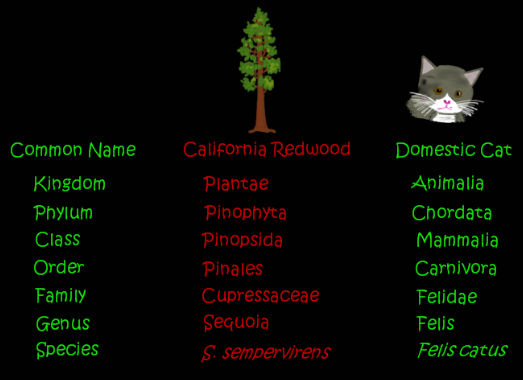
On the third day, Miles wanted to know about classification.
Mrs. Thomas told Miles that there are seven levels of classification - kingdom,
phylum, class, order, family, genus, species (most general to most specific).
Each level becomes more specific as you continue. Mrs. Thomas showed Miles an
example of classifying a Domestic Cat.
She showed him how each level got more specific.

• Kingdom: animalia (all animals & humans)
• Phylum: chordata (having a backbone -
excludes all invertebrates)
• Class: mammalia (animals that do not lay eggs)
• Order: carnivora (only meat-eating animals)
• Family: felidae (all cats - cats, lions, etc)
• Genus: Felis (small cats)
• Species: felis catus (house cats)



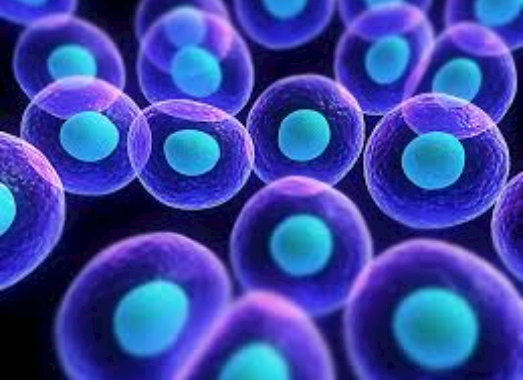
On the fourth day, Miles wanted to know about the parts of the cell.
Mrs. Thomas told miles that there are two kinds of cells - animal cells and plant
cells. Both cells have very similar parts, called organelles.
Cells are the starting point for all organisms. They hold all of the biological
information necessary for a cell to function.
The only differences between the two cell types is that plant cells have a cell wall -
provides supports and protection - and a green chloroplast - uses energy and
releases oxygen.
Even with those differences each cell still contains organelles essential to the cell
itself.
Cell membrane: provides support and protection to the cell
Nucleus: controls the cell activities
Nuclear Membrane: controls what enters and exits the nucleus
Cytoplasm: supports and protects organelles
Endoplasmic Reticulum: carries materials through the cell
Ribosome: breaks down proteins
Vacuole: stores food and water
Lysosome: digests old cells parts
Golgi Apparatus: modifies, packages, and exports proteins
Mitochondrion: breaks down sugar
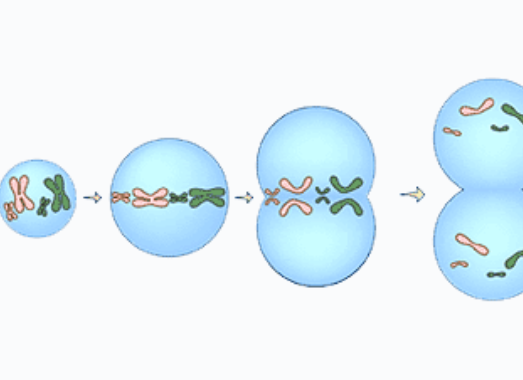
On the fifth day, Miles wanted to know about mitosis. The simple
definition is the duplication of DNA and creates two new daughter cells.
There are five phases in mitosis.
1. Prophase: a cell decides it's time to divide. This is when the cells
prepares for division.
2. Metaphase: everything is in the right place for the split. The DNA lines
up on the central axis (the middle) and the centrioles send out special
tubules to connect the the DNA (or chromatin) which has now been
condensed into chromosomes, to the centromere in the center of the
cell.
3. Anaphase: this is when the separation begins. Half of the chromosomes
are pulled in one direction, while the other half is pulled in another.
4. Telophase: the division is done at this point. Now, the cell membrane
will close in and divide the cell into two, each new cell containing half of the
original DNA.
5. Interphase: now, the cell is in a normal state, also called the resting
state. At this point, the cell is making sure it survives and gets all the
nutrients it needs. It's also preparing for another division, that will one
day happen.
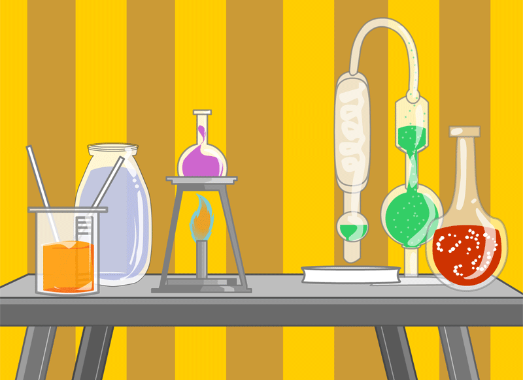
On the sixth day, Miles asked about the Scientific Method. Mrs. Thomas
told him that the Scientific Method is a 7-step process.
1. Make an observation/ask a question: What are you curious about?
What do you want to know?
2. Do some research: find some information on the topic you want to know
about.
3. Form a hypothesis: take a guess or predict what your results will be.
4. Conduct an experiment: create a test or procedure that will allow you
to determine whether or not your hypothesis is correct.
5. Analysis: record your data.
6. Conclusion: review the data you collected to see if your hypothesis was
correct.
7. Compare: compare your data to others. Was it different?
You've previewed 9 of 15 pages.
To read more:
Click Sign Up (Free)- Full access to our public library
- Save favorite books
- Interact with authors


- < BEGINNING
- END >
-
DOWNLOAD
-
LIKE
-
COMMENT()
-
SHARE
-
SAVE
-
BUY THIS BOOK
(from $2.99+) -
BUY THIS BOOK
(from $2.99+) - DOWNLOAD
- LIKE
- COMMENT ()
- SHARE
- SAVE
- Report
-
BUY
-
LIKE
-
COMMENT()
-
SHARE
- Excessive Violence
- Harassment
- Offensive Pictures
- Spelling & Grammar Errors
- Unfinished
- Other Problem





COMMENTS
Click 'X' to report any negative comments. Thanks!