This book is dedicated to ...
Science Maniacs.


Created & published on StoryJumper™ ©2026 StoryJumper, Inc.
All rights reserved. Sources: storyjumper.com/attribution
Preview audio:
storyj.mp/adwjg9e9xkj3
Hello. My name is Cindy !
I am your assistant for today's lesson.
Today, we will be discussing:
- The Process of Radioactive Decay
- Use of Radio - Isotopes in Measuring Absolute Age
- Evidence of Age for Oldest Rocks in Australia




2
Basic Terminology:
Defining Radioactivity:
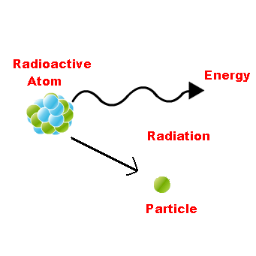
Radioactivity refers to the emission of particles from the nuclei (atomic nucleus), as a result of nuclear instability.
In other words, they are particles that exit the core of an atom due to lack of solidity.
(Visual example)
3
Nuclear Isotopes:
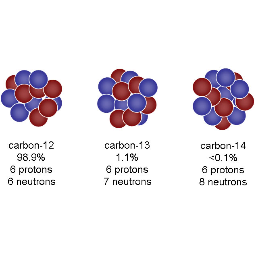
Nuclear Isotopes consist of two (+) forms of the same element that maintain equal number of protons, though vary in terms of neutrons and atomic mass.
For Example:

Did you know?
There are 254 known stable isotopes, and 80 elements which occupy at least one stable isotope!

4
Radioactive Decay:
Radioactive Decay is a natural procedure. Decaying process may involve the breakdown of various types of radiations such as Gamma, Alpha and Beta Rays.
The difference between the three categories of radiation is the emission of the particle from the nucleus.
Radioactivity was discovered by the scientist A. H. Becquerel in 1896. - Fun Fact
5
Now, lets take a closer look at the different categories of Radiation:
Beta Decay: (Two Types)
Beta Minus: Neutron in nucleus becomes proton, electron and anti-neutrino (neutral), electron and neutral exit, which leaves one extra proton left.
Example: Carbon -14 (6 protons) becomes Nitrogen -14 (7 protons).

6
Beta Plus: Proton in nucleus a neutron, positron and neutrino. P and N fly away, leaving one less proton.
Example: Carbon -10 (6 protons) becomes Boron -10 (5 protons).
Fun Fact:
Beta particles can not be stopped by a sheet of paper, rather some can be stopped by human skin.
7
Gamma Decay:
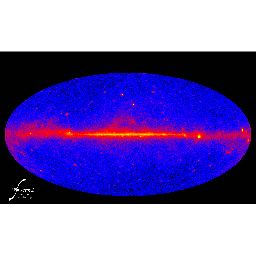
Nucleus changes from a high energy level to a lower energy level, through emitting photons. The numbers of the three elements within the nucleus stay the same.

8
Alpha Decay:
In simple terms, unstable atoms eventually change into stable atoms. An atoms nucleus drops two neutrons and two protons in something called an "Alpha Particle". This causes the atom to change from one element to the next. (E.g. Polonium=211 becomes Lead=207)
Did you know?
Alpha radiation can not penetrate skin, and only travels a short distance through air!
9
Benefits:
- Full access to our public library
- Save favorite books
- Interact with authors
READ
The World of Science.
storyjumper.com
- < BEGINNING
- END >
-
DOWNLOAD
-
LIKE
-
COMMENT()
-
SHARE
-
SAVE
BUY THIS BOOK (from $2.99+)
-
BUY THIS BOOK
(from $2.99+) -
BUY THIS BOOK
(from $2.99+) - DOWNLOAD
- LIKE
- COMMENT ()
- SHARE
- SAVE
- Report
Liked By
X
Encourage this author
-
BUY
-
LIKE
-
COMMENT()
-
SHARE
Problem with this book
X
- Excessive Violence
- Harassment
- Offensive Pictures
- Spelling & Grammar Errors
- Unfinished
- Other Problem
Which pages have problems?
Please describe the problem:
left text
right text
"Exploring Science: THE DYNAMIC EARTH LEILA ALAMEDDINE"
Cindy, an assistant, explains radioactive decay, isotopes, and measuring absolute age using radioisotopes. She also discusses the oldest rocks in Australia.
(15 pages)
Privacy level:
PUBLIC
2 reads
Report





COMMENTS
Click 'X' to report any negative comments. Thanks!