
This book was created and published on StoryJumper™
©2010 StoryJumper, Inc. All rights reserved.
Publish your own children's book:
www.storyjumper.com

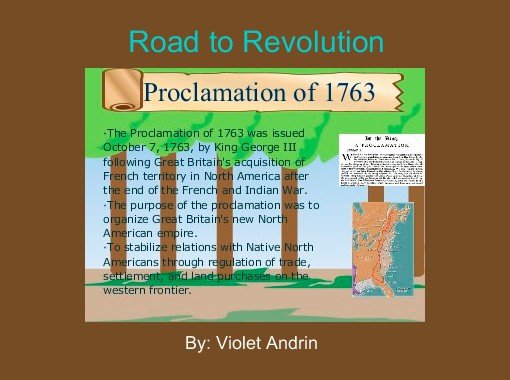
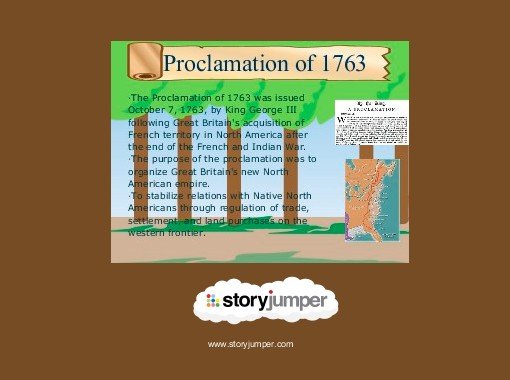
 Proclamation of 1763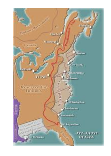
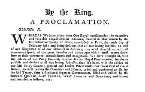
·The Proclamation of 1763 was issued
October 7, 1763, by King George III
following Great Britain's acquisition of
French territory in North America after
the end of the French and Indian War.
·The purpose of the proclamation was to
organize Great Britain's new North
American empire.
·To stabilize relations with Native North
Americans through regulation of trade,
settlement, and land purchases on the
western frontier.

 Quartering Act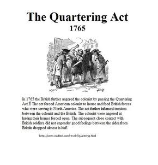
· These Quartering Acts ordered the local governments of the
American colonies to provide housing and provisions for British
soldiers.
·Most colonies had supplied provisions during the war, but the
issue was disputed in peacetime. The result was the Quartering
Act of 1765, which went far beyond what Gage had requested.
The colonies disputed the legality of this Act since it seemed to
violate the Bill of Rights which forbid taxation without
representation and the raising or keeping of a standing army
without the consent of Parliament.
·A second Quartering Act was passed on June 2, 1774, as part
of a group of laws that came to be known as the Intolerable
Acts. The acts were designed to restore imperial control over
the American colonies. While several of the acts dealt
specifically with the Province of Massachusetts Bay, the new
Quartering Act applied to all of the colonies.

 Stamp Act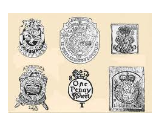
·The Stamp Act of 1765 was a direct tax imposed by the
British Parliament specifically on the colonies of British
America.
·Required that many printed materials in the colonies be
produced on stamped paper produced in London, carrying an
embossed revenue stamp. (legal documents, magazines,
newspapers, many other types of paper used throughout the
colonies)the stamp tax had to be paid in valid British currency.
·The purpose of the tax was to help pay for troops stationed in
North America after the British victory in the Seven Years War.
The British government felt that the colonies were the primary
beneficiaries of this military presence, and should pay at least
a portion of the expense.
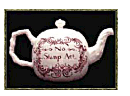
·Many colonists considered it a violation of their rights as
Englishmen to be taxed without their consent.
·Very soon all stamp tax distributors were intimidated into
resigning their commissions, and the tax was never effectively
collected.Opposition to the Stamp Act was not limited to the
colonies.
·The Act was repealed on March 18.

 Townshend Acts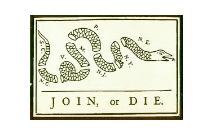
·The Townshend Acts were a series of laws passed
beginning in 1767 by the Parliament of Great Britain
relating to the British colonies in North America.
·Named after Charles Townshend, the Chancellor of the
Exchequer, who proposed the program.
·To raise revenue in the colonies to pay the salaries of
governors and judges so that they would be
independent of colonial rule
·To create a more effective means of enforcing
compliance with trade regulations
·The Townshend Acts were met with resistance in the
colonies, prompting the occupation of Boston by British
troops in 1768, which eventually resulted in the Boston
Massacre of 1770.

 Boston Massacre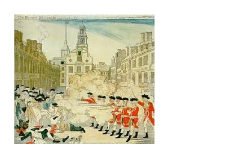
·The Boston Massacre, called the Boston Riot
by the English, was an incident on March 5,
1770, in which British redcoats killed five
civilian men.
·British troops had been stationed in Boston
since 1768 in order to protect and support
crown-appointed colonial officials attempting
to enforce unpopular Parliamentary
legislation.
·Amid ongoing tense relations between the
population and the soldiers, a mob formed
around a British sentry, who was subjected to
verbal abuse and harassment.

 Tea Act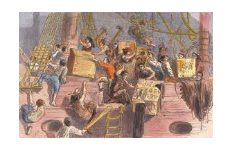
·The Tea Act was an Act of the Parliament of Great
Britain. Its principal overt objective was to reduce the
massive surplus of tea held by the financially troubled
British East India Company in its London warehouses.
·A related objective was to undercut the price of tea
smuggled into Britain's North American colonies. This
was supposed to convince the colonists to purchase
Company tea on which the Townshend duties were paid.
·The act granted the Company the right to directly ship
its tea to North America and the right to the duty-free
export of tea from Britain, although the tax imposed by
the Townshend Acts and collected in the colonies
remained in force. It received the royal assent on May
10, 1773.

 Boston Tea Party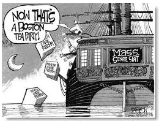
·The Boston Tea Party was a direct action by
colonists in Boston, a town in the British
colony of Massachusetts, against the British
government and the monopolistic East India
Company that controlled all the tea imported
into the colonies.
·On December 16, 1773, after officials in
Boston refused to return three shiploads of
taxed tea to Britain, a group of colonists
boarded the ships and destroyed the tea by
throwing it into Boston Harbor.
·The incident remains an iconic event of
American history, and other political protests
often refer to it.

 Intolerable Acts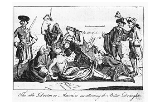
·The Intolerable Acts are names used to describe a
series of laws passed by the British Parliament in 1774
relating to Britain's colonies in North America.
·Triggered outrage and resistance in the Thirteen
Colonies that later became the United States, and were
important developments in the growth of the American
Revolution.
·Four of the acts were issued in direct response to the
Boston Tea Party of December 1773
·The British Parliament hoped these punitive measures
would, by making an example of Massachusetts, reverse
the trend of colonial resistance to parliamentary
authority that had begun with the 1765 Stamp Act.
·A fifth act, the Quebec Act, enlarged the boundaries of
what was then the Province of Quebec and instituted
reforms generally favorable to the French Catholic
inhabitants of the region.
You've previewed 9 of 15 pages.
To read more:
Click Sign Up (Free)- Full access to our public library
- Save favorite books
- Interact with authors
- < BEGINNING
- END >
-
DOWNLOAD
-
LIKE
-
COMMENT()
-
SHARE
-
SAVE
-
BUY THIS BOOK
(from $2.99+) -
BUY THIS BOOK
(from $2.99+) - DOWNLOAD
- LIKE
- COMMENT ()
- SHARE
- SAVE
- Report
-
BUY
-
LIKE
-
COMMENT()
-
SHARE
- Excessive Violence
- Harassment
- Offensive Pictures
- Spelling & Grammar Errors
- Unfinished
- Other Problem





COMMENTS
Click 'X' to report any negative comments. Thanks!