I dedicate this book to my old foreign exchange student Eric.

Physical Features of Northern Europe
Northern Europe is a land of great variety. Because of its variety, the physical features change greatly from one location to another.
There are two regions, the British Isles and Scandinavia, that make up Northern Europe. The British Isles lie to the southwest. The British Isles are a group of islands located across the English Channel separate from the rest of Europe. Scandinavia lies northeast of the British Isles. Scandinavia is a region of islands and peninsulas in far northern Europe. Iceland, an island to the west, is often considered part of Scandinavia.
Hills and Mountains
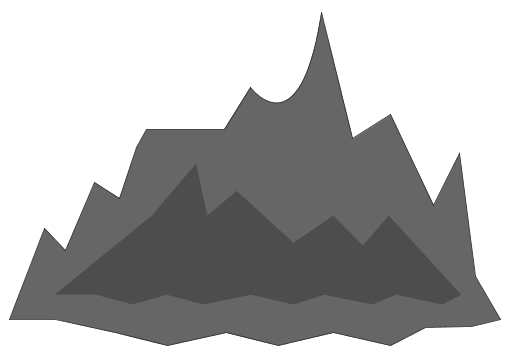
Rough, rocky hills and low mountains cover most of Northern Europe's land. Rugged hills expand over much of Iceland, northern Scotland, and Scandinavia. The bumpy Kjolen (CHUH-luhn) Mountains on the Scandinavian Peninsula divides Norway from Sweden.The rocky soil and unequal terrain in these parts of Northern Europe make farming there very difficult. This adds to fewer people living there than the rest of Northern Europe.
Farmland and Plains
Stretching across the southern parts of the British Isles and Scandinavia are fertile farmland and flat plains. The rolling green hills of Ireland, provides rich farmland. In England and Denmark there are wide valleys that also provide plenty of fertile soil.
Effects of Glaciers
Glaciers, or slow moving sheets of ice have carved a mark on Northern Europe's coastlines and lakes. Millions of years ago, glaciers cut deep valleys into Norway's coastal mountains. These valleys filled up with water as the glaciers melted, creating deep fjords; a narrow inlet of the sea set between high, rocky cliffs.
Effects of Glaciers Continued
Fjords can be very long and deep. For example, Norway's Sogne Fjord is over 100 miles long and more than three-quarters of a mile deep. Melting Glaciers also carved thousands of lakes in Northern Europe. Thousands of years ago, glaciers carved Sweden's Lake Vanern, along with many other lakes in the British Isles.


Natural Resources
Northern Europe's resources have helped make it one of the wealthiest regions in the world. Northern Europe's most important resources are forests, soils, and surrounding seas.
Energy
Northern Europe has a wide variety of energy sources. Norway and the United Kingdom benefit from oil and natural gas deposits under the North Sea. Another source is hydroelectricity. Hydroelectricity energy is made by the regions many lakes and rivers. Geothermal energy, or energy from the heat of Earth's interior is the last source. Geothermal energy is produced from steam in Iceland from hot springs.
Forests and Soils
Two other important resources in Northern Europe are forests and soils. Stretching across Finland and the Scandinavian Peninsula are large areas of timber producing forests. Fertile soils provide rich farmland for growing crops, such as wheat and potatoes. Also, livestock like sheep and cattle are common in these parts.


Seas and Oceans
The last important resource are the seas and oceans that surround Northern Europe. For many centuries, the North Sea, the Norwegian Sea, and the Atlantic Ocean have provided bountiful stocks of fish. Today, fishing is a key industry in Norway, Denmark, and Iceland.


Climate
Northern Europe is close to the Arctic Circle. You may think that it would be very cold, but it is actually remarkably mild. Northern Europe's mild climate is a result of the North Atlantic Drift. The North Atlantic Drift is an ocean current that brings warm, moist air across the Atlantic Ocean. The warm waters from this ocean current keeps most of Northern Europe warmer than other locations around the globe at similar latitudes. Most of Northern Europe has a marine west coast climate. Denmark, the British Isles, and western Norway all benefit from mild summers and frequent rainfall. Snow and frosts may occur in wintertime but don't last very long.
Climate
Central Norway, Sweden, and southern Finland have a humid continental climate. This area has four true seasons with cold snowy winters and mild summers.
Far to the north, there are colder climates. Subarctic regions, like those in Northern Scandinavia, have long, cold winters and shorts summers. Iceland's tundra and ice cap climates, produce extremely cold temperatures all year.

The British Isles
History
Two independent countries, the Republic of Ireland and the United Kingdom, make up the British Isles. The United Kingdom is made up of four small countries, England, Scotland, Wales, and Northern Ireland.
Early History
Early settlers had built Stonehenge, an ancient monument. There were many tribes of early settlers, the Celts, the Angles, Saxons, and the Vikings. They all established little kingdoms throughout Britain. Then, in 1066, the Normans from Northern France conquered England and established a strong kingdom there. Over time, England grew in strength and power. It soon overpowered its neighbors in the British Isles. By the 1500s England had strong rulers like Queen Elizabeth I who led England to greatness!
Rise of the British Empire
England's strong economy and mighty navy helped it become a vast empire. Over time, England joined Wales and Scotland to create the United Kingdom of Great Britain. Eventually, Ireland was annexed also. Then England also launched an overseas empire. By the 1800s Britain had colonies in the Americas, India, and Australia. Thanks to the Industrial Revolution, the United Kingdom's economy soared in the 1700s and 1800s. Industries like iron, steel, and textiles, or cloth products, helped make the United Kingdom one of the world's richest countries. However, not everyone benefited. In the 1840s a severe food shortage devastated Ireland. Lack of support from the English government during the famine increased tensions between the two countries. By the late 1800s, the British Empire had colonies in Africa, Asia, Australia, and the Americas.

Decline of Empire
In the 1900s, the British Empire started to fall apart. Both World War I and the Great Depression, hurt the British economy. Rebellions in Ireland forced Britain to self-rule to all but the northern part of Ireland. In 1994 the Republic of Ireland gained full independence. Other movements for independence also emerged in Britain's overseas colonies. After World War II, Great Britain gave up most of its colonies. The British Empire was over.
Culture
For many years, the British ruled most of the world. As a result, the government, people, and popular culture of the British Isles have influenced people all around the world.
Government
The United Kingdom's government is a constitutional monarchy. A constitutional monarchy is a type of democracy in which a king or queen serves as head of state but a legislature makes the laws. At first, the English had limited the power of monarchs in the Middle Ages. A document known as the Magna Carta, or Great Charter, limited the powers of kings. It also made everyone obey the law. Today, a prime minister leads the British government. Most members of Britain's legislative body, known as Parliament, are elected. The Republic of Ireland has a president as head of state. The president, who has limited powers, elects a prime minister. Together with the Irish parliament, the prime minister runs the government.
People
The countries of the British Isles, have had close ties for hundreds of years. As a result, the countries share many culture traits. One similarity is their common heritage. Most people in the British Isles can trace their heritage to the region's settlers, such as the Celts, Angles, and the Saxons. Another common trait shared among the people, are sports like soccer and rugby. Even though people in the British Isles share many culture traits, each region still has its own unique identity.
British Isles Today
The British Isles today face some challenges. Efforts to bring peace to Northern Ireland and to maintain a powerful economy are big issues.
Northern Ireland
One of the toughest problems facing the British Isles today is the conflict in Northern Ireland. In the 1500s Protestants from England and Scotland began settling in Northern Ireland. When Ireland became a separate state, Northern Ireland's Protestant majority chose to stay part of the United Kingdom. For years, the two sides have waged a bitter and violent struggle. In the late 1990s peace talks between the two began but failed when some groups refused to disarm themselves. However, recently hopes are once again high that peaceful relations between the groups will bring on long-lasting peace once again.
The economy of the British Isles is energy reserves, banking, tourism, and insurance.
- Full access to our public library
- Save favorite books
- Interact with authors
Physical Features of Northern Europe
Northern Europe is a land of great variety. Because of its variety, the physical features change greatly from one location to another.
There are two regions, the British Isles and Scandinavia, that make up Northern Europe. The British Isles lie to the southwest. The British Isles are a group of islands located across the English Channel separate from the rest of Europe. Scandinavia lies northeast of the British Isles. Scandinavia is a region of islands and peninsulas in far northern Europe. Iceland, an island to the west, is often considered part of Scandinavia.
- < BEGINNING
- END >
-
DOWNLOAD
-
LIKE(7)
-
COMMENT()
-
SHARE
-
SAVE
-
BUY THIS BOOK
(from $4.99+) -
BUY THIS BOOK
(from $4.99+) - DOWNLOAD
- LIKE (7)
- COMMENT ()
- SHARE
- SAVE
- Report
-
BUY
-
LIKE(7)
-
COMMENT()
-
SHARE
- Excessive Violence
- Harassment
- Offensive Pictures
- Spelling & Grammar Errors
- Unfinished
- Other Problem





COMMENTS
Click 'X' to report any negative comments. Thanks!