




" My culture, your culture, our culture "
Erasmus+ project KA2 (2018-2020)
" Historical monuments
of prefecture of Trikala "
The book was created by Ann Magkiosi

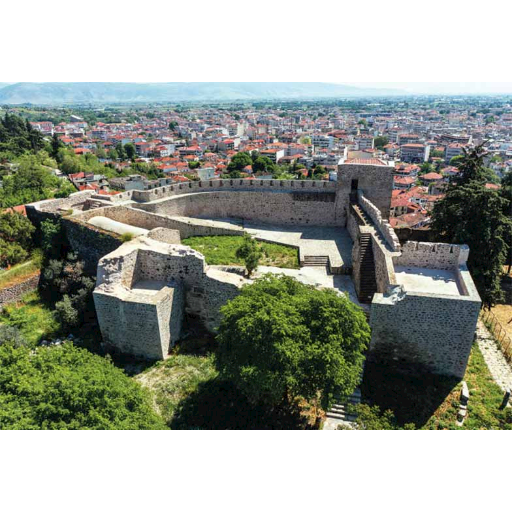
The castle of Trikala city
" Forest and historical monuments
in the Prefecture of Trikala "
The Prefecture of Trikala is a natural and historic monument for itself and can be characterized as one of the most developed areas culturally and touristically.
Is the place where myths were born, where experiences never end...
Is a place dotted with unique, invaluable historical monuments.
A visitor has endless choices, from the rocks and monasteries of Meteora, Byzantine churches and the monasteries of the local villages, castles and ancient theaters to the arched bridges of this region.
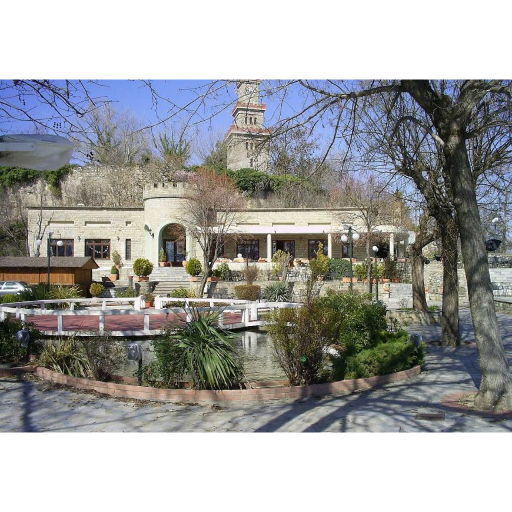
The castle of Trikala
The castle of Trikala is located at the north-eastern side of the town. It was built by the Emperor Justinian I (6th century) in the place of the ancient acropolis of Trikki. During the palaiologeian period it underwent extensive renovation .
This castle was an important factor for the safety of the initial settlement on the roots of a hill, where it lays, over the city of Trikala.
On the eastern side of the castle the Turks built in the middle of the 17th century a clock tower (or tower bell) of a grand dimensions. The clock-towers of Trikala and Larissa are the oldest towers in Greece.
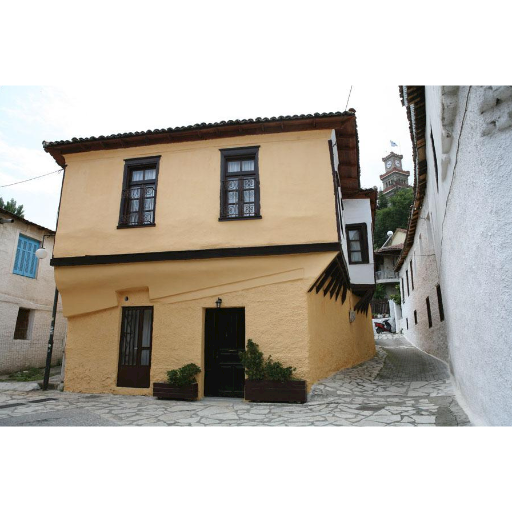
The old city of Trikala, Varousi
The old city of Trikala, Varousi, with a uniform architecture.
Varousi is located in the area around the castle. During the Turkish occupation it was a Christian district and today it is fully preserved.
The old houses of Varousi built between the 17th and 19th century. and the numerous churches reflect the economic and cultural flourishing of the 18th and 19th centuries which was the result of the development of trade and handicrafts.
Varousi is distinguished for its beautiful mansions with elaborate architectural rhythms. In this district are the oldest churches of the city, which are built very close to each other.
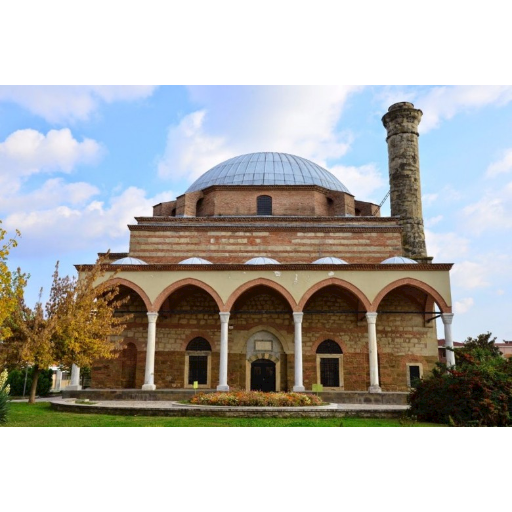
Kursum Mosque
Kursum Mosque or Osman Shah Mosque of Trikala is an Islamic mosque, a 16th century building designed by Mimar Sinan, which today functions as a venue for events.
Near the mosque is the octagonal mausoleum of its founder, Osman Shah, grandson of Sultan Selim I, governor of the local province who died in Trikala in 1567. According to tradition, Osman built the mosque because in Trikala he was cured of a disease that afflicted him. The mosque today is a UNESCO protected monument and serves as a venue for mild events.
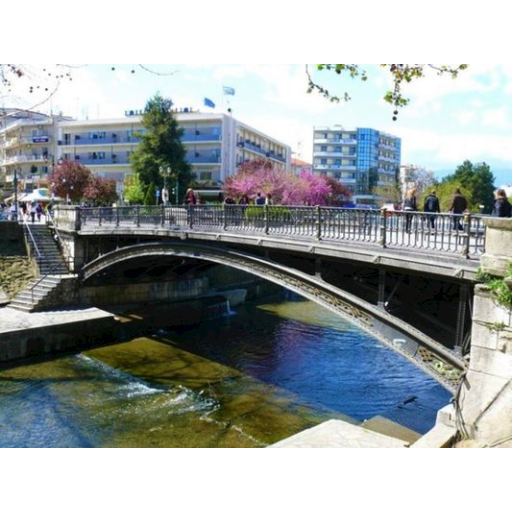
Lithaios river and central bridge of Trikala
The city of Trikala crossed by Lithaios river, tributary
of Pineios and there in a big central bridge in the center
of the city over the river of The bridge was so beautiful
,made by iron and had lot of different lights at the night.
Wanted to learn more about the central bridge of Trikala
city ,she learned that is a very old bridge ,made by French
engineers at 1888 that edited design, study and
construction, apparently inspired by the bridges of the
Seine. The minerals were shipped from France and it is an
architectural jewel and a symbolic bridge.
Basilika of Porta Panagia (Buzantine church )
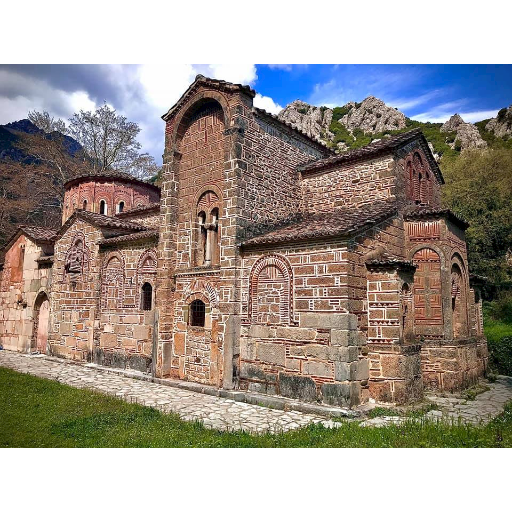
Pyli
A place of great historic importance due mainly to its strategic location as well its unique landscape, Pyli boasts a large number of monuments.
The Basilica of Porta Panagia that dates back to 1264, on the north bank of the river Portaikos. The basilica of Porta Panagia is dedicated to the Dormition of the Theotokos.
It was built in 1283 by John I Doukas.
The church is divided into two parts, the main church and the outer section. There are still pieces of marble decoration and structured that date back to the original ancient temple on top of which the church was built, but most were destroyed in a fire in 1855.
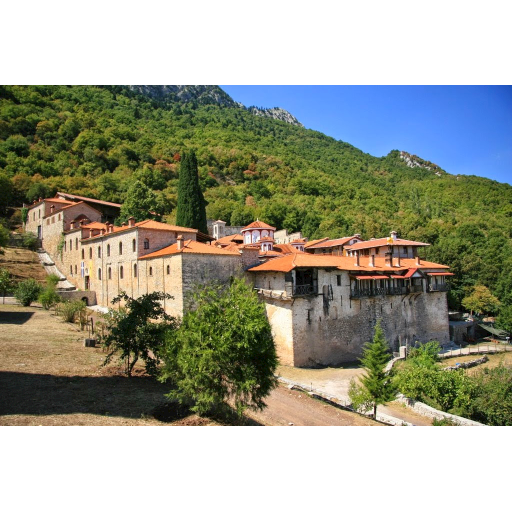
Monastery of Saint Vissarion
The monastery of St. Vissarion, where women are not allowed to enter and has a total of 365 cells for the monks, situated on Mount Koziakas. The monastery was re-established by St. Vissarion between 1527 and 1535.
The church of the monastery is situated at the location the church St. Vissarion built with the help of his brother, Ignatios. The iconography was completed in November 1557 The monastery was one of the richest and most active of the area. It has 366 cells, dining halls, land property in Romania, a rich library with important manuscripts (most of which currently reside in the National Library of Greece). In 1823 the monastery was looted by Suldje Kordja, and in 1943 it was bombed twice, by the Italians and the Germans.
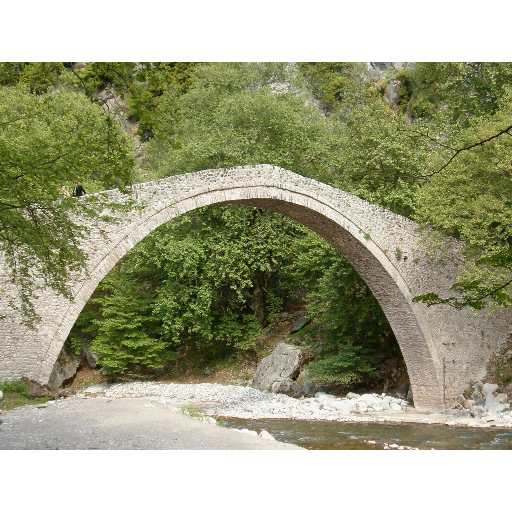
The arched bridge of Pyli (known as Kamara).
The arched bridge at Pyli, which is a classic example of stonemasonry of the area.
This arched bridge was built in 1514 by St. Vissarion, and up to 1936 was the only link between the plains of Thessaly and the villages of Pindos.
According to the tradition, because St. Vissarion had no money with which to pay the craftsmen, they stopped work on the bridge. A bear then presented itself, which helped to carry the raw materials but also led the chief craftsman to move a large boulder and uncover a treasure. So the workers were paid and the bridge was completed.
The monastery of Saint Paraskevi
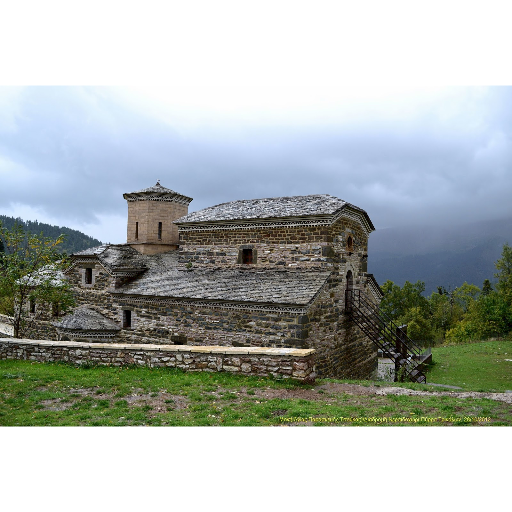
The old (built 1732) monastery of Saint Paraskevi, in the idyllic landscape of mount Pindos ,is an excellent example of stonework
of the old craftsmen.
The monastery of Agia Triada (1798)in the fir forest of the village Desi of Trikala with its rich wall painting and the beautiful temple.
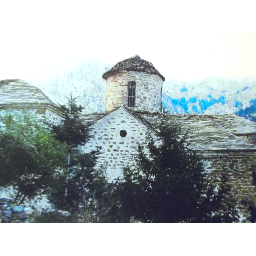
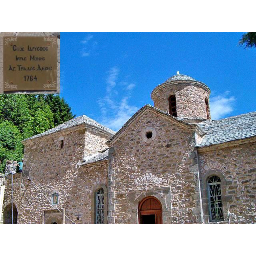
Agia Triada of Desi
The rocks of Meteora
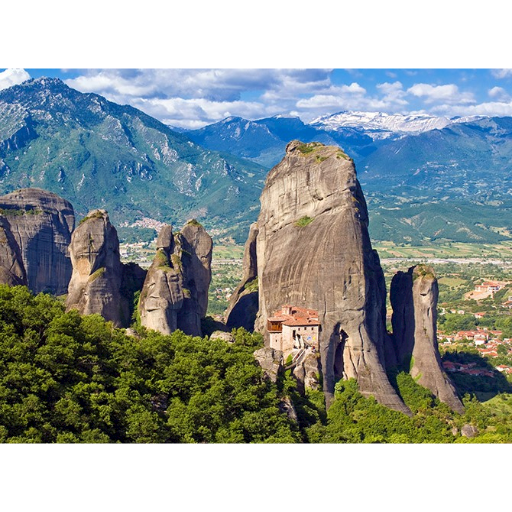
Meteora
The giant rocks of Meteora, over the town of Kalmbaka are unique in all over the world and because of this, Metéora is included on the UNESCO World Heritage List.
This stone forest of rocks is one of the most miraculous improsive geological phenomena of our planet.
Their unusual form is not easy to explain geologically.
The rocks was formed of deposits of stone, sand and mud from streams flowing into a delta at the edge of a lake, over millions of years.About 60 million years ago a series of earth movements pushed the seabed upwards, creating a high plateau,the famous rocks of Meteora and the water of the lake found exit to the Aegean sea through the valey of Tempi.
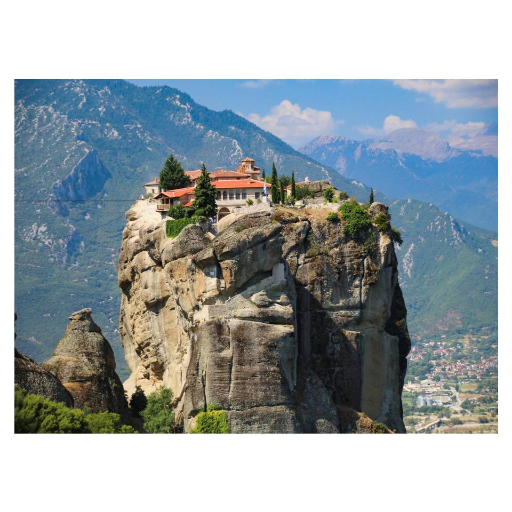
In the sixteenth century there were 24 monasteries at Metéora in Greece were lived monks and nuns.
Today only six of these monasteries remain open:
the monastery of Great Meteoron
the monastery of Barlaam,
the monastery of Saint Nicolas Anapafsas,
the monastery of Roussanou,
The monastery of Saint Stefanos and
the monastery of Agia Triada
Of these four are inhabited by men, and two by women.
The monasteries now are the number one tourist attraction of the prefecture of Trikala.
- Full access to our public library
- Save favorite books
- Interact with authors
- < BEGINNING
- END >
-
DOWNLOAD
-
LIKE(3)
-
COMMENT()
-
SHARE
-
SAVE
-
BUY THIS BOOK
(from $6.99+) -
BUY THIS BOOK
(from $6.99+) - DOWNLOAD
- LIKE (3)
- COMMENT ()
- SHARE
- SAVE
- Report
-
BUY
-
LIKE(3)
-
COMMENT()
-
SHARE
- Excessive Violence
- Harassment
- Offensive Pictures
- Spelling & Grammar Errors
- Unfinished
- Other Problem





COMMENTS
Click 'X' to report any negative comments. Thanks!