The first thing you must know is that I am NOT a professional horse person. I do not own a horse, and can not guarantee total accuracy. However, I do ride at local stables and have picked up some interesting things from the horses there. If you think something else should be included, or find inaccurate info leave a comment, I want to know. Enjoy!

Horses are very sensitive and intelligent creatures, and some may even be capable of outsmarting you. They have extremely good memories and are all unique and individual. Like humans, they all have their quirks, so general rules don't always apply. You can learn the basics, but in order to completely understand them, you have to learn the horse.
Horse Talk:
Ears
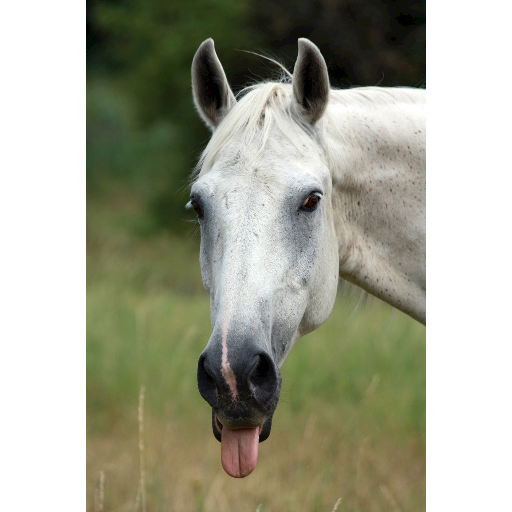
Horses will generally pin their ears back if they are angry or upset. However, I have encountered horses who will do it as an excuse to behave badly or boss you around. If you don't know the horse well and it pins it ears back, its important to ask someone who knows the horse much better. If something is hurting the horse, or they are very angry, most will pin their ears flat against their head. If a horse is mildly grumpy, or wants to be left alone, their ears will tilt back about halfway. Some very grumpy horses will keep their ears in this position most of the time. This is one of the things that really depends on the horse, so don't be surprised if you discover something else.
Horses do all kinds of things with their ears. I've ridden a few who angle their ears back and squeeze them together when I ask them to canter. Some will put both ears forward and hold them high. This is usually a sign that the horse is enjoying itself and is happy. If you are riding and the horse turns its ears to face you, it is paying attention to you. Ears tilting sideways can sometimes show tiredness, kind of like when your eyelids droop. Sometimes when you are riding, a horse will have its ears forward. When you give a command or day something, it may flick one ear back. This is a sign that it is paying attention or noticed your saying something.
Ears Tilted Sideways
This horses ears are held high and forward.
This horse is likely upset, don't approach it!
articles.extension.org
Fun Fact:
The Kathiawari horse and Marwari horses have ears that actually curve together, and sometimes touch. The ears a small and finely curved. The two breeds are often considered very beautiful.
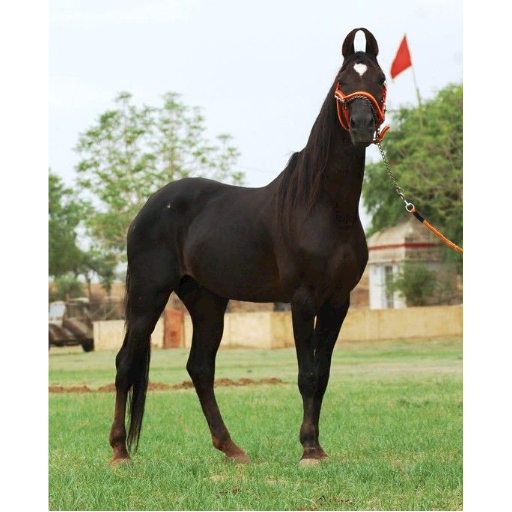
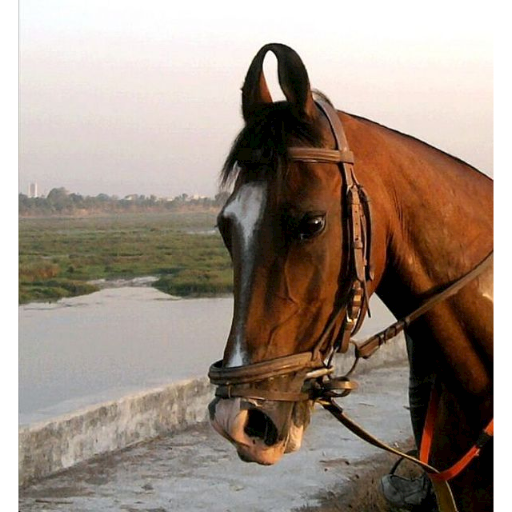
Their ears curve so close to each other that they touch!
Marwari Kathiawari
Horse Talk:
Stall Behavior
This is extremely different depending on the horse, so be prepared to find some things you may not agree with. Much of the things a horse will do in his/her stall are bad habits. Some horses will pace in their stalls, going in constant circles. I assume this is sometimes caused by boredom, but doing a little research I stumbled upon the fact that horses may pace at different speeds, therefore showing their mood. If a horse is circling slowly, it may be upset with its surroundings or situation. If a horse is pacing fast, they may be stressed or I feel it is safe to guess, excited. Just like you may feel like jumping through the roof when something good happens, I believe horses feel similar.
youtube.com
Sometimes horses will develop other vices, or bad habits. Some may chew on their wall, or even kick it. Horses often kick at their stall when they are angry, or want attention. This should be discouraged, and not rewarded because the horse may injure itself. If it can, a horse may even start cribbing, where they grab hold of something with their teeth (Maybe a feed bucket, board or bar within reach) and suck in a large amount of air. This produces a gulping sound. The habit is unhealthy, though difficult to stop. To keep a horse from developing bad habits, keep it entertained. Most bad habits come from boredom, so adding a toy or something for it to do is usually good.
But horses don't spend all their time working on bad habits. There are other ways to spend time in a stall. Sometimes horses just want some quiet time. If a horse just wants to be left alone, it may turn its hindquarters toward the door. If a horse does this, and you don't need to get it out, its probably best not to bother it. Sometimes as I move through the stables and feed carrots to the horses, I am met with different responses. They sometimes nicker when I come, but a few decide they don't want to come out and ignore me and hang around the back of the stall. Moving the carrot into their range of vision usually encourages them to come say hi, but some continue to ignore me.
When this happens, I simply leave the carrot where they can reach it and move on. I had one horse friend who refused to look at me the first time we met, but he discovered that carrots were something I usually have. The next time he ignored me until he saw the carrot, then ambled right over. The third visit was hilarious. I got to his stall and he was already at the door, waiting happily. We are now very good friends. Some horses are not like that. Occasionally you will meet a horse that is best to leave alone unless you need to do something, especially those who act up a lot when they can. Always ask someone who knows the horse unless you are sure about the horse, or if the horse belongs to you.
- Full access to our public library
- Save favorite books
- Interact with authors
- < BEGINNING
- END >
-
DOWNLOAD
-
LIKE(10)
-
COMMENT()
-
SHARE
-
SAVE
-
BUY THIS BOOK
(from $5.99+) -
BUY THIS BOOK
(from $5.99+) - DOWNLOAD
- LIKE (10)
- COMMENT ()
- SHARE
- SAVE
- Report
-
BUY
-
LIKE(10)
-
COMMENT()
-
SHARE
- Excessive Violence
- Harassment
- Offensive Pictures
- Spelling & Grammar Errors
- Unfinished
- Other Problem





COMMENTS
Click 'X' to report any negative comments. Thanks!