Vocabulary...............................................p. 3-6
Early Years of Vietnam...........................p. 7-10
1968..........................................................p. 11-13
Later Years of Vietnam..........................p. 14-18
1960's Culture.........................................p.19-25
Vietnam Timeline....................................p. 26-28
Nixon's Presidency.................................p. 29-30
Ford & Carter's Presidencies.................p. 31-33
Table of Contents

Reagan's Presidency...............................p. 34-36
George W. Bush's Presidency................p. 37
Bill Clinton's Presidency..........................p. 38
Barack Obama's Presidency...................p. 39
o Ho Chi Minh: was a Vietnamese Communist revolutionary leader who was Chairman and First secretary of the Workers' Party of Vietnam
o Dien Bien Phu: the climactic confrontation of the First Indochina War between the French Union's French Far East Expeditionary Corps and Viet Minh communist-nationalist revolutionaries.
o Geneva Accords: arranged a settlement which brought about an end to the First Indochina War.
o Ngo Dinh Diem: was leader of Vietnam from 1955 until his assassination in 1963. His heavy-handed rule and resulting ouster paved the way to the Vietnam War.
Vocabulary
o Vietcong: a member of the communist guerrilla movement in Vietnam that fought the South Vietnamese government forces 1954–75 with the support of the North Vietnamese army and opposed the South Vietnamese and US forces in the Vietnam War.
o Gulf of Tonkin Resolution: was a joint resolution that the United States Congress passed on August 7, 1964, in response to the Gulf of Tonkin incident.
o Ho Chi Minh Trail: was a logistical system that ran from the Democratic Republic of Vietnam to the Republic of Vietnam through the kingdoms of Laos and Cambodia.
o Napalm: a highly flammable sticky jelly used in incendiary bombs and flamethrowers, consisting of gasoline thickened with special soaps.
Vocabulary
Vocabulary
o Agent Orange: herbicide and defoliant chemical. It is widely known for its use by the U.S. military as part of its herbicidal warfare program, Operation Ranch Hand, during the Vietnam War
o Credibility Gap: term that came into wide use with journalism, political and public discourse in the United States during the 1960s and 1970s.
o Vietnamization: Nixon's plan provided for a gradual, phased withdrawal of American combat forces, combined with an expanded effort to train and equip South Vietnam to take over military responsibility for its own defense
o Silent Majority: the majority of people, regarded as holding moderate opinions but rarely expressing them.
Vocabulary
o My Lai Massacre: the Vietnam War mass killing of between 347 and 504 unarmed civilians in South Vietnam on March 16, 1968.
o Kent State University: four Kent State University students were killed and nine injured when members of the Ohio National Guard opened fire during a demonstration protesting the Vietnam War.
o Pentagon Papers: the name given to a secret Department of Defense study of U.S. political and military involvement in Vietnam
o War Powers Act: passed by Congress in the aftermath of the war to address these concerns and provide a set of procedures for both the President and Congress to follow in situations where the introduction of U.S. forces abroad could lead to their involvement in armed conflict.
Early Years of Vietnam
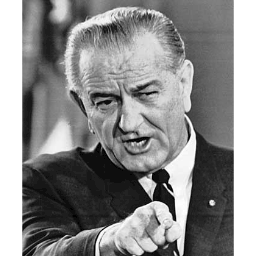
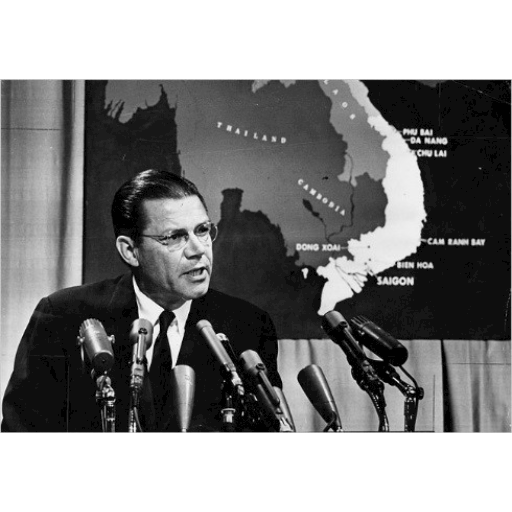
The U.S. government viewed its involvement in the war as a way to prevent a Communist takeover of South Vietnam. This was part of a wider containment policy, with hopes of preventing the spread of communism in the United States. Robert McNamara was an American business executive and the eighth Secretary of Defense, serving from 1961 to 1968 under Presidents John F. Kennedy and Lyndon B. Johnson, during which time he played a major role in escalating the United States involvement in the Vietnam War. On August 7, 1964, Congress passed the Gulf of Tonkin Resolution.
Early Years of Vietnam
Early Years of Vietnam
This enabled President Johnson to take any measures he thought were necessary to retaliate and to support the maintenance of international peace and security in southeast Asia. As the war got closer, many men wanted to avoid being drafted, and there were some legal ways to get around it. Men who had physical or mental problems, were married, with children, attending college or needed at home to support their families were often granted deferments. Some men even claimed to be homosexuals while many others fled to a neutral country such as Canada and Mexico to avoid being drafted.
Early Years of Vietnam
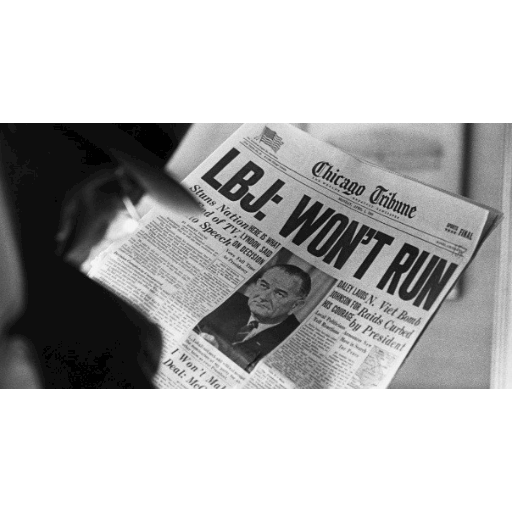
It was unfair to the men who were drafted, and the "draft dodgers" were seen as cowards. The fighting that took place in this war versus other wars was different in that it was a limited war. Guerrilla tactics were first seen in the Vietnam War and it had the largest home-front negative reaction to the war. The Tet Offensive shocked many Americans who thought the U.S. was easily taking care of the enemy. U.S. forces pushed the North Vietnamese forces back and inflicted huge casualties on them, but opposition to the war grew more heated and contributed mightily to Lyndon Johnson's decision not to run for re-election in 1968.
1968
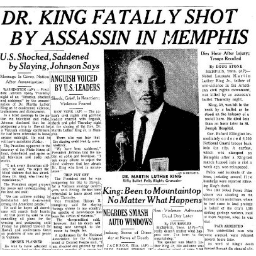
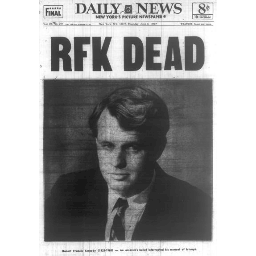
A couple notable assassinations took place in the year 1968; Martin Luther King Jr. and Bobby Kennedy were both shot. MLK was shot at the Lorraine Motel in Memphis, Tennessee on April 4th of 1968, and was pronounced dead at the St. Joseph's Hospital that evening at around 7 p.m. Bobby Kennedy was shot at the Ambassador Hotel in Los Angeles after winning California presidential primaries in the 1968 election. He died the next day while hospitalized. On January 31, 1968, around 70,000 North Vietnamese and Viet Cong forces launched the Tet Offensive: a coordinated series of attacks on more than 100 cities and towns in South Vietnam.
1968
1968
During the time of the Tet Offensive, Walter Cronkite's famous broadcast about the Tet Offensive in February 1968 concluded that the Vietnam War was “mired in stalemate.” Upon seeing the broadcast, Lyndon B. Johnson declared,“If I’ve lost Cronkite, I’ve lost middle America.” This statement proves how influential Cronkite was as a broadcaster on CBS and his ability to move the nation. Being that he had been credited with massive public swings in the past, he was also able to turn the public against the war.
Later Years of Vietnam
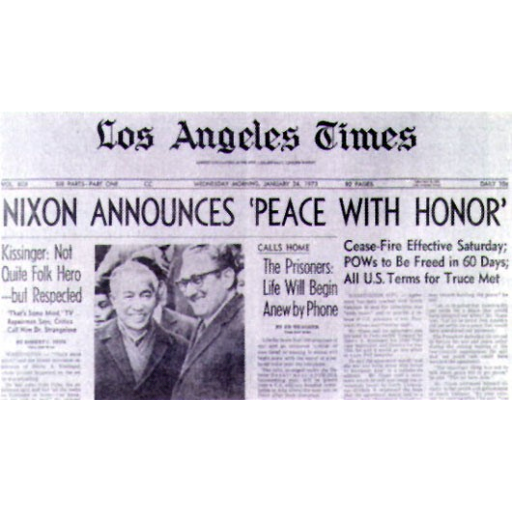
Upon taking office in 1969, U.S. President Richard Nixon adopted a new strategy called Vietnamization that was aimed at ending American involvement in the Vietnam War by handing off military responsibilities to South Vietnam. He wanted to be able to withdraw American ties to the war while keeping its honor intact. Also in the later years, On May 4, 1970, four Kent State University students were killed and nine injured when members of the Ohio National Guard opened fire during a demonstration protesting the Vietnam War.
Later Years of Vietnam
Later Years of Vietnam
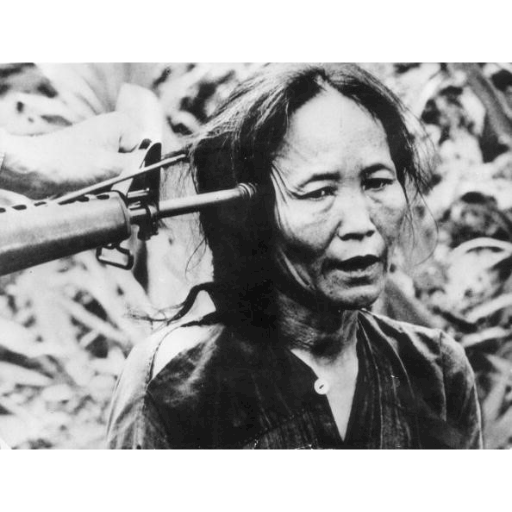
Even though the U.S. had mostly left South Vietnam in 1973 and war had subsided, the aftermath of the My Lai Massacre was not to be ignored. After a soldier who had heard of the brutal killings of civilians, international outrage led to an investigation of the event. . In 1970, a U.S. Army board charged 14 officers of crimes related to the events at My Lai, but only one was convicted. The extent of the cover-up and killings fueled growing antiwar sentiment on the home front in the U.S and further divided the nation over the continuing American presence in Vietnam.
Later Years of Vietnam
Later Years of Vietnam
In conclusion to the end of the war, about 2 million civilians on both sides and 1.1 million North Vietnamese and Viet Cong fighters died. The U.S. military has estimated that between 200,000 and 250,000 South Vietnamese soldiers died in the war. War amputations or crippling wounds were 300 percent higher than in World War II. 75,000 Vietnam veterans are severely disabled. The Defense Department reported that the overall cost of the Vietnam war was $173 billion. As a result of America's loss in Vietnam, there was a misperception that the men who fought there did not measure up to their predecessors in World War II and Korea.
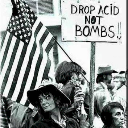
Among all of the events that took place during this era, hippies were one of the most distinctive features of this fresh and colorful decade. Hippies were sure to attract the attention of the media due to their uniquely patterned shirts, bell bottom jeans, drug use, psychedelic music, and downright rejection to conform to the traditional American values. The hippies' cultural dissent derived from their criticism towards the developing American ideologies of the 60s, their opposition of the Vietnam War, and their desire for a social change.
1960s Culture
1960s Culture
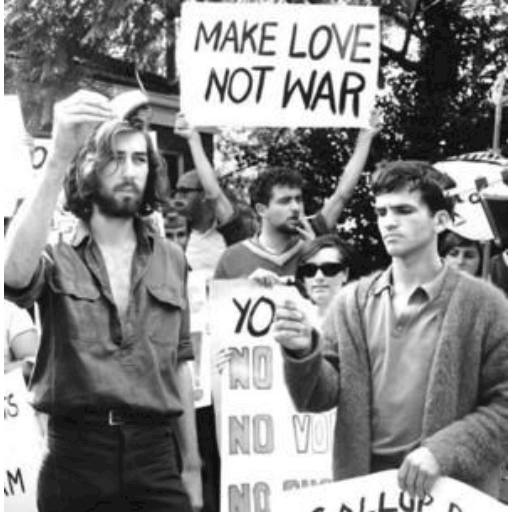
Hippies commonly praised sexual liberation, were often vegan and eco-friendly, and promoted the use of psychedelic drugs such as LSD, marijuana, peyote, and psilocybin mushrooms because the believed that the drugs would work to expand one's consciousness. Their brand was all about peace and love for one another and living harmoniously; violence was strongly opposed by most in any situation.
1960s Culture
1960s Culture
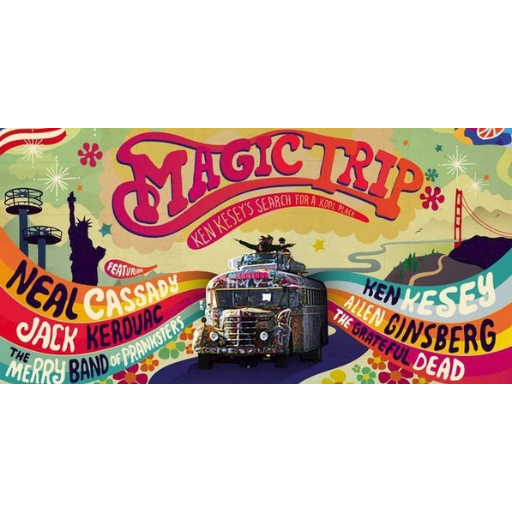
During the 60s, the cultural revolution was slowly bubbling. Bob Dylan was a musician of this era who used beat poetry to comment on the world and the nature of society, and he was the primary kick-starter of the "rock revolution" that began in Laurel Canyon. This specific music revolution prompted the youth to create music and explore life freely. Drugs also played a huge hole in the lives of teenagers and young adults during this era, especially in San Francisco. A man named Ken Kesey took writing classes at Stanford and talked to the public about how he was offered to take part in the LSD experiments, which was a government sponsored test.
1960s Culture
Many credit Kesey for the expansion of the drug culture in California and more and more people than ever before began using drugs to enhance their minds and experience euphoria. Another key event that shaped the 60s that we all think of today was the musical and art festival known as Woodstock. This event took place over the course of 3 days on a dairy farm in New York and entertained as many as 400,000 people. There was rock music and marijuana, but no rioting. Artists such as Jefferson Airplane, Janis Joplin, and Creedence Clearwater Revival, and many performed for people all over the country.
1960s Culture
- Full access to our public library
- Save favorite books
- Interact with authors
- < BEGINNING
- END >
-
DOWNLOAD
-
LIKE
-
COMMENT()
-
SHARE
-
SAVE
-
BUY THIS BOOK
(from $7.79+) -
BUY THIS BOOK
(from $7.79+) - DOWNLOAD
- LIKE
- COMMENT ()
- SHARE
- SAVE
- Report
-
BUY
-
LIKE
-
COMMENT()
-
SHARE
- Excessive Violence
- Harassment
- Offensive Pictures
- Spelling & Grammar Errors
- Unfinished
- Other Problem





COMMENTS
Click 'X' to report any negative comments. Thanks!