CONTENTS
- - Introduction to Mary
- - Mary's school problem
- - Exploring composting
- - Introducing composting investigation
- - Mary's investigation
- - Teacher's comments to the investigation's success

Introduction to Mary
My name is Mary and I am a grade 4 student at Yiyili Aboriginal Community School, in Western Australia.
I love my school because the teachers, parents, and students are always trying to discover and achieve different methods of creating a sustainable school.

My school currently has water tanks in the school yard to prevent using too much of the provided water, as students and teachers can use any rainwater as drinking water.
Yiyili Aboriginal Community School also has chickens which produce fresh eggs which are served at lunch time for the teachers and students.





Mary's School Problem
Although Yiyili Aboriginal Community School has many different methods of being sustainable, we are struggling to think of a way to sustainably provide fertiliser for our school plants.
Natural Fertiliser is much better for the environment, compared to chemical fertiliser. So the students and teachers need to come up with an idea to solve the problem of not having any natural fertiliser.
So one day when we were sitting at the assembly area after lunch, a person came to visit our school. His name was John and he was introducing our school to the “Yiyili Compost Program”.
John explained to the school about what this program involves, and how it will help to provide the school with natural fertilisers for the plants.
COMPOST
Exploring Composting
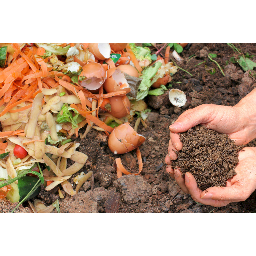
So John explained to all of the teachers and students about composting, what composting does for the environment, and how to do it.
John explained that "Composting is a way to purpose- fully use the process of decay to break down organic materials in a location where the resulting mixture can be harvested for enriching garden soil" (P. Ashbrook, 2016).
John explained that composting is important for the environment because of many reasons. These reasons include:
- - "Recycles kitchen and yard waste"
- - 'Provides as a soil conditioner'
- - "Natural alternative to chemical fertilisers"
--> (Eartheasy, 2014)
John told all of the students and teachers that composting is easy to implement in schools, and that they will provide resources to implement compost bins within our school.
There will also provide main bins scattered around the school. One being general waste, one being recycled paper, and the third being compost.
So rather than putting food scraps into the general waste bin, students and teachers have the option to recycle their waste, rather than contribute to more unnecessary rubbish.
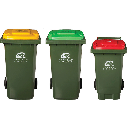
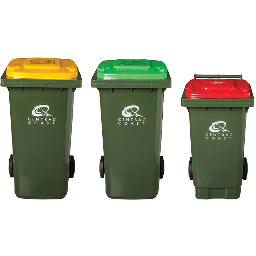
Recycle
General waste
Compost
Conducting the Composting Program
Not only did John provide our school with composting recourses, but he challenged each student and teacher to create a compost bin at home.
The aim of the investigation is to understand the process of composting, and that composting provides natural soil fertilisers, which can be used to help plants grow.
We were challenged to carry out a composting investigation at home and take photos of each step. While we take the photos of each step, we were asked to record what was happening.
Students were also given the opportunity to use recourses from the school for their investigation, if they weren't able to fund the composting recourses themselves.
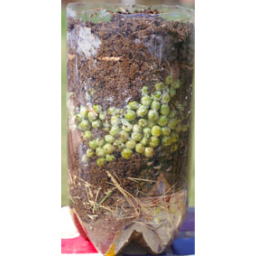
John also provided us with composting alternatives, for example, instead of using a large compost bin, a recycled soda bottle can be used.
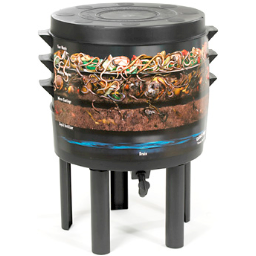
Worm farms are also a great alternative to create natural fertiliser and soil for the school gardens.

Mary's Investigation
Once John said goodbye to the teachers and students, and school had finished, I raced home to begin my investigation.
I decided to use a big bucket from home to create my compost investigation in.
I cut, and prepared, the bin so that I could begin the process straight away.
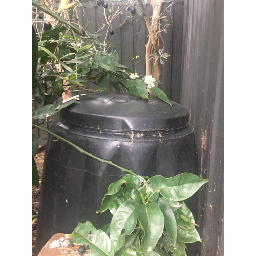
At the dinner table, I explained to my parents about the composting investigation, and made sure that they put their food scraps into the household compost bin that I created.
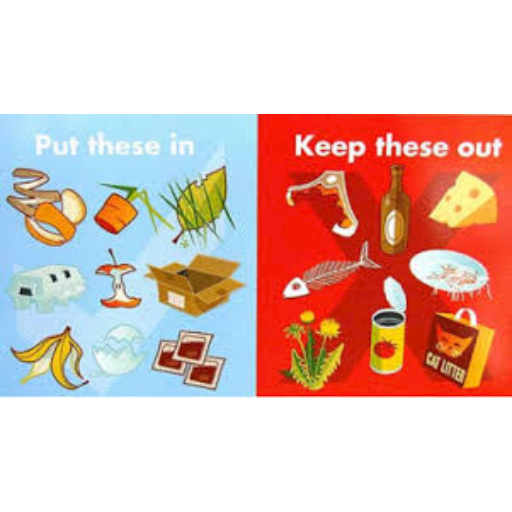
I told them which food scraps could be used for composting, such as:
- - Fruit and vegetable scraps
- - Coffee grounds
- - Tea bags
- - Egg shells
And which foods couldn't be used, such as:
- - Meat scraps
- - Oils
- - Bones
- Full access to our public library
- Save favorite books
- Interact with authors
- < BEGINNING
- END >
-
DOWNLOAD
-
LIKE
-
COMMENT()
-
SHARE
-
SAVE
-
BUY THIS BOOK
(from $6.99+) -
BUY THIS BOOK
(from $6.99+) - DOWNLOAD
- LIKE
- COMMENT ()
- SHARE
- SAVE
- Report
-
BUY
-
LIKE
-
COMMENT()
-
SHARE
- Excessive Violence
- Harassment
- Offensive Pictures
- Spelling & Grammar Errors
- Unfinished
- Other Problem





COMMENTS
Click 'X' to report any negative comments. Thanks!