This book is dedicated to the wonderful
Diana Podmoroff!!!

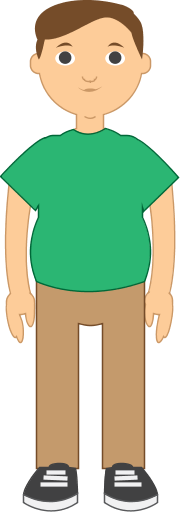
You are about to go on a fantastic journey through the human digestive tract with no one other the famous Protein Pete! We will start by following food entering the mouth and end at no where other than the anal sphincter! Buckle up and join Peter on this wonderful voyage!

Hi! I'm Protein Pete!
Our Journey starts in the mouth, where food is mechanically digested with chewing. The saliva in your mouth helps create a bolus of food which is then swallowed.


wow! looks delicious!
When swallowing, the epiglottis blocks your air ways so that the food travels down your esophagus properly. The food travels down the esophagus in a muscle squeezing action known as peristalsis.The cardiac Sphincter relaxes and tightens to help the bolus along. The bolus enters the stomach and pepsin gets to work!

The Esophagus sounds exquisite.
The bolus is digested in the stomach by digestive juices secreted by gastric glands. These juices include a peptidase pepsin, which takes proteins in food and breaks them down into smaller peptides. The partially digested food and stomach juices mix and create acid chyme. after the food has been broken down the pyloric sphincter controls the flow from the stomach to the small intestine.

Who turned off the lights in here?!
The expedition is then carried on in the first segment of the small intestine known as the duodenum as it receives the partially digested food (or chyme) from the stomach. While passing from the stomach to small intestine Secretin is released into the bloodstream which stimulates the pancreas to release water and bicarbonate which will drain into the duodenum.

Quite the windy road!
As the chyme enters the duodenum the pancreas releases pancreatic juice into the small intestine to help digest all kinds of food particles as well as neutralize the gastric acid. This pancreatic juice contains a peptidase called trypsin, which speeds up the hydrolysis of peptide bonds, bringing the food one step closer to being absorbable. CCK (Cholecystokinin) is released from the upper small intestine which is stimulated by hydrochloric acid, amino acids, or fatty acids being introduced into the stomach or duodenum. CCK stimulates the gallbladder to contract and release stored bile into the intestine.

i
That's a lot of Hormones
- Full access to our public library
- Save favorite books
- Interact with authors

- < BEGINNING
- END >
-
DOWNLOAD
-
LIKE
-
COMMENT()
-
SHARE
-
SAVE
-
BUY THIS BOOK
(from $2.99+) -
BUY THIS BOOK
(from $2.99+) - DOWNLOAD
- LIKE
- COMMENT ()
- SHARE
- SAVE
- Report
-
BUY
-
LIKE
-
COMMENT()
-
SHARE
- Excessive Violence
- Harassment
- Offensive Pictures
- Spelling & Grammar Errors
- Unfinished
- Other Problem

COMMENTS
Click 'X' to report any negative comments. Thanks!