dedicated to my town: Catania

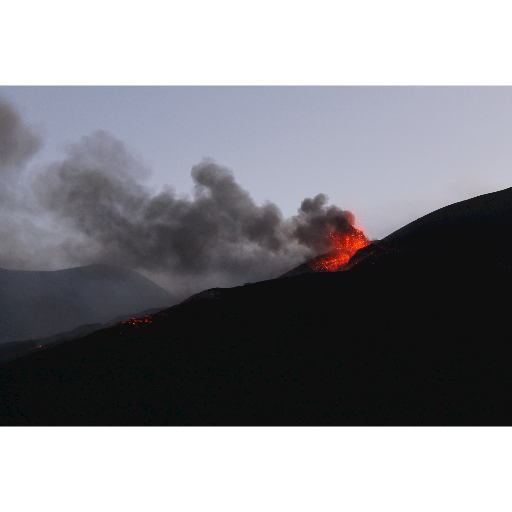
Mount Etna is the largest active volcano in Europe and one of the world's most frequently erupting volcanoes. It is also the volcano with the longest record of continuous eruption. Mount Etna also made an appearance in a "Star Wars" movie.
Mount Etna often comes to life in short, violent bursts called paroxysms. Its outbursts produce enough lava each year to fill Chicago's Willis Tower (the former Sears Tower), a 2012 study found. It erupted on February 27, 2017, but soon quelled. Small eruptions occurred in 2016 and 2015, and in 2014, it burst into a spectacular nighttime display. The last major eruption was in 1992.
Located near the east coast of the island of Sicily, Mount Etna is 10,900 feet (3,329 meters) tall with a base circumference of about 93 miles (150 kilometers). Mount Etna is a series of nested stratovolcanoes with four distinct summit craters. There are two central craters, called Bocca Nuova and Voragine; the Northeast crater; and the newest Southeast crater, which was formed by an eruption in 1978. Strombolian eruptions, which produce ash, tephra and lava fountains, are fairly common in these craters. The eruptions of early 2013 were mostly strombolian eruptions. The January 2013 eruption was from Bocca Nuova, and the February eruptions are most noticeable from the Southeast crater.
History of eruptions
Mount Etna has a longer written record of eruptions than any other volcano. The first recorded observation of a Mount Etna eruption was written by Diodorus Siculus in 425 B.C. The mountain was also described by the Roman poet Virgil in the Aenid. Roman records from 122 B.C. indicate a large eruption blocked the sun for several days and caused widespread damage to the town of Catania on the coast. Roman taxes were cancelled for 10 years to help locals rebuild. Catania was in the path of destruction again in A.D. 40, 1169 and 1185.Then, in 1669, in one of the mountains most destructive eruptions, 1,500 people were killed when the town of Nicoli was destroyed by an earthquake originating beneath Mount Etna. In Catania, the townspeople made one of the first known attempts at damage control by digging a trench to divert the lava slowly advancing upon the town. Unfortunately, the diverted lava then threatened the nearby town of Paterno, causing a brief battle that halted the attempt. Lava overtopped the Catania city wall and obliterated half the town again. Mount Etna has almost continuous eruptive activity near the summit craters and in the Valle del Bove, but these vertical eruptions pose little threat to inhabitants. Flank eruptions cause more damage as vents and fissures can open at much lower, inhabited elevations. In 1928, the village of Mascali was obliterated in only two days when a fissure opened up near the foot of the mountain. In 1960, agricultural land was destroyed by ejected lava and ash fall.In 1992, the town of Zafferana was endangered by lava flow and was saved by a more successful attempt at volcano control. Earthen dams were erected to try to contain the lava in the Valle del Bove but were shortly overtopped by the flowing lava. U.S. Marines were then called upon to help with “Operation Volcano Buster” by flying cargo helicopters to drop huge concrete blocks at the edge of the lava tunnel. Additional blocks, suspended underneath the helicopters were used like croquet mallets to knock the grounded blocks into the mouth of the tunnel. These efforts slowed the progression of the lava for the two weeks necessary to dig a diversionary channel for the lava, which was stopped just about half a mile (850m) from the city limit. Unfortunately several homes, fields, orchards and vineyards around the town were completely buried.
Mount Etna Flora
The flora of Mount Etna varies depending on the altitude.At the base, the mountain is mostly occupied by crops, especially citrus (up until 500 meter high).Once, the lower slopes of the volcano were occupied by carob and wild olive, but in recent times these were replaced.At higher altitudes (600 - 1000m above sea level) the vegetation was at a time characterized by forests of holm oak .Today these forests almost completely disappeared due to anthropogenic influence.They were substituted by vineyards, olive trees, almonds and pistachios on the western side and hazel on the northern side.The holm oak woods are still present on the western slope where one can also find plenty of Oriental hackberry Between 1000-1500m, the mountain is characterized by forests of downy oak (Quercus pubescens) and chestnut trees.On the eastern side one can find forests of Turkey oak (Quercus cerris). Above these forests there are black pines, for example the pine forests of Serra la Nave. Above the 1500 meter mark, pine trees as well as beech trees (Fagus sylvatica) can be found. In some areas, especially on the eastern side there are trees of Etna birch (Betula aetnensis), considered by some endemic to Mount Etna.Above the 2450m mark very few plants can survive that adapted to the harsh environment like the French sorrel (Rumex scutatus). Above 3,000m altitude the continuous eruptive activity of Etna prevents any form of plant life to thrive.
Mount Etna Fauna
The fauna of Mt Etna is very diverse and more species of animals have been re-introduced here in recent years.Various species of snakes and lizards inhabit Etna and you can encounter them at different altitudes.If you will hike the mountain it is very probable that you will encounter squirrels, hedgehogs, foxes, martens or porcupines. If you are very lucky, you will spot a wild cat as well.Regarding birds, Etna is home to owls, falcons or even golden eagles (but they are still very endangered).
- Full access to our public library
- Save favorite books
- Interact with authors
- < BEGINNING
- END >
-
DOWNLOAD
-
LIKE
-
COMMENT()
-
SHARE
-
SAVE
-
BUY THIS BOOK
(from $2.99+) -
BUY THIS BOOK
(from $2.99+) - DOWNLOAD
- LIKE
- COMMENT ()
- SHARE
- SAVE
- Report
-
BUY
-
LIKE
-
COMMENT()
-
SHARE
- Excessive Violence
- Harassment
- Offensive Pictures
- Spelling & Grammar Errors
- Unfinished
- Other Problem






COMMENTS
Click 'X' to report any negative comments. Thanks!