
Functions of Your Skeletal System:
Support: The bones support the main frame of the human body to keep its shape.
Protection: The bones protect certain organs such as the brain protected by the cranium.
Movement: Allows strength in moving muscles.
Production: Bone marrow produces red blood cells.
Storage: It stores minerals like calcium

You Have 4 Types of Bone Cells in Your Body!
Osteogenic cells:
Stem cells that develop from embryonic mesenchymal cells and then give rise to most other bone cell types. They are found in the endosteum, the inner layer of the periosteum, and in the central canals
Osteoblasts:
Bone-forming cells. They are roughly cuboidal or angular, and line up in a single layer on the bone surface under the endosteum and periosteum
Osteocytes:
Former Osteoblasts that have become trapped in he matrix they deposited. They reside in tiny cavities called lacunae, which are interconnected by slender channels called canuliculi. Osteocytes contribute to the homeostatic maintenance of both bone density and blood concentrations of calcium and phosphate ions.
Osteoclasts:
Bone dissolving cells found on the bone surface. They develop from the same bone narrow stem cells that give rise to the blood cells.
Did you know...?
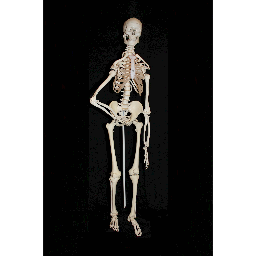
There are 206 bones in the adult skeleton! These bones can be separated into the axial and appendicular divisons.
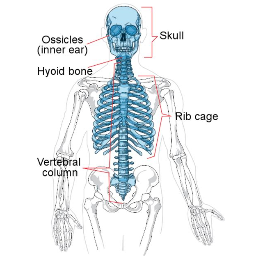
Axial Skeleton
Your axial skeleton is composed of 80 bones located along a vertical line, the longitudinal axis of the body. It's bones support and protect the organs of the head, neck, and torso.
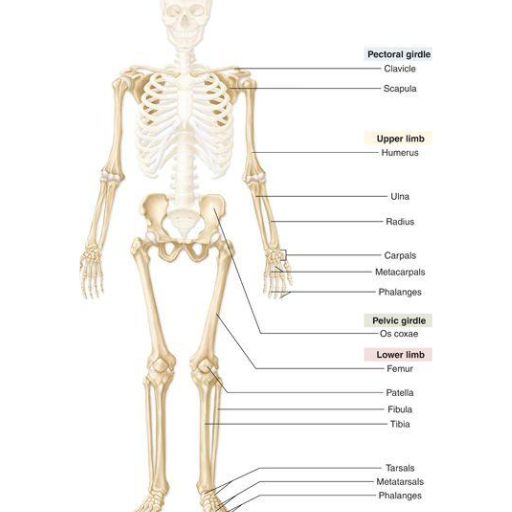
Appendicular Skeleton
Your appendicular skelton permits a greater variety of movement than the axial skeleton. This division of the skeleton has four main parts and is composed of 126 bones that make up upper and lower limbs, and the girdles that attach limbs to the axial skeleton.
You have 5 different bone types:
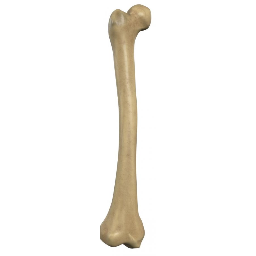
Long bones: are longer than they are wide. Long bones are usually somewhat curved - contributing to their mechanical strength
Ex/ femur, tibia, fibula, humerus

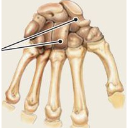
Short bones: can be approximately cube-shaped
Ex/ carpal bones, tarsal bones, scaphoid, cuboid
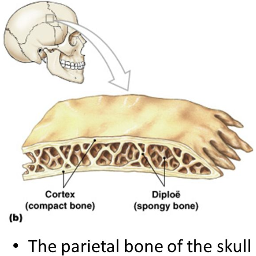
Flat bones: have a thin shape and in some cases, provide mechanical protection to soft tissues beneath or enclosed by the flat bone .
Ex/ frontal, sternum, parietal
- Full access to our public library
- Save favorite books
- Interact with authors
- < BEGINNING
- END >
-
DOWNLOAD
-
LIKE
-
COMMENT()
-
SHARE
-
SAVE
-
BUY THIS BOOK
(from $2.99+) -
BUY THIS BOOK
(from $2.99+) - DOWNLOAD
- LIKE
- COMMENT ()
- SHARE
- SAVE
- Report
-
BUY
-
LIKE
-
COMMENT()
-
SHARE
- Excessive Violence
- Harassment
- Offensive Pictures
- Spelling & Grammar Errors
- Unfinished
- Other Problem





COMMENTS
Click 'X' to report any negative comments. Thanks!