Dedicated to the framers of the United States Constitution

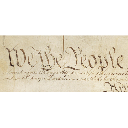
One day, Joe was sitting in his history class. The teacher, Mr. Madison was having the students memorize the beginning of the Constitution, or the Preamble.




Preamble- A preamble is an introductory statement or fact. In the context of the United States Constitution, the Preamble is the opening statement that explains why the Constitution was created to govern the country like it does.
Mr. Madison, why do we have to know all of this?
Well, Joe, let's take a little journey and see.

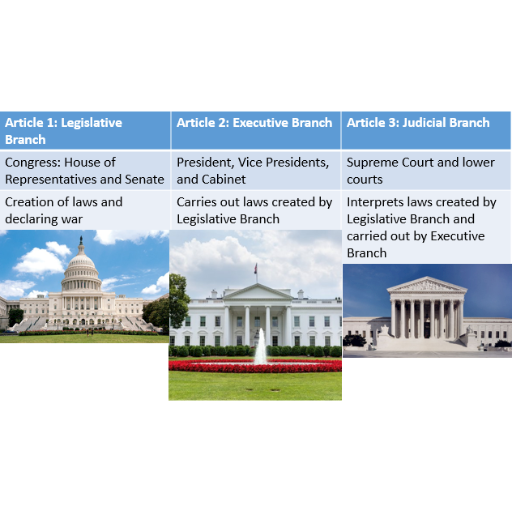
It's important to learn about the Constitution because it teaches us how the government is set up. The first 3 articles describe each of the branches of our government.
I get it now. This is cool!

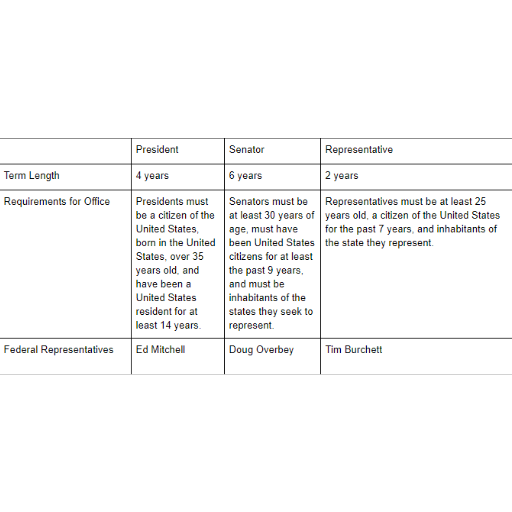
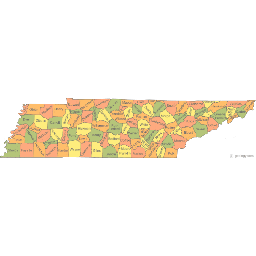
Here you'll see some information about elected officials in our community. These are the requirements to run, term lengths, and our local representatives for a few government positions.
Mr. Madison and Joe returned to the classroom. Their next stop was the Bill of Rights.
The Bill of Rights is the first 10 amendments to the Constitution. This section helps to protect the rights of the people.
Does the Bill of Rights really protect our rights?
What does it say?
The First Amendment says that you have freedom to choose your religion, speak your mind, write what you think, and come together to stand up for what is right.
The Second Amendment says that you have the right to be armed in order to prevent the government from becoming too powerful.




The Third Amendment says that soldiers cannot stay in your house without your permission or the government's position.
The Fourth Amendment says that nobody can search you or your property without a warrant saying they can or your permission.


The Fifth Amendment says that nobody can be declared guilty of a crime without a trial in front of a jury, you cannot be punished for the same crime twice, and you cannot be deprived of life, liberty, or property.
The Sixth Amendment says that if you are accused of a crime, you have the right to a speedy and public trial from a jury that has no opinion. You also have the right to know what you are charged of, find witnesses, and have an attorney.
The Seventh Amendment says that in cases of common law, the right to a trial by jury is still preserved.
The Eighth Amendment says that no cruel or unusual punishment or fines will be placed on you.
The Ninth Amendment says that there are more rights than the ones in the Constitution and Bill of Rights.
The Tenth Amendment says that the states are allowed to decide on what unlisted rights are allowed.
Now do you see how the Bill of Rights protects us?
I think I get it now!
So what's our next topic?
Next we will talk a little about Federalism.
Federalism is the distribution of power in a government between a central authority (federal government) and the constituent (state governments).
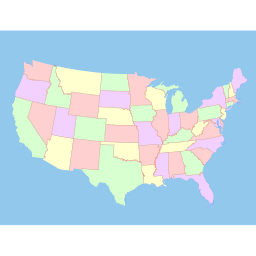

As you've already seen, the federal government has three branches (executive, legislative, and judicial). Before we dive into federal and state government duties, let's cover these some more.
The Legislative Branch has a House of Representatives and Senate forming the Congress. The House of Representatives is the lower house of the United States Congress tasked with representing the popular will. The Senate is tasked with creating laws.
The Executive Branch has the President, Vice President, and the Cabinet.
Finally, the Judicial Branch is the Supreme Court and lower courts. The Supreme Court is the highest judicial court in the United States which judges both the Constitution and any cases involving Congress. This branch exhibits a power known as judicial review.
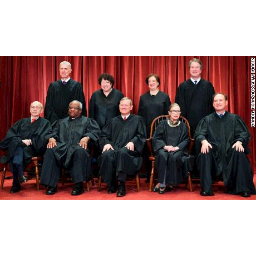
Supreme Court Justices
Judicial Review is a constitutional principle that gives a court system the power to review legislative or executive acts which the judges declare to be unconstitutional. By unconstitutional, I mean anything that goes against the principles of the Constitution.
The 3 branches are formed because of Separation of Powers. Separation of Powers refers to the principle of United States government that provides the framework for having three separate branches of government which may not infringe upon each other’s constitutionally granted powers. These branches also have Checks and Balances.

Federal Government

Legislative Judicial Executive
- Full access to our public library
- Save favorite books
- Interact with authors
- < BEGINNING
- END >
-
DOWNLOAD
-
LIKE
-
COMMENT()
-
SHARE
-
SAVE
-
BUY THIS BOOK
(from $6.79+) -
BUY THIS BOOK
(from $6.79+) - DOWNLOAD
- LIKE
- COMMENT ()
- SHARE
- SAVE
- Report
-
BUY
-
LIKE
-
COMMENT()
-
SHARE
- Excessive Violence
- Harassment
- Offensive Pictures
- Spelling & Grammar Errors
- Unfinished
- Other Problem





COMMENTS
Click 'X' to report any negative comments. Thanks!