
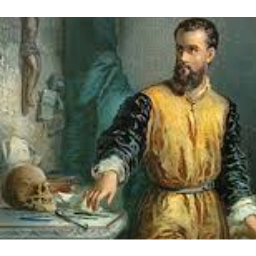
Andreas Vesalius was a Belgian physician who revolutionized medicine and biology during the Renaissance period. He would perform dissections either in solitude or with his academic disciples, and carefully explain his anatomy ideas, models and scriptures that he made. He wrote the first comprehensive textbook on anatomy, basing his ideas off of the observations of his dissections. Before all of this, he studied at the University of Paris, where he learned how to dissect animals. He then began to dissect human cadavers and study human bones. He represented the culmination of humanistic science in the form of medicine and biology, and the growth of medical literature. He left behind a legacy for the most up-to-date anatomy, physiology and medicine treatments in the time of the Renaissance.
is for Andreas Vesalius

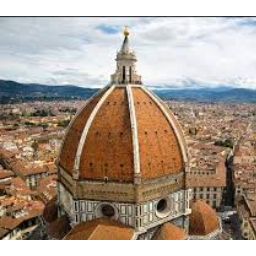
Filippo Brunelleschi was a Renaissance architect and engineer who was one of the early pioneers of Renaissance architecture in Italy. His most famous work is his construction of the dome of the Cathedral of Santa Maria del Fiore. He constructed the seemingly impossible dome with machines that he invented for the project. He was the inventor of a drawing style called linear perspective, where he could show people what his building would look like once it was completed. Trained as a goldsmith and sculptor in his younger years, he rose up to solve architectural issues on buildings in Florence and eventually construct the legendary dome. He was named chief architect (capomaestro) in 1420 and remained until his death in 1446.

is for Brunelleschi
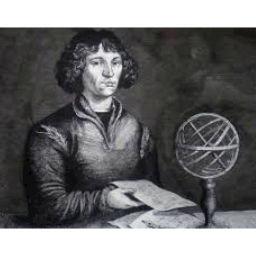
is for Copernicus
When everyone held the belief that the Earth was the center of the universe, Copernicus stated the idea that the planets, like our Earth, revolve around the sun. He designed the heliocentric model to show how he viewed our solar system. It wasn’t exactly correct, but it was the astronomical pioneer invention that gave a strong idea and foundation for scientists and astronomers after him to build on. Indeed, they built off of this idea and found that we are one world orbiting one star, an innumerable distance from the center of the universe.

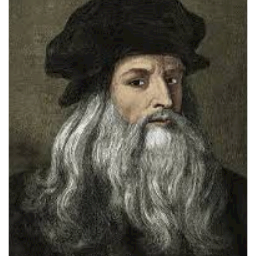
is for Da Vinci

Leonardo Da Vinci was one of the most influential Renaissance artists and geniuses of his time, living in the technologically triumphant age known as the Renaissance with other known figures like Michelangelo and Donatello, and contributed his legendary genius to every piece of art and idea. He was an Italian sculptor, painter, draftsman, architect and engineer. His “Mona Lisa” and “Last Supper” paintings are among the most widely popular and influential artworks ever made. His notes and documents reveal an inventiveness and scientific inquiry that were centuries ahead of its time, with drawn models of submarines and gliders, diving suits and even the first prototype machine gun, although these ideas were ahead of their time and nowhere near our modern variations. But it laid the founding steps for some of our most effective inventions.
is for Exploration

The Age of Exploration, or Age of Discovery, was a period between the 15th and 17th century when European ships were traveling in search of trade routes. During these voyages, the Europeans discovered lands and entire civilizations unknown to them. The Age of Exploration was born through the Renaissance discoveries and founding ideas of technological advancements, such as better ship construction and navigation. One of the most important developments was the invention of the caravel in Iberia, a ship based off of European and Arabic designs, the size of a galleon. It could safely sail outside the Mediterranean on to the open Atlantic.
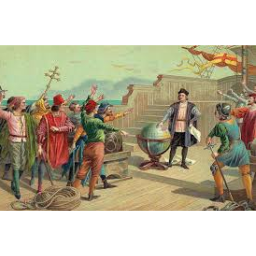
is for Florence

The city that was known as the “cradle of the Renaissance”, nearly every artist, thinker, mathematician, architect and engineer was born in or around Florence. Florence became a very wealthy and distinguished city during this time period due to the fact that the trade of luxury items and amount of merchants turned it into an economic superpower. Florence also became the foundation of Renaissance culture with its artists and writers gaining popularity for their works. Banking became one of the important industries since Florence didn’t have a port. From these factors, the city of Florence became arguably the most important city in the time of the Renaissance.
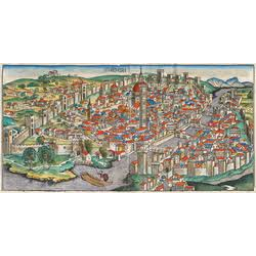
is for Galileo

Galileo was one of the most legendary genius Renaissance thinkers that blessed our world with his presence from February 1564 to January 1642. He applied his unique problem solving and thinking to every single piece of art, arithmetic equation or engineering prototype. He is known as the “Father of modern science”, and the “Father of observational astronomy”. He discovered Ganymede, Europa, Callisto and Io, 4 of the moons of Jupiter. He also discovered rings on saturn and confirmed Kepler’s idea that planets revolve around the sun in elliptical orbits. Galileo was found guilty of heresy by the church for publishing a book that argued that the Earth revolves around the sun, which was considered heretical by the church. He retracted his statement when they threatened to burn Galileo at the stake. Because of his poor health and age, he was sentenced to house arrest rather that life imprisonment or execution.
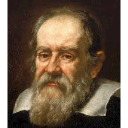
is for Henry(Prince Henry the Navigator

Prince Henry The Navigator helped usher in the Age of Exploration with the funding of Portuguese crews to take on expeditions along the west coast of Africa. Under the patronage of Henry, these crews set up the first colonies across the Atlantic for the Portuguese and discovered regions previously unknown to Europe. He was also known as the originator of the Atlantic slave trade. Though not a sailor or navigator, he sponsored many sea voyages. When the Portuguese reached Africa, they viewed the people living there as savages without God, and they decided to divide Africa into sections that would be part of their countries with other European nations. This became known as the Treaty of Tordesillas. The Portuguese brought back African slaves, viewing themselves superior. This marked the dawn of the Atlantic slave trade.
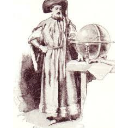
is for Indigenous People

The Doctrine of Discovery was a document made by Pope Alexander VI. The document supported the plan of Spain to ensure its exclusive right to the lands discovered by Columbus the previous year. It established the seizure and colonization of lands uninhabited by Christians. In a nutshell, Europeans believed that there was nothing wrong with taking the lands of Indigenous peoples and taking them back as slaves. This was also a key document for the success of the disturbing Atlantic slave trade. The document placed Christianity in dominant hierarchy, that if an explorer claims land in the name of a Christian European Monarch, places a flag and reports his “discovered land” and journeys back to occupy it, that land belongs to him.
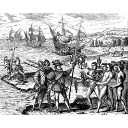
is for Johannes Gutenberg

Johannes Gutenberg was a German inventor who revolutionized print technology in the time of the Renaissance. He invented the printing press, where books could be made on paper, and not parchment, which was far cheaper at the time. Books could also be made much quicker, rather than one person writing with ink and quill on parchment. This meant that knowledge could spread far quicker and the middle class would become literate and be able to purchase books. Johannes Gutenberg revolutionized the Renaissance era with a movable invention that created a new industry, and the spread of knowledge to a whole class of people.
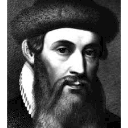
is for King Ferdinand

King Ferdinand was the first monarch to rule a united Spain. He and Queen Isabella were remembered for sponsoring the Christopher Columbus voyage. Ferdinand and Isabella wanted Spain to be inhabited by Christians, and Spain was made up of several kingdoms; Aragon, Castille, Navarre were controlled by Christians. Although a fourth kingdom, Granada, was controlled by the Moors. In 1483, with the assistance of the Pope, King Ferdinand launched the second Spanish Inquisition. It required the Moors and Jewish to convert to Christianity or be burned at the stake. The military force of King Ferdinand defeated Granada in 1492 and thousands fled. Ferdinand succeeded in uniting a Christian Spain.
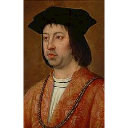
is for Luther

Martin Luther was a German professor of theology in Renaissance times. He was a seminal figure in the Protestant Reformation and ordained to priesthood in 1507. He had many disputes and disagreements with the ideas of the Roman Catholic Church, which included their internal corruption and the selling of indulgences. He nailed the “95 Theses” on the church door in Wittenberg. The statements ordained by the bible stated that the bible should be one’s spiritual guide and not their deeds or superiors, and that the selling of indulgences was wrong and that it would not absolve sin. This became the spark for the Protestant Reformation. Luther was then accused of heresy by the church and the pope commissioned a public decree that Luther’s beliefs were heretical. He refused to retract his statement, saying these defiant words to champion his argument. “Here I stand. God help me. I can do no other.” He was excommunicated from the Church. He then settled down and married Katherine of Bora, and completed a German translation of the New Testament into German in his later years.
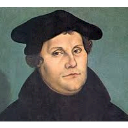
is for Medici

The Medici were an Italian banking family in Florence that managed to technically rule the city through their economical power. They became the most influential family in Florence from their patronage to the arts and humanism. The family was extremely wealthy from the Medici Bank, started by Giovanni de Medici. They were patrons to Donatello, Michelangelo, Raphael, Da Vinci and Galileo. They had a serious rivalry with the Pazzi family, a noble Florentine family who assassinated Giuliano de Medici in front of 10,000 people in a cathedral. They were the best bank in Europe by far, and well respected. They gained money by selling wool and banking, and then bribing cardinal officials and marrying royals. Each heir in the Medici was another symbol of power, and they were the strongest economical powerhouse in Florence until the dynasty died in 1737 when Gian Gastone de Medici could not provide a male heir.
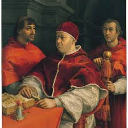
is for Niccolo Machiavelli

Italian diplomat Niccolo Machiavelli was famous for writing “The Prince”, a book that discusses the best ways to govern. He was known as the father of political science. The reason why his book was so significant was because it was based on political reality and not political theory. People’s political ideas on how things should function in society were often directed to their lust for power or inability to govern. He believed that virtues should be set aside when necessary, that it is better to be loved than feared, and that the end justifies the means.
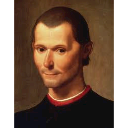
is for Orbit

The Renaissance Roman Catholic Church was, in some aspects, very ignorant to accept that their theories on how the world worked were redundant to the facts and discoveries of science. Johannes Kepler, a German mathematician and astrologer, wrote three laws about planetary motion. The first stated that all planets move in an elliptical orbit focused around a sun. The second, a radius vector conjoining the sun to any planet sweeps out equal areas in equal lengths of time. The third: A planet’s time it takes to go around the sun is its period(P) is related to the planet’s mean distance from the sun. The period squared divided by the distance of the mean, is equal to a constant. In theory, any planet, no matter its period or distance, that constant will be the same number.
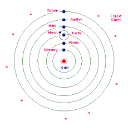
is for Portugal

The ‘Portuguese Renaissance’ was a time in Portugal when music and culture flourished in Portugal and new technology and ideas were introduced, much like the Renaissance. The country became the pioneer of the Age of Discovery, and it became the most technologically advanced country in the world for naval exploration for quite some time. From the 15th to 17th centuries, Portugal made voyages to India, Africa, The Americas and The Orient. Portugal, led by Prince Henry the Navigator, was the principal country for finding a route to Asia and exploring and mapping the new world.
- Full access to our public library
- Save favorite books
- Interact with authors
- < BEGINNING
- END >
-
DOWNLOAD
-
LIKE
-
COMMENT()
-
SHARE
-
SAVE
-
BUY THIS BOOK
(from $5.39+) -
BUY THIS BOOK
(from $5.39+) - DOWNLOAD
- LIKE
- COMMENT ()
- SHARE
- SAVE
- Report
-
BUY
-
LIKE
-
COMMENT()
-
SHARE
- Excessive Violence
- Harassment
- Offensive Pictures
- Spelling & Grammar Errors
- Unfinished
- Other Problem






COMMENTS
Click 'X' to report any negative comments. Thanks!