
Table of Contents
Section 1 Electrical Charge (pages 4 - 23)
Section 2 Electrical Currents (24 - 31)
Section 3 Electrical Circuits (32 - 54)
Quiz and Answer Key (55 - 58)
Section 1 Electrical Charge
where electrical charge exists in the world around us...
what types of electrical charge exist...
& how electrical charge can be manipulated or interacted with!
Section 2 Electrical Currents
what electrical current is...
what causes electricity to flow...
& how electrical current is measured.
Section 3 Electrical Circuits
what an electrical circuit is...
conductors and insulators of electricity...
the different components to a circuit...
& the different kinds of electrical circuits!
Why do our lights turn on when we flip a switch?
Why do I see lightning during thunderstorms?
How can a balloon stick to my head just by rubbing it against my hair?



Electricity...
The answer is ELECTRICITY! Electricity surrounds our lives through many different ways in the world around us. It's the reason why we can heat our houses without burning fires, or why we can turn on a light when we walk into a room, or even ride on a roller coaster. But where does electricity come from?
Section 1:
Electrical Charge
In this section, we will be exploring:
where electrical charge exists in the world around us...
what types of electrical charge exist...
& how electrical charge can be manipulated or interacted with!
To understand electricity, we have to break down what it means for an object to have an electrical charge...
But where does electrical charge come from?

Electrical charge is found in atoms when there is an imbalance between their electrons and protons. Atoms are found in all matter in the entire universe.Therefore, everything either has some sort of electrical charge or has the possibility to be electrically charged!
Atoms are often referred to as the "building blocks of matter"
An Atom is made up of three major parts:
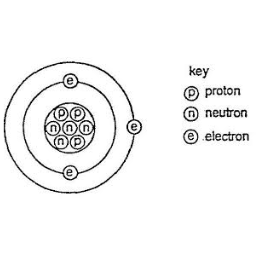
Protons Nuetrons Electrons
contains a
positive charge
contains a
negative charge
neutral; no
electric charge
Diagram of an Atom
The parts of an atom broken down by their charge

Matter can either be neutral, positive, or negative in charge...
Neutral = an equal balance of protons, neutrons, and electrons in the atom.
Negative = an imbalance of too many free electrons, the atom has more electrons than protons.
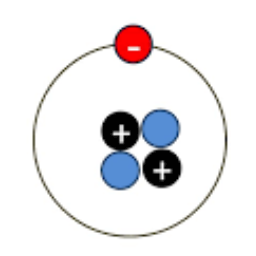
Positive = an imbalance of missing free electrons, the atom has more protons than electrons
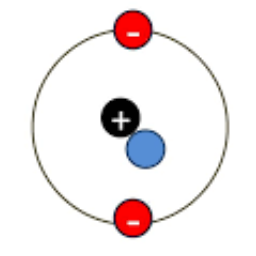
1 Proton
1 Neutron
2 Electrons
=
Negative
2 Protons
2 Neutrons
1 Electron
=
Positive
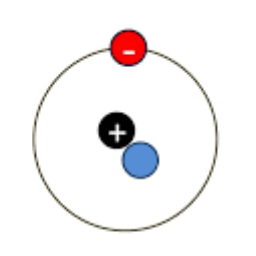
1 Proton
1 Neutron
1 Electron
=
Neutral
Examples of the different types of electrical charge
Charges can move from one object to another
One way that the of an object can flow to another object would be through friction...
What is friction?
Friction is when you rub one object over or on another, creating resistance between them

For Example: When you rub a cloth over a glass rod, you are creating friction between the two objects!

Here you have your cloth and your glass rod.
Both the cloth and the glass rod have a "neutral charge" status, meaning they both have an equal balance between their protons and electrons.

In the second photo, you can see the resistance that is being created between the rod and the cloth by the friction motion. This is called static electricity.

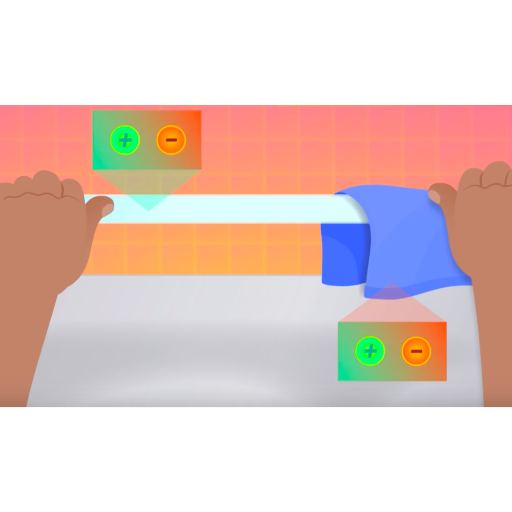
This caused some of the free electrons to transfer over from the cloth to the rod through the friction
BEFORE FRICTION, the rod and the cloth had a neutral charge state, where their protons and electrons had an even balance
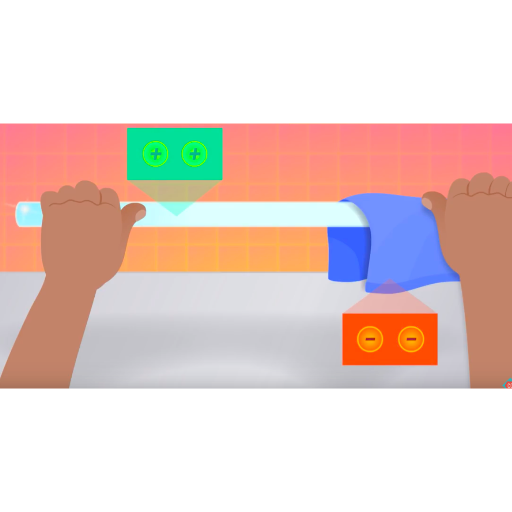
AFTER FRICTION, some of the electrons in the rod had transferred to the cloth, creating an imbalanced-electrical charge for both the cloth and the glass rod.
The glass rod now has a positive charge
(more protons than electrons)
& the cloth has a negative charge
(more electrons than protons)
Another way a charge can move from one object to another is through contact...
This is when you take a neutrally "charged" object and you touch it to either a positively charged object or a negatively charged object.
Neutral & Negative
When you touch a neutral object to a negatively charged object, some of the electrons will flow from the negatively charged object to the neutral object until they are both have an equal, negative charge between them!
Neutral & Positive
When you touch a neutral object to a positively charged object, some of the electrons will flow from the neutral object and into the positively charged object until there is an equal balance between them, causing both of the objects to now be positively charged!
Let's look at an example of contact charging with an initially neutral and positive objects!
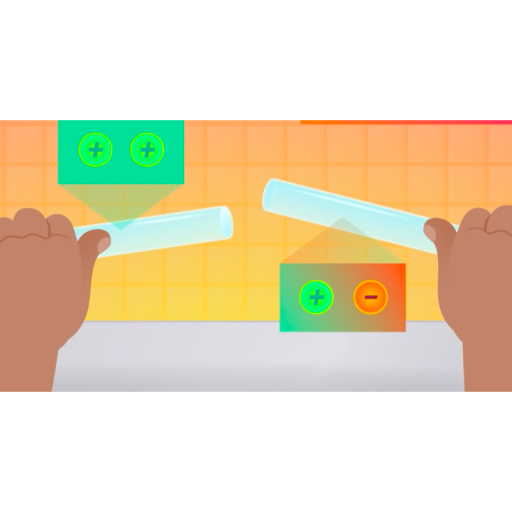
Here we have an initially positively charged glass rod on the right. On the left, we have an initially neutral glass rod.

Now that the two rods have made contact, electrons are flowing from the neutral rod over into the positive rod.
The electrons are flowing in the direction from left to right in this photo!

We now have two positively charged glass rods through contact charging and the exchange of electrons from one object to the other!
Notice how we did not create new electrons to put into one of the objects through either friction or contact. Rather, electrons that were already in one of the objects just moved from one object to the next, rearranging to balance the two objects!
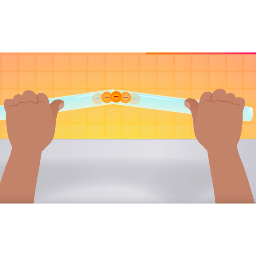
This upholds the...
Law of Conservation of Electrical Charge:
you can never create a net (overall) electric charge, but rather charge can only be moved from one place to another, just like our glass rod and our cloth.
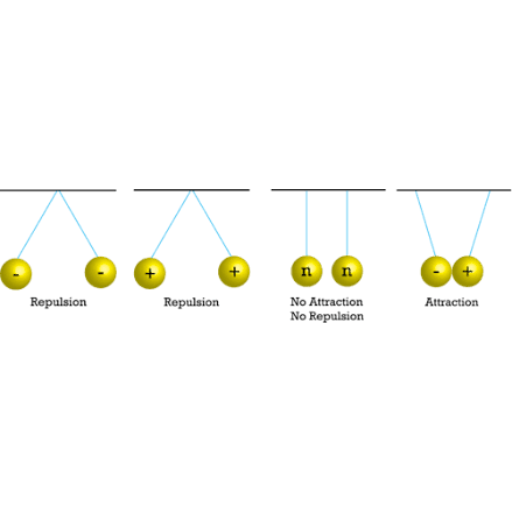
How do charges interact with one another?
When you have two charges of the same kind
( + + or - -), they will repel against one another!
When you have two neutral objects, they remain neutral and neither repel or attract!
When you have charges that are opposite of one another, they attract to one another!
Magnet Example:
Have you ever tried to stick two magnets together, but it felt like something was pushing them apart? They were repelling each other because the sides of the magnets that you were trying to connect were both either negatively charged or both positively charged!

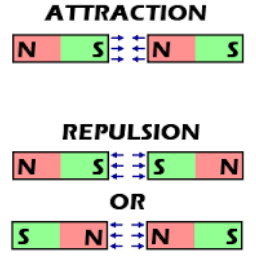
The first pair has two oppositely charged magnet sides connecting, allowing them to attract one another...
The other pairs have identically charged sides being paired, forcing them to repel one another.
As the saying goes...opposites attract!
Section 2:
Electrical Currents
In this section we will be exploring:
what electrical current is...
what causes electricity to flow...
& how electrical current is measured.
What is electrical current?
How is it used?
& why is it important?
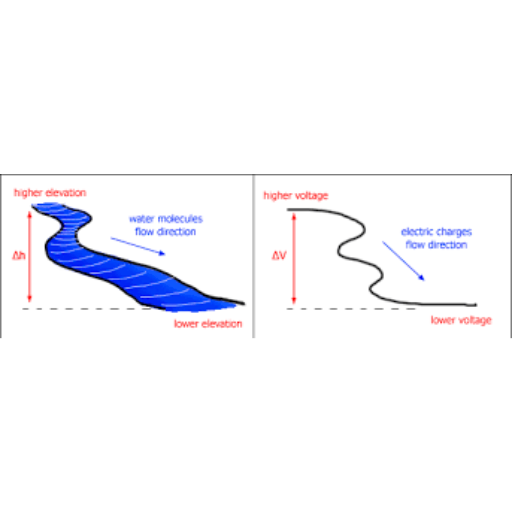
Electrical current is a lot like the flow of a river.
In rivers, water flows from a higher point of elevation to a lower point of elevation
Electrical current mimics this, but is the flow of electrons from higher voltage to lower voltage.
Both a river's current and an electrical current are taking the path of least resistance!
What does the path of least resistance mean anyway?

The path of least resistance can be explained through stairs. It is much easier and takes less energy to walk down stairs than it does up the stairs.
For electrons, it is much easier to flow from higher voltage to lower voltage, rather than fight against the natural resistance of the current to go from a lower voltage to a higher voltage. By "going down the stairs", or going from higher voltage to lower voltage, electrons are taking the path of least resistance in an electrical current!
Conventional current flows in the direction of the positive terminal of a battery or power source, to the negative terminal of that source.
With the flow of the conventional current being from the positive terminal to the negative terminal of a battery, the electrical flow of electrons must come out of the negative terminal to the positive terminal, because the negative charge of the electron is attracted to the opposite charge of the positive terminal!
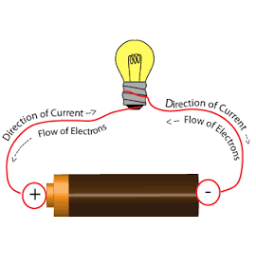
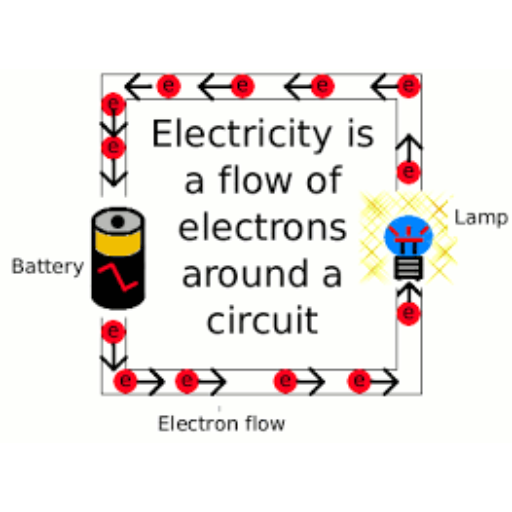
This photo shows how the current moves from the positive end of the battery, along the current path to the negative side of the battery
This photo goes into more visual depth over the actual movement of electrons, which is the more exact depiction of electrical current!
+
-
How can you measure the strength of an electrical current?
The strength of an electrical current is often measured using the following equation:
V = I (R)
V = Volts
This is a measure of the voltage, or electromagnetic force in a battery that causes charges (electrons) to move along a current.
I = Amps
This is a measure of the strength of the current. Amps can be found by dividing volts by ohms!
R = Ohms
This is the resistance of the electrical current and how hard it is for the electrons to flow!

In other terms, electrical current is the measure of the total amount of charge passing through a wire over a certain period of time!
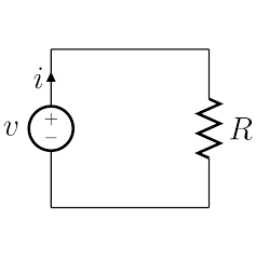
This would be the battery putting out volts
This would be the measure of resistance that the electrical current has to go against.
This would be the the strength of the current, or the amps flowing through the circuit
Section 3:
Electrical Circuits
In this section we will be exploring:
what an electrical circuit is...
conductors and insulators of electricity...
& the different kinds of electrical circuits!
the different components to a circuit...
Where is the flow of electricity used? Why is is important?
As we have reflected in the previous section, understanding electricity, it's flows, and different things that affect it is crucially important to how we live today. Smartphones, lighting our houses, transportation, music, electricity is connected to almost every aspect of our lives in some way. Without electricity, the way we live would be completely different




What is an electrical circuit?
First, let's break down what what a circuit is, and how that applies to electricity!
A circuit is a pathway to starts at one point and ends back where it started, creating a loop.
A circuit doesn't not have gaps!
A circuit can often be compared to a circle, because it starts and ends in the same place, and it doesn't have gaps.
The word circuit also means "to go around" just as a circle does!

How does this apply to electricity?
An electrical circuit is the pathway through which electrical current, discussed in section 2, can flow.
A simple, electrical circuit contains the following qualities:
it must be a complete circuit
has a source of power
has conductors of electricity
has an electrical load
has a controller
What does it mean for a circuit to be complete? or incomplete?

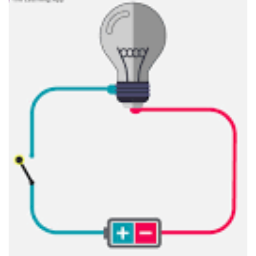
Complete
Incomplete
The circuit is complete. The electrons can flow and there are no gaps with the switch on.
The circuit is incomplete. The switch is off, leaving a gap in the circuit. With the circuit broken, electrons cannot flow with a gap in the pathway, leaving the light unlit.
VS
- Full access to our public library
- Save favorite books
- Interact with authors
- < BEGINNING
- END >
-
DOWNLOAD
-
LIKE(5)
-
COMMENT()
-
SHARE
-
SAVE
-
BUY THIS BOOK
(from $11.39+) -
BUY THIS BOOK
(from $11.39+) - DOWNLOAD
- LIKE (5)
- COMMENT ()
- SHARE
- SAVE
- Report
-
BUY
-
LIKE(5)
-
COMMENT()
-
SHARE
- Excessive Violence
- Harassment
- Offensive Pictures
- Spelling & Grammar Errors
- Unfinished
- Other Problem





COMMENTS
Click 'X' to report any negative comments. Thanks!