 Religions of the Ancient World
By Madison Starks
This book was created and published on StoryJumper™
©2010 StoryJumper, Inc. All rights reserved.
Publish your own children's book:
www.storyjumper.com

I. Judaism Page 1
Leader & Beginnings Page 2
Holy Writings & Guidelines Page 3
Beliefs/Influence of Beliefs Page 4
II. Christianity page 5
Leader & beginnings page 6
Holy Writings & guidelines page 7
Beliefs/Influence of Beliefs page 8
III. Hinduism page 9
Leader & Beginnings page 10
Holy Writing & Guidelines page 11
Beliefs/Influence Beliefs page 12
IV. Buddhism
Leader & Beginnings page 14
Holy writing & Guidelines page 15
Beliefs/Influence beliefs page 16
Table of Contents
V. Islamic/ Muslim page 17
Leader & Beginnings page 18
Holy Writing & Guidelines page 19
Beliefs/Influence of Beliefs Page 20
VI. Confucianism page 21
Leader & Beginnings page 22
Holy Writing & Guidelines page 23
Beliefs/Influence of Beliefs page 24
VII. Connections To THe World Today page 25
Where, Who & Why page 26
JUDASIAM
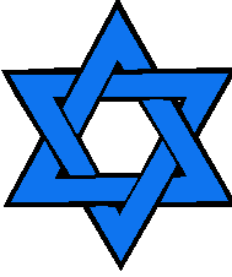
Leader & Beginnings...
The Phoenicians lived in a place called Palestine. The Romans had also
lived there. The Jews' ancient home was called Canaan. Their influence
had a huge impact on the Western cultures. Their history, moral laws,
and legends began tradtition in Christianity and Islam.
Holy Writings & Guidelines...
The Bible said that Cannan was the land that God had promised the
Hebrew people. The first five books of the Hebrew Bible, are filled with
history about early Hebrew. Jewish people call those five books,
"Torah". Torahs are considered to be the most sacred writings in their
tradition. God chose Torah to be the "Father" of Hebrew people. God
wrote " Go from your country and your kindred and your father's
house the land that I will show you. I will make of you a great nation,
and I will bless you, and make your name great. " in the Torah.
Abraham lived in the city of Ur, in Mesopotamia. He was also a
Shepard. In the book of Genesis, it says that God commanded his
people to move to Canaan. Decendants of Abraham moved to Egypt in
1650 B.C.
In the Torah, it says the man who led the Hebrews out of slavery was
Moses. Moses was hid by his mother. His mother hid him by the Nile
river. There, a princess found Moses and adopted him. Moses didn't
forget his Hebrew birth but when God commanded to take the Jews
out of Egypt, he did.
Beliefs & Influences...
Moses climbed to the top of the Mount Sinai to pray and talk to God,
while the Hebrews were exploring the Sinai Peninsula. When Moses
came down from Mount Sinai, he brought 2 stone tablets with the 10
commandments on them. Which Yahweh had written. The basis for
civil and religious laws of Judaism, were the commandments and
teachings that he had found. Hebrews believed that the
commandments formed a new covenant between them and God. God
also promised to protect the Hebrews. In return, they promised to
keep his commandments.
The Torah says that the Hebrews wandered for 40 year around the
Sinai Desert.
After the Death of Moses, the Hebrews went back to Canaan, to be
with Abraham. They changed from a nomadic, tribal society to settles
herders, farmers, and city dwellers. They also learned new
technologies about Ancient Palestine.
1800 B.C- Abraham & his family made their way to Cannan.
1650 B.C- Descendants of Abraham moved to Egypt.
1300, 1200 B.C- The Hebrews fled Egypt.
1020 to 992 B.C-Hebrews united under 3 kings, Saul, David, and
Solomon.
962 B.C-David was succeeded by his son, Solomon.
922 B.C- the kingdom had divided into 2. Israel was in the north and
Judah was in the south.
738 B.C- Israel and Judah began playing tribute.
725 B.C- the Assyrians began a relentless siege of Samaria
722 B.C- the northern kingdom had fallen to the Assyrians' ferocious
assault.
586 B.C-Solomon's temple was destroyed in the Babylonian victory.
539 B.C- the Persain king, Cyrus the great, conquered Babylon.
515 B.C- Work on the 2nd temple was completed
445 B.C- the walls of Jerusalem were rebuilt.
Timeline...
CHRISTIANITY

Leaders & Beginnings...
Christianity was born as a movement of Judaism. It was a more
personal relationship between people and God. This attracted many
Romans. The Romans took it back to the Jews in Judea. The jews
remained independent. in A.D 6, the Romans took over the Jewish
Kingdom. They made it a province of the Empire. Jews thought that
they would once be free. The Bible read that a man named Messiah
would come and restore the land of the Jews. Horistorians say that
sometime around 6 to 4 B.C. a Jewish baby names Jesus was born in
the town of Bethlehem in Judea. He was raised in the village of
Nazareth in Northern Palestine. Jesus was baptized by John the
Baptist. Jesus tok up the trade of Carpentry as a young man. He
started public ministry at age 30. Jesus taught, preached, and did
good works for the next 3 years. He taught the 10 commandments.
Gospels are the main source of information
about Jesus. The Gospels are the first four
books of the New Testament Bible. Some
people think that Apostles wrote the Gospels.
Apostales are a group made of 12 men, who
were Jesus' pupils.
Jesus had large crowds of people that followed
him and his messages. He helped the poor,
and ignored his wealth. "Blessed are the meek,
for they shall inherit the earth." - Jesus.
Holy Writings & Guidelines...
Beliefs & Influences...
The Roman and Jewish leaders were concerned about
Jesus and why he was so popular to their communities.
Jerusalem thought that Jesus was Messiah. But, the
chief priests of the Jews said that he wasn't Messiah. So,
they had Jesus crucified and nailed to a wooden cross to
die. Jesus' body was placed in a tomb. Three days after
his body was placed there, it went missing. Jesus'
followers said that he went to Heaven. & they said that
they could see him. They we're convinced that he was
Messiah.
His beliefs were spread among the people after he was
crucified. His first followers were Jewish people. The
Jews created a religion based on his teaching and his
messages. That religion is now known as Christianity.
Timeline
63 B.C- Roman power spread to Judea.
A.D6- Rome took control of the Jewish kingdom.
6-4B.C- Jews believe Jesus was born.
A.D29- enthusiastic crowds greeted Jesus.
A.D66-a band of Jews rebelled against Rome.
A.D70-Romans stormed Jerusalem & destroyed the Temple
Complex.
A.D73- 1/2 million Jews were killed in this course of rebellion.
A.D132-1/2 million Jews died from fighting.
A.D312-Constantine was fighting 3 rivals to battle his cheif
rival.
A.D313-Constantine ended the persecution of Christians.
A.D325- Constantine moved to solidify further teachings of
Christianity.
HINDUISM
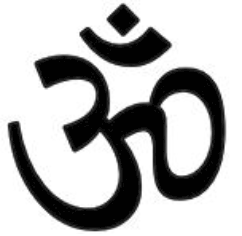
Leaders & Beginnings...
Aryans and non-Aryans used to not follow the same
religion. They followed different. They both realized they
were following the same thing. The only thing that was
different was their way of living. The blending of beliefs,
made them believe in thousands of Gods. The
complexity of all of this, made them question why they
were here. The Aryans & non-Aryans questioned the
wealth and power of the Brahmin priests. With the cause
of all of this, people to this day, still are influenced by
their beliefs.
Holy Writings & Guidelines...
Scholars have tried to organize popular cults, and Gods. But,
Hinduism can't be traced back to one system of beliefs.
Hindu teachers tried to explain the meaning of Vedic Hymns.
Their comments were written down and are now known as the
Upanishads.
Beliefs/Influence...
The beliefs of Hinduism slowly developed over a very long
period of time. Some aspects are still traced back to ancient
times. Hinduism is nothing like Buddhism, Islam or
Christianity. Those three religions can not be traced back to a
founder. Even though, they aren't a lot like any other religion,
they do have many followers. Hindu's use religion to get rid of
everyday mistakes, illusions and disappointments. Teachers of
Hinduism tried to explain Vedic Hymns. Their teachings were
eventually written down and are now known as the
Upanishads. Upanishads are written dialogs between a teacher
& student. They establish a way to figure our how to explore
how people liberate & suffer. Better known as, Moksha. Which
means a state of perfect understanding of all things. People
earn the Moksha by understanding the relationship between
Braham and Atman.
Timeline...
750 & 550B.C- Hindu teachers tried explaining the hidden
meaning of the Vedic Hymns.
599B.C-Mahavira, the founder or Jainism was born.
527B.C-Mahavira believed that everything in the universe has
a soul and so should not be harmed.
Buddhism

Leader & Beginnings...
Upanishads led to Judaism and Buddhism. Siddhartha
Gautama, was the founder of Buddhism. He lived in
Kapilavastu in the foothills. Proficiency's said that he
was going to be a great leader & man. But he couldn't
leave home. If he did, then he would become a universal
spiritual leader. So, his father isolated him to the palace.
Holy Writings & Guidelines...
Siddhartha first left the palace when he was 29. He saw
a corpse, old man, a sick man, and a holy man that was
wandering. After he saw those things, he decided to
spend the rest of his life searching for religious truth. He
wanted to end life's sufferings. Siddhartha was
wandering India for 6 years while trying to find
Enlightenment. (Wisdom) He debated with many other
religious seekers. He only ate 6 grains of rice per day.
Still, none of these methods seemed to work for
Siddhartha. He sat for 49 days in meditation trying to
achieve the understanding of suffering in this world.
After he achieved that, he became known as, Buddha.
Buddha means, "enlightened one".
Beliefs & Influences...
Buddha preached his Sermon to 5 companions. Those 5
companions, accompanied him on his wanderings.
Buddha's first Sermon became a landmark in history.
His Sermon had the four main ideas to understand his
enlightenment. Those four main ideas were, The First
Noble Truth : life is filled with suffering and sorrow. The
Second Noble Truth: The cause of all suffering is
people's selfish desire for the temporary pleasures of
this world. The Third Noble Truth: The way to end all
suffering is to end all desires. The Fourth Noble Truth:
The way to overcome such desires and attain
enlightenment is to follow the Eightfold Path, which is
called the Middle Way between desires and self-denial.
The Eightfold Path was a way to behavior. If you
followed the Eightfold Path, you could reach Nirvana.
Nirvana's is Buddha's word for selfishness or pain.
Timeline...
563 B.C- Their leader was born.
483B.C- their leader died.
You've previewed 23 of 35 pages.
To read more:
Click Sign Up (Free)- Full access to our public library
- Save favorite books
- Interact with authors


- < BEGINNING
- END >
-
DOWNLOAD
-
LIKE
-
COMMENT()
-
SHARE
-
SAVE
-
BUY THIS BOOK
(from $6.99+) -
BUY THIS BOOK
(from $6.99+) - DOWNLOAD
- LIKE
- COMMENT ()
- SHARE
- SAVE
- Report
-
BUY
-
LIKE
-
COMMENT()
-
SHARE
- Excessive Violence
- Harassment
- Offensive Pictures
- Spelling & Grammar Errors
- Unfinished
- Other Problem





COMMENTS
Click 'X' to report any negative comments. Thanks!