 This book is dedicated to anyone out there with questions about
space and beyond!
This book was created and published on StoryJumper™
©2010 StoryJumper, Inc. All rights reserved.
Publish your own children's book:
www.storyjumper.com

Table of Contents
Part I- Galaxies.... page 1
Part II- Life Cycle of a Star.... page 6
Part III- Constellations.... page 12
Bibliography.... page 15
Part IGalaxies1
There are billions of galaxies in our universe,
many of them which are unknown to man.
Galaxies are a huge cluster of millions of
stars, gas,and dust.
There are three different kind of galaxies-
elliptical galaxies, spiral galaxies, and irregular
galaxies. Each galaxy is unique and different
in their own way.
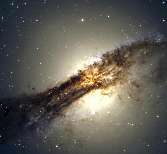
Elliptical GalaxiesElliptical galaxies are the oldest out of the three kinds of
galaxies. Their shape is similar to the one of a football
(rounded), and it has a very concentrated center. Elliptical
galaxies do not contain much gas or dust, and they can be
small or so huge that the size of the Milky Way could fit
inside of it.
 3Irregular Galaxies
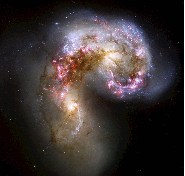
Irregular galaxies are usually the youngest out of
all the galaxies. They have no arms and are in no
particular shape. Irregular galaxies can be large
or small in size, and they contain lots of gases and
cosmic dust.
 4Spiral Galaxies
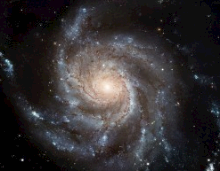
Spiral galaxies hold up to 200 billion stars, for
they can be huge. These kinds of galaxies have
arms, and it is the most common kind of galaxy
(the Milky Way is a spiral galaxy).
 56 Part II
Life Cycle
of a Star
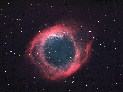
Low Mass StarsEvery star must go through different phases in their lives. If the
star it is low mass star, it will undergo through the following phases:
Nebula- The nebula contains gas and dust, and it
is known as the birth of a star. The higher the
mass of the star, the more gas and dust will be
found in the nebula.
Protostar- During the next stage, a star is
considered a protostar. The middle of the nebula
begins to shrink and get hotter, and a new star
is created. No nuclear fusion is involved in this
process.
 7
7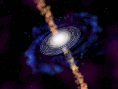
Main Sequence- During this phase, the star remains
unchanged for several billions of years. Our sun is still
considered a main sequence star.
Red Giant- Once the star passes the main sequence
stage, it is depleted of Hydrogen and it expands up to
100 times. The star is now recognized as a red giant.
Planetary Nebula- After the star expands, all the
helium in he core is used up. The star then shrinks
and blows its outer layer off into space.
White Dwarf- Eventually, gravity crushes the all the
matter in the star. It is now a small planet-sized
body of immense density, known as a white dwarf.


 8
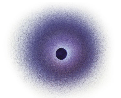
8Black Dwarf- During the last phase of a star's
life, it is considered a black dwarf. All that is
left of the star is a ball of gas that is not
capable of nuclear fusion. This star is required
to produce different amounts of energy.
 9High Mass Stars10
High mass stars go through the same exact phases as low mass stars,
until after it is a main sequence star. After it becomes a
main sequence star, high mass stars pass through the following
stages:
Red Supergiant- If a star is a red supergiant, it is the exact same as
a red giant, only bigger.
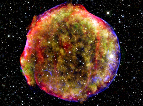
Supernova- When the nuclear fusion within the
interior of the star can no longer produce the
heat required for equilibrium, the star collapses
and then rebounds in a massive explosion.
Supernovas are considered the death of a high
mass star.
 11
11Neutron Star- After the large explosion, all
that is left of the star is its core, which is
known as the neutron star.
or
Black Hole- After the supernova explosion, the
star can become a neutron star, or it can
become a black hole. Black holes are an
incredibly dense object whose gravity is so
strong that not even light can escape from it.
Black holes warp space and time around them.
You've previewed 13 of 20 pages.
To read more:
Click Sign Up (Free)- Full access to our public library
- Save favorite books
- Interact with authors

- < BEGINNING
- END >
-
DOWNLOAD
-
LIKE
-
COMMENT()
-
SHARE
-
SAVE
-
BUY THIS BOOK
(from $3.99+) -
BUY THIS BOOK
(from $3.99+) - DOWNLOAD
- LIKE
- COMMENT ()
- SHARE
- SAVE
- Report
-
BUY
-
LIKE
-
COMMENT()
-
SHARE
- Excessive Violence
- Harassment
- Offensive Pictures
- Spelling & Grammar Errors
- Unfinished
- Other Problem





COMMENTS
Click 'X' to report any negative comments. Thanks!