We dedicate this story to Dr. McLaughlin, who spent the entire semester wrangling a circus but also managed to teach us a good bit about science. Thank you!!

What is an eclipse?
An eclipse is an
astronomical event. It takes
place when one celestial
object such as the moon or
planet moves into the shadow of another celestial object. It is a result of either an occultation (completely hidden) or a transit (partially hidden). There are two types of eclipses on Earth: an eclipse of the moon and an eclipse of the sun.
Why NASA Studies Them
NASA scientists want to learn more about the moon. To do this, they took the moon's temperature during a lunar eclipse. They wanted to see how fast the moon cooled when Earth's shadow was on it. This helped them learn what the moon could be made of.
NASA can also study the top layer of the sun during some solar eclipses. Since the moon blocks the brightest waves of the sun, it makes it easier for them to see it. They use tools on Earth to take a pictures of the sun and can then study them.
The History of Eclipses
Long ago before we understood what they were, eclipses were often mistaken for supernatural phenomena. However, as time progresses ancient civilizations began to record eclipses on clay tablets and as they gained an understanding they used these events to create and develop sophisticated calendars.
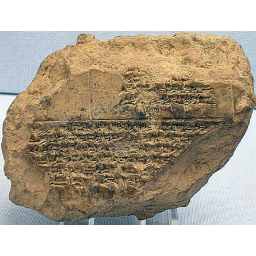
It is believed that lunar eclipses taught people that Earth is round. A long time ago, people thought that Earth was flat. Then they saw Earth’s shadow on the moon. They learned that Earth is round.
Did you know?
Lunar Eclipse
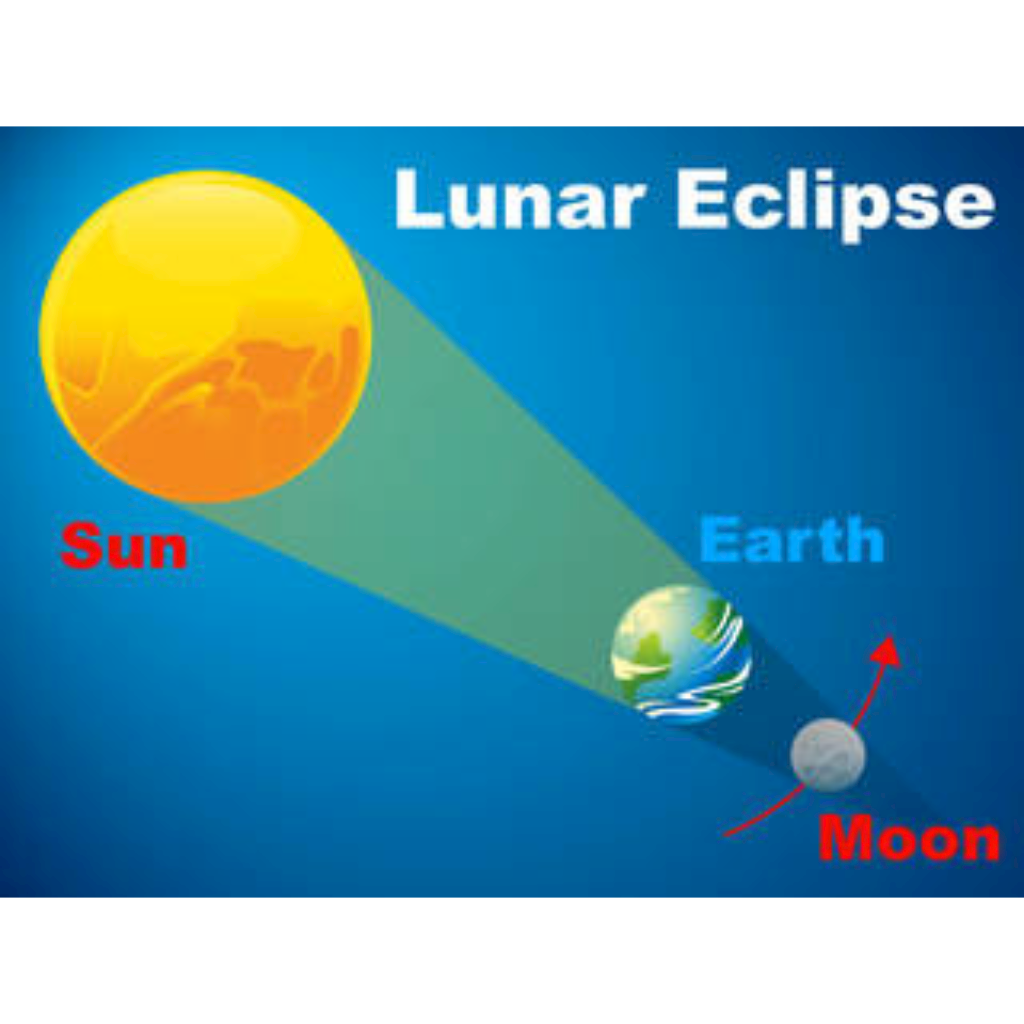
Total lunar eclipses occur when the moon and the sun are on exact opposite sides of the Earth. The sunlight passes through Earth's atmosphere and filters out most of the blue light. This makes the moon appear red.
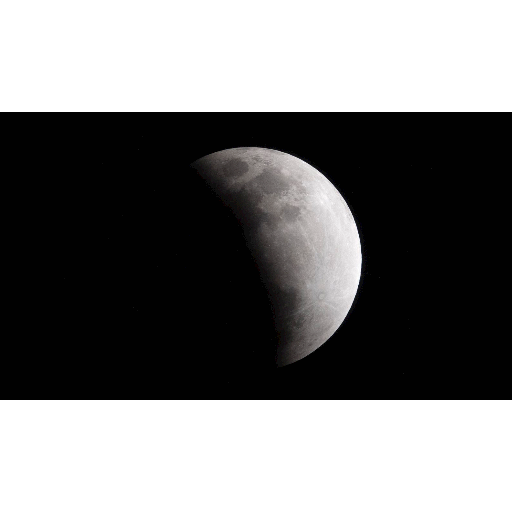
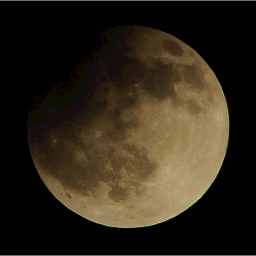
Partial lunar eclipses happen when only a part of the moon enters the Earth's shadow. The Earth's shadow is very dark on the side of the moon facing Earth.
What the moon looks like during a Lunar Eclipse.
The moon moves in orbit around the earth, at the same time Earth is also orbiting the sun. A lunar eclipse happens when the Earth moves between the sun and the moon at the same time. When this occurs, the Earth is blocking the sunlight that is usually reflected by the moon. When this happens, Earth's shadow
falls on it. A lunar eclipse
seen from Earth at night.
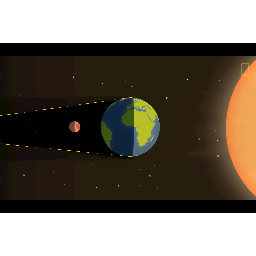
Video:
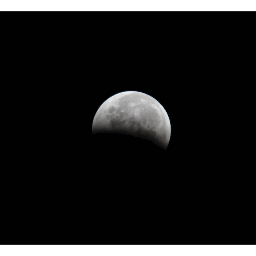
Partial Lunar Eclipse Diagram
A Partial Lunar Eclipse can be seen during the build up to the total lunar eclipse. The Moon enters the penumbra and then part of the Earth's primary shadow called the umbra. The Shadow does not completely cover the Moon.
Solar Eclipse
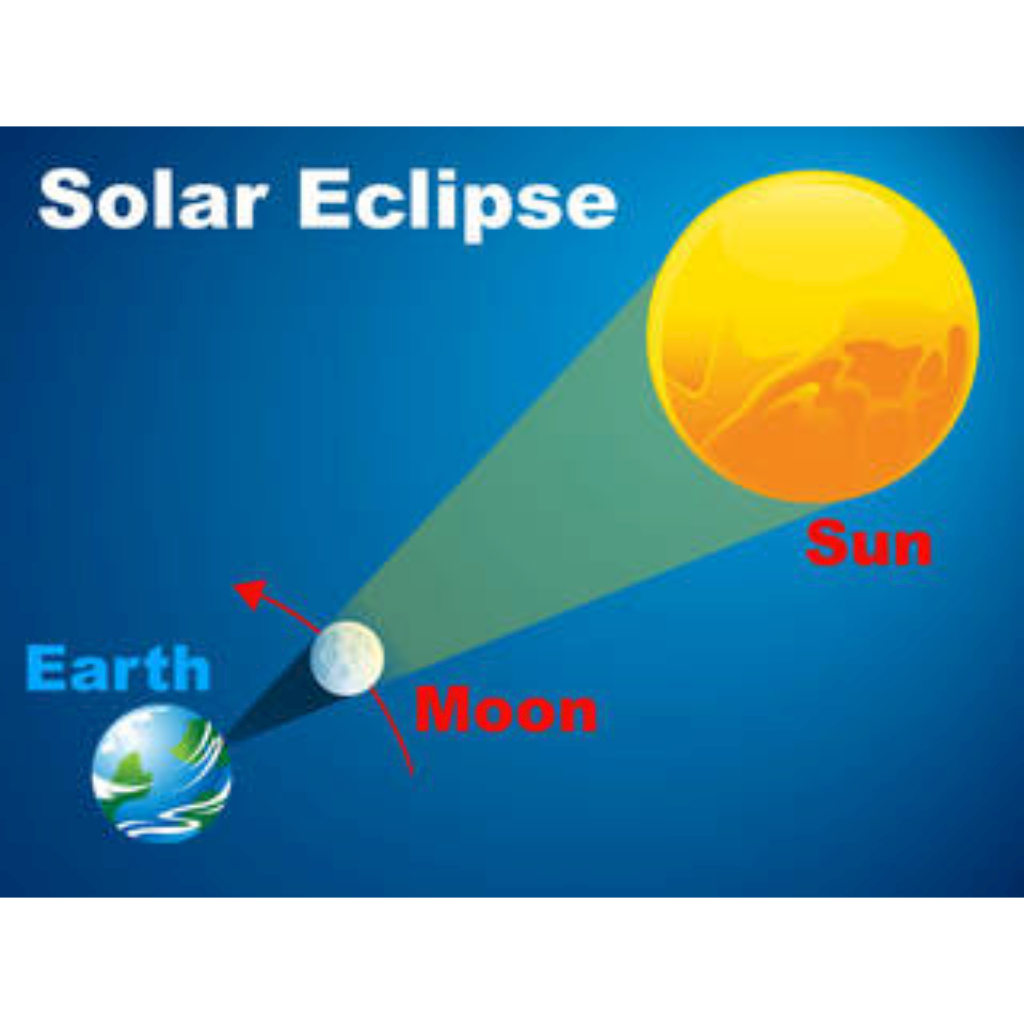
The first shadow in a solar Eclipse is the umbra and the second shadow is the penumbra. The umbra gets smaller as it reaches Earth. The penumbra gets bigger as it reaches Earth. A total solar eclipse is when the Earth gets very dark, and the sun, moon, and Earth are in a direct line. A partial solar eclipse is when the sun, moon, and Earth are not in a direct line, and the sun only casts a shadow over part of the surface. An annular solar eclipse is when the moon is the farthest from the Earth. The moon does not block the entire sun, and creates a ring around the moon.
- Full access to our public library
- Save favorite books
- Interact with authors
- < BEGINNING
- END >
-
DOWNLOAD
-
LIKE(4)
-
COMMENT()
-
SHARE
-
SAVE
-
BUY THIS BOOK
(from $4.19+) -
BUY THIS BOOK
(from $4.19+) - DOWNLOAD
- LIKE (4)
- COMMENT ()
- SHARE
- SAVE
- Report
-
BUY
-
LIKE(4)
-
COMMENT()
-
SHARE
- Excessive Violence
- Harassment
- Offensive Pictures
- Spelling & Grammar Errors
- Unfinished
- Other Problem





COMMENTS
Click 'X' to report any negative comments. Thanks!