Dedicated to all the wonderful people I have met who have changed my world view


"Culturally and linguistically diverse students typically come from working-class families where their individual lives are inseparable from the social dynamics of the household and community in which they live" (Vacca et al., 2016). Teachers who understand the student's community and home culture are in a better position to understand the types of knowledge diverse students can contribute to the classroom. Teachers can adjust the curriculum to these students' sociocultural strengths. Tapping into a community fund of knowledge builds on the social networks within a group and can be an asset.
There are an increasing number of racially, ethnically, culturally and linguistically diverse students in the US. According to the Equity Assistance Center (2016) diverse students make up 48 percent of the population while 84 percent of teachers are white. Students need to make connections between the content that is taught and their own lives and cultures. Teachers need to know and understand all their students to demonstrate that each student is valued. Being valued contributes to a student's success in the classroom and beyond. If teachers are to positively impact student lives through education then they must be prepared to understand how they can adapt classroom culture to meet and address these differences (EAC, 2016).
Five essential themes for cultural relevant pedagogy
Vacca et al. (2016) states that there are five essential themes that should be considered when developing culturally relevant pedagogy:
- The identity of both the student and teacher.
- Equity and excellence
- Developemental appropriateness
- Teaching the whole child
- Student-teacher relationships
(Vacca et al., 2016)
As teachers we must consider not just the student's identity, but also our own identity so we can understand our own cultural lens and be aware of our own biases. That way we are better able to create greater equity in the classroom. We must be able to understand differences without seeing deficits. We must know our students so we can give them the individualized instruction that they need to succeed and meet the student's developmental level. Understanding family and community experiences helps a teacher teach to the whole child. Finally, communicating an atmosphere of concern for individual students fosters a positive student-teacher relationship crucial to a student's success. (Vacca et al. 2016)
Which strategies will help teachers to provide culturally responsive teaching?

Provide texts and materials that enable students to see themselves reflected in what they read and see. These materials can help students understand cultural norms and find commonalities between cultures. These materials need to be understood as part of the "American narrative not as a separate entity" (Vacca et al. 2016).
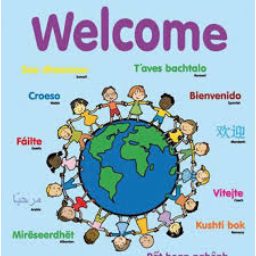
Demonstrate your interest in students' culture by displaying words and pictures that are relevant to their culture in your classroom. Provide opportunities for students to share artifacts and materials with the class that are culturally relevant to them if they are comfortable sharing.
S.I.O.P. strategies are ones that are used in a classroom for English learner students but can be used successfully in mainstream classrooms also.
Sheltered
Instructional
Obervation
Protocol
S.I.O.P. classrooms enable English learner students the freedom to express themselves that they may not have in another setting.
Teachers begin by teaching vocabulary. They encourage students to bring in their own knowledge as it relates to the subject being taught. This strategy enables students to make connections that are relevant to them. Students then use graphic organizers to arrange and categorize knowledge and transfer that knowledge into notebooks. This technique makes knowledge more accessible to students rather than if it were just available in a text book. Organizing knowledge on the floor provides powerful visual graphics that all students can see.
Students then make posters to present and share what they learn with the class enabling them to take ownership of their learning. Pictures are invaluable tools for these learners.
- Full access to our public library
- Save favorite books
- Interact with authors
- < BEGINNING
- END >
-
DOWNLOAD
-
LIKE
-
COMMENT()
-
SHARE
-
SAVE
-
BUY THIS BOOK
(from $2.99+) -
BUY THIS BOOK
(from $2.99+) - DOWNLOAD
- LIKE
- COMMENT ()
- SHARE
- SAVE
- Report
-
BUY
-
LIKE
-
COMMENT()
-
SHARE
- Excessive Violence
- Harassment
- Offensive Pictures
- Spelling & Grammar Errors
- Unfinished
- Other Problem






COMMENTS
Click 'X' to report any negative comments. Thanks!